The best advice Sam Mostyn ever received was to stop talking and start listening. Really listening.
The suggestion came when she was working alongside her friend Marika on the board of Reconciliation Australia.
“She said, ‘I love your enthusiasm. I love the fact you want to change the world, and that you’re open and present, but you’re too quick to offer what you think the solution is, and I don’t think you’re a very good, active listener’.”
Sign up to The Nightly’s newsletters.
Get the first look at the digital newspaper, curated daily stories and breaking headlines delivered to your inbox.
By continuing you agree to our Terms and Privacy Policy.
The Yolngu leader’s words came as a shock at the time but upon reflection, Mostyn realised she had been missing whole parts of conversations while thinking about what she might contribute.
Now, almost two years into her term as Governor-General, listening intently is the skill she relies on daily in her efforts to be an optimistic, modern and visible wearer of that mantle.
“Ever since, I’ve thought, what if we all just stopped waiting to jump in to talk and we actively listen to each other?” Mostyn says.
“Don’t jump in with a solution. Don’t jump in with the words that you think people want to hear. Just wait and listen to what it is that emerges.
“And I think that’s what I’ve brought to the job. I’m in many places in the country where people need to tell me things, and I won’t hear it unless I’m quiet and not thinking that I’ve got to jump in and give them a solution or a response straight away.”
Yet the passion to pass on what she has learned from all quarters comes across as Mostyn speaks at rapid-fire pace, bringing lots of ideas together all at once.
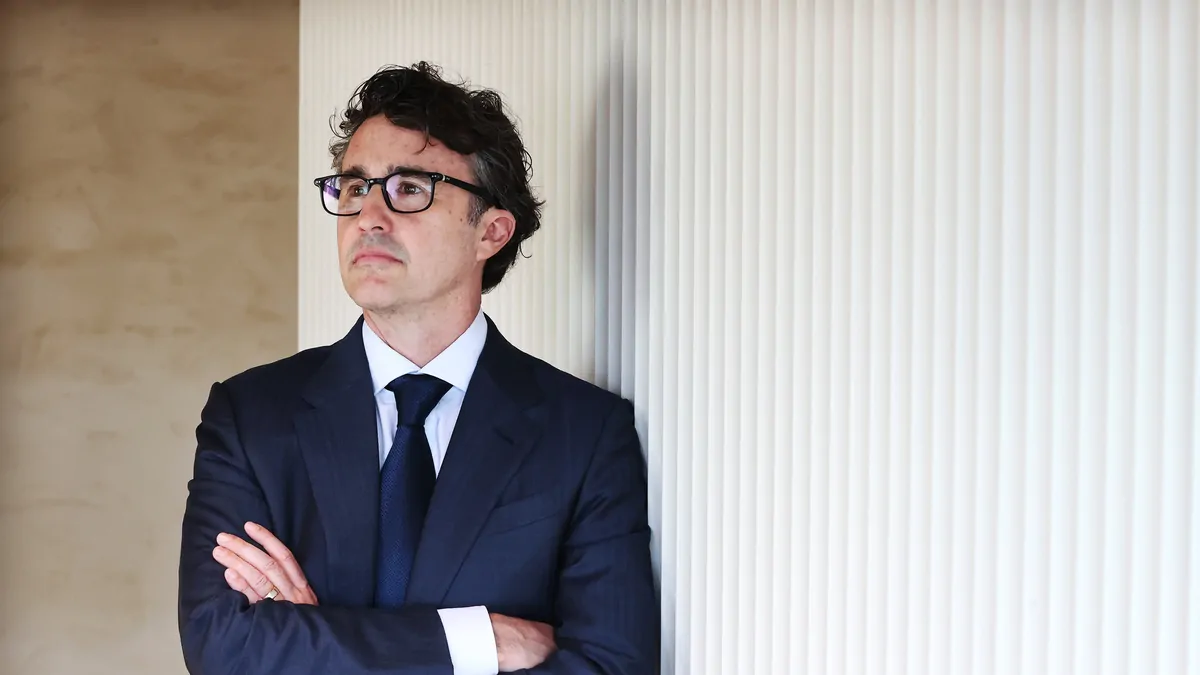
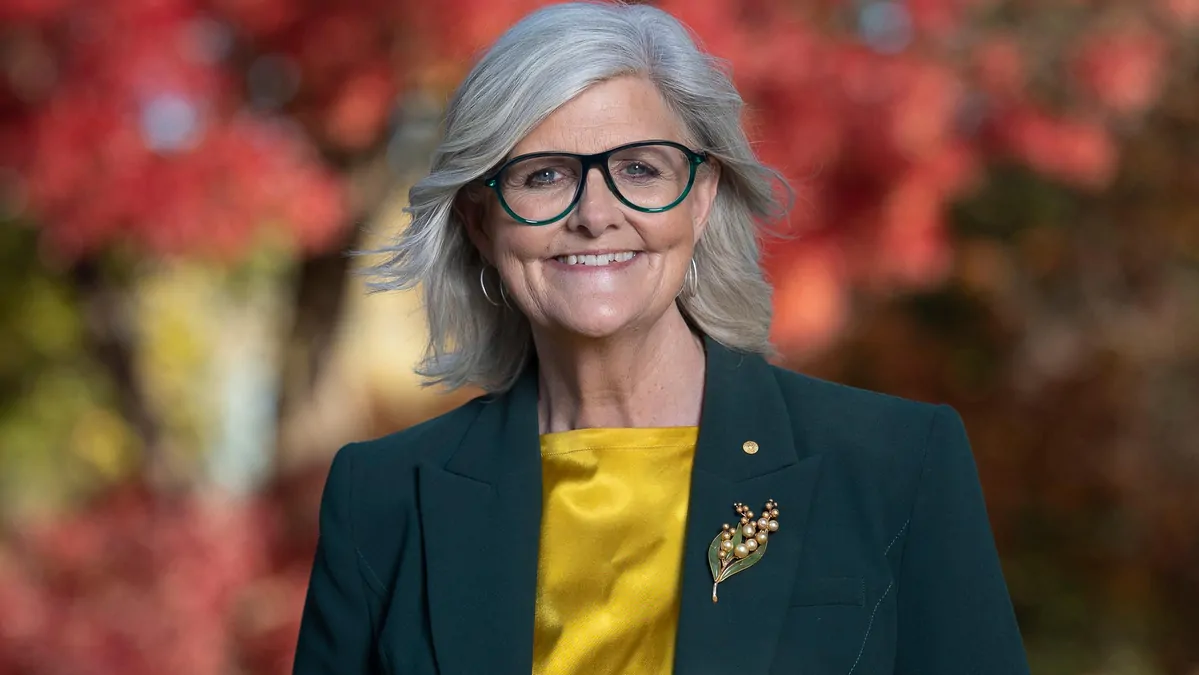
Sam Mostyn is simultaneously in the most powerful and least powerful role of her career. Credit: Hilary Wardhaugh/Hilary Wardhaugh
When Prime Minister Anthony Albanese recommended the former businesswoman and advocate for the vice-regal appointment in 2024, concerns were raised in some quarters that she would use the position to be an activist, at odds with the duties of someone representing the monarchy.
But she has approached the role in the same way as the other influential jobs she had before moving to Yarralumla: seriously, and with warmth and empathy.
In many ways, she is simultaneously in the most powerful and least powerful role of her career.
As Australia’s Governor-General, she can’t fundraise, she can’t advocate, she can’t be seen to be political.
But she can pay attention and draw attention to causes or issues that should be of national concern.
She often reflects on the words of the country’s 19th governor-general, Sir Zelman Cowen, who described the role as one which reflects the light and shade of the country back to itself. And there has been a fair amount of shade over the past two years, from floods, bushfires and cyclones to the Bondi terror attack, ongoing cost-of-living pressures and an increasingly brittle, fractured society.
As Mostyn has travelled across the country, she’s picked up a widespread, underlying sense of anxiety.
It reminds her about what psychiatrist Ian Hickie would say when they worked together at the National Mental Health Commission and Beyond Blue, that it’s increasingly just as important to ask are we OK as a society as it is to check in individually.
“I’ve had that in the back of my mind as, are we OK as a country when it comes to how we’re going? Are we OK as a community? If we ask that question of ourselves after Bondi, are we OK? What would it take to be OK?” Mostyn says.
“If the social cohesion story is one that is wearing and is fraying, then what is our local and national project to make sure we bring those strands back together and hold to something that has been a great strength for this country?”
On December 14 last year, she had just landed back in Canberra after being in Sydney when she heard news reports of the deadly Islamic State-inspired attack on a Chanukah celebration at Bondi Beach.
She immediately said to her husband, barrister Simeon Beckett, that they had to turn around and go back.
“I’m the only non-political part of the system,” she says of her thinking.
“I won’t say I was ready for it, I don’t think you’re ever ready for those things. But I was very, very conscious of the role I had to play, and No.1 was to be present, to just show up, get to the memorial site as quickly as possible, do a lot of listening.”
She had already hosted Jewish community leaders and heard their concerns about rising anti-Semitism, and spoke to many of them again that night, passing on her condolences and taking advice on what they wanted her to do next.
Jewish friends cautioned that it was important in that awful moment not to “stumble through this, or think you know what you’re doing”, and Mostyn took her lead from the families of victims, the community, the people who mattered most there and then.
“Of course, my role was quite different to the political actors in that moment,” she says.
Governor-General Sam Mostyn, photographed at Government House in Canberra. Credit: Hilary Wardhaugh/Hilary Wardhaugh
“Many people just wanted me to show up and hug people, to stand there and hug and not say anything at all, but just be present in solidarity, to use the language, the abhorrence of anti-Semitism, not to cover it in anything else but the horror of what people are going through.”
At the suggestion that turning up and hugging people seems a very Australian thing to do, something one can imagine from the royal family’s representative Down Under but not the monarchs, Mostyn cites Queen Elizabeth II saying that, for people to understand your role, just show up.
“I do it in an Australian fashion,” she says.
One major piece of work Mostyn has set for herself is demystifying the role of Governor-General and Australia’s democratic institutions.
It’s no less than a battle for the soul of democracy.
“If we have a collision between apathy and disinformation, we start to lose the very tenets of support for our unique democracy,” she says.
She fears the very Australian “she’ll be right” attitude is manifesting in people thinking they don’t need to bother themselves with politics, then questioning why we have compulsory voting, or why politicians matter.
Her concerns are backed by data about the decline in civics education and understanding of how the system works.
“The algorithms are clearly driving people into echo chambers of similar beliefs, and it’s harder and harder just to educate and to lay out a store of information that says, here are the principles of democracy,” she says.
Yet she encounters many leaders from other countries who see Australia as a shining example of a stable, strong democracy.
If Australians could have that same sense, they would push back against those telling them they didn’t need to worry or care or be curious, she believes.
“That, to me, is the greatest risk because I think if we descended into that, all of our public discourse would be through rage and through contest and anger,” she says.
Now, almost two years into her term as Governor-General, listening intently is the skill she relies on daily in her efforts to be an optimistic, modern and visible wearer of that mantle. Credit: Hilary Wardhaugh/Hilary Wardhaugh
“We wouldn’t find the ways to really celebrate the strength of our democratic system, and that has catastrophic impacts for the future of the country.
“And of course, technology and social media have a lot to play in there.”
On this education mission, Mostyn might be our most accessible governor-general — and not only because she’s always urging school children to “call me GG Sam!”
She’s done podcasts, multiple media interviews, hired former US ambassador Caroline Kennedy’s digital communications adviser, and opened up her official homes to host drinks for media, diplomats, every Federal MP and senator elected last year and their families, and countless school groups.
The @gg_australia Instagram account has nearly 91,000 followers, and there are another 82,000 on Facebook, while a YouTube video of Mostyn discussing the 1975 dismissal with constitutional expert Anne Twomey has been watched 19,000 times.
At events, people ask her to sign their mini constitutions — “and it’s not all just kids who are studying legal affairs”, she hastens to add. She’s been heartened by the level of interest.
“I’ll pop into a shop and someone will say, ‘keep going’, and ‘geez, our democracy is great’, and using that language back at me,” she says.
“Everywhere I go, someone will notice something about the visit or the language or have looked at our social media and will want to engage.
“It can’t be down to one office, one institution, but I think it tells me that if enough people tap into that rich vein of Australians’ interest and commitment to our country, there’s so much we can do together.”
Mostyn is seeking to help the country interpret itself, and sees her best opportunity “to help change things and keep us growing as a country positively” as reflecting on the issues communities raise with her — gender-based violence, respect for Indigenous people, the rise of anti-Semitism and Islamophobia, and questions of who belongs — and bringing these to the attention of the prime minister and government of the day.
She also draws on her own experience at all levels of community organisations, such as doorknocking for the Salvation Army as a child of about 10, going around Canberra’s suburbs with her sister and asking strangers to donate money. She’s now the Salvation Army’s patron.
“I’m not an activist in this role. I don’t think of myself as being involved in advocacy,” Mostyn says.
“I think that’s a way of actually encouraging the country to lift and to change and to reflect where we could be better.”
One example is bringing together groups of which she is patron to round-table sessions, allowing them to network and discover where they could be co-operating to use their resources better or deliver more services.
Early in her time at Government House, she hosted one such session convened by She Gives, a group that highlights women’s philanthropy, which led to a report identifying gaps in where their money and government funding was flowing.
Several hundred million dollars has been redirected as a result.
“That meant I didn’t advocate for any, I didn’t have a view about what they were doing, but they were given a place (to talk) . . . and they know that when they then do the work, I can bring attention to it to say, look at what happens when these Australians come together,” Mostyn says.
“There’s a great thrill in watching others take those opportunities.”
Another example is highly visible, but also less obvious: the mother of one chooses to wear only Australian-made clothes, mostly from brands that support women in some way.
Social enterprise label The Social Outfit is in high rotation, including making the suit she wore the day she was sworn in as Governor-General, and the floral print shirt she wears for our photo shoot.
There aren’t any commercial engagements or even discounts at play here, just one woman using her purchasing power and visibility to send a quiet message.
The fashion diplomacy extends to reflecting the colours of another country’s flag in her outfits — a recent string of engagements with leaders from Canada, Singapore and Denmark saw her happily sport the red and white that also belongs to her beloved Sydney Swans — or donning culturally meaningful pieces of jewellery.
She didn’t seek dressing advice from former governor-general Quentin Bryce (although she is a huge fan of Dame Quentin’s fashion) or Julia Gillard when she spoke to them before taking on the role, but she clearly looked at how such prominent women considered what they wore and mulled over her own approach.
“I was very conscious, coming in as the second woman and the work I’d done on women’s economic equality, I knew I’d have my critics. I knew there’d be the allegation or the accusation of being an activist,” she says, adding that she also thought about her intention to demonstrate compassion and to reflect Australia, and the restraint and respect required for the role.
“I want to make sure whatever I’m wearing, if it is sending a signal, it is that I believe in Australia. I believe in what we can do here.”