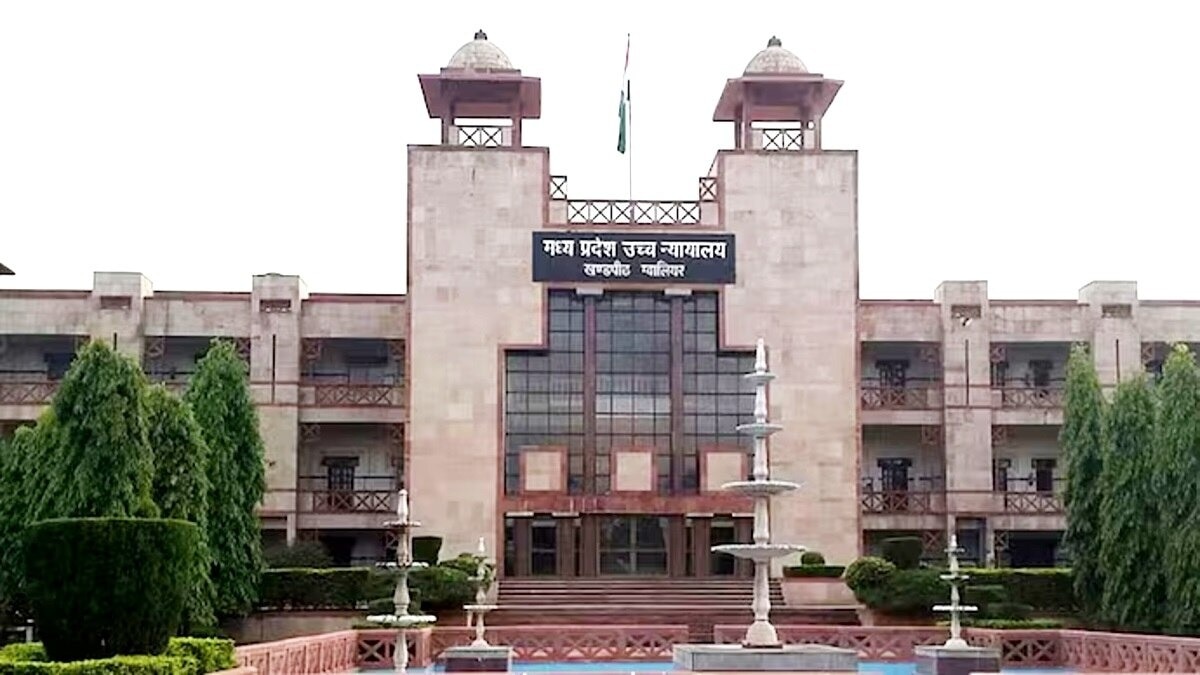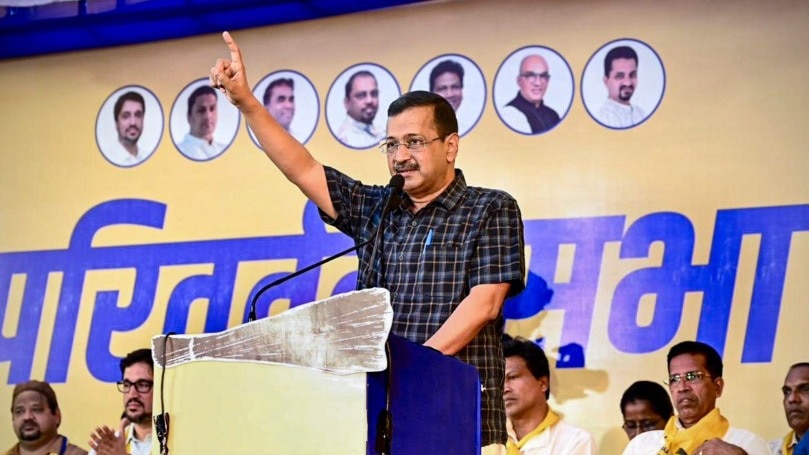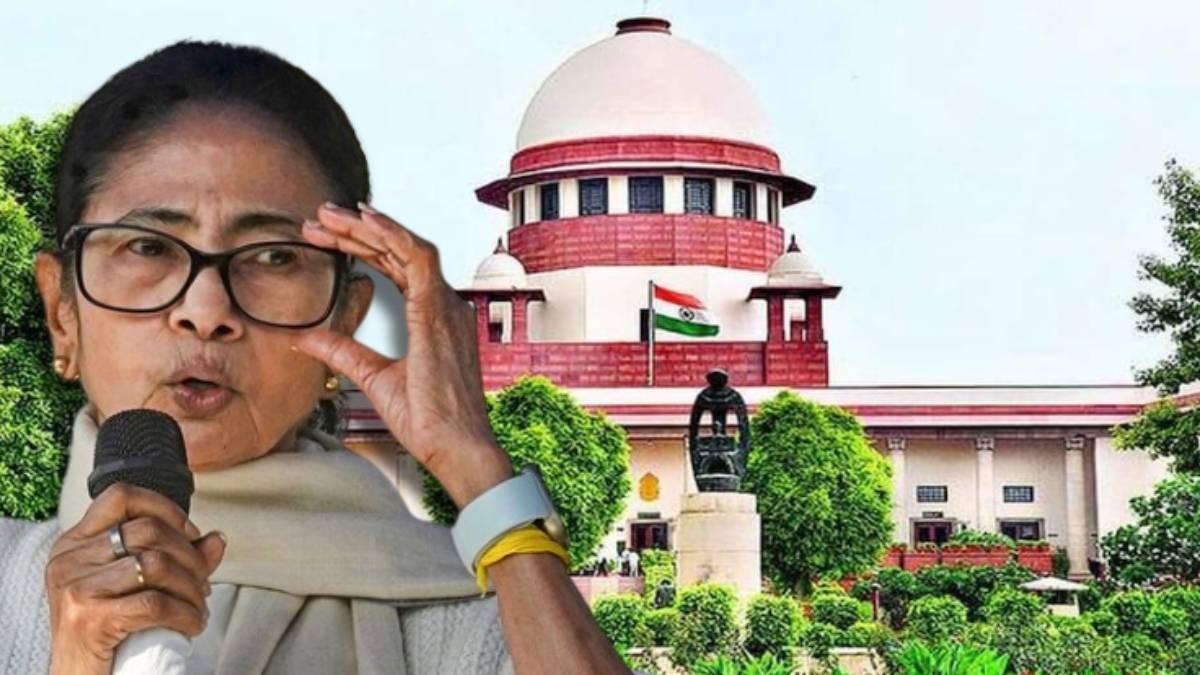
With barely three weeks left for the West Bengal Assembly elections, attention has shifted to the Supreme Court’s SIR hearing scheduled for later today, which coincides with the deadline for judicial officers to submit the revised voter list.
The 294-seat Assembly goes to polls in two phases on April 23 and April 29. But beneath the surface, an unusual development is unfolding — one that could have far-reaching implications.
On February 20, the Supreme Court stepped in, invoking its extraordinary powers under Article 142 to address what it called a “trust deficit” between the state government and the Election Commission of India (ECI).
The aim: to get the derailed SIR process back on track, ensure no valid voter is struck off, and deliver “complete justice” under Article 142.
Yet, more than a month after the court’s extraordinary intervention, and several orders later, there is little clarity.
Around 33 lakh names are likely to be restored to the voter rolls during adjudication, out of the 60 lakh deleted in the final SIR list — still leaving nearly 27 lakh out.
The estimate is based on a 45% exclusion rate across nearly 55 lakh cases disposed of so far, indicating the scale of potential disenfranchisement.
Amid concerns over the process and an apparent lack of coordination between the Election Commission and the Mamata Banerjee government, the Supreme Court stepped in.
In its February 20 order, it directed the Calcutta High Court to constitute a team of 530 judicial officers.
The number was later increased to 700, with 200 additional officers brought in from neighbouring Odisha and Jharkhand to expedite the adjudication process.
These officers have been tasked with taking over the role of Electoral Registration Officers (EROs) to adjudicate pending claims and objections arising from “logical discrepancies” in the voter list.
THE UNRESOLVED NEXT STEP
Complicating matters further is an elaborate appellate tribunal process, which will follow the adjudication stage. How soon this happens is something we’ll cover later in this article.
With deadlines tightening and little clarity on the functioning of the 19 appellate tribunals, concerns are rising over whether objections from the adjudication process can be resolved before the polls — raising the spectre of a constitutional crisis.
Last week, Chief Minister Mamata Banerjee warned of President’s Rule, accusing the BJP of attempting to delay the elections.
Her remarks came shortly after seven judicial officers involved in the adjudication phase were held hostage for over nine hours by a mob in Malda on Thursday.
But is Mamata Banerjee’s attack on the Centre just fearmongering, or are last-minute twists and turns in store as the state heads to the polls later this month?
To understand this, we take a deep dive into the situation as it stands.
EX-CEC OFFERS WAY OUT OF QUAGMIRE
Speaking to India Today Online, former Chief Election Commissioner SY Quraishi offered a simpler panacea to the quagmire unfolding in the Supreme Court over the SIR process.
Referring to the Representation of the People Act (RPA), 1950, he told India Today Online, “In case lakhs of voters are left out, the last valid electoral roll (Special Summary Revision 2025 in Bengal) continues to remain in force until a fresh revision is completed (the ongoing SIR process). In no case does the absence of a fresh revision stall the process, as it is a continuous scheme under the RPA.”
The former poll body chief went on to say that the Supreme Court could also allow those with pending applications to vote in the upcoming Bengal elections, subject to a final decision by the appellate tribunals in due course, without imposing further deadlines.
NO END IN SIGHT
However, the picture becomes even more muddled with the hurried exercise of setting up appellate tribunals and getting them fully operational.
As per electoral law, voter rolls will be frozen on the last date of filing nominations — April 6 for the first phase and April 9 for the second.
This raises a crucial question: If the voter roll for the first phase is frozen today, does the hurried effort to set up and get the appellate tribunals functional before the upcoming polls become futile?
After the freeze, no names can be added to or removed from the voter roll for the elections, unless the Supreme Court decides to extend the nomination filing dates today.
It also remains unclear whether the elections will proceed as scheduled or be postponed until the appellate tribunals complete their work on adding or deleting voters from the electoral roll.
In any case, the Election Commission’s motto — “No valid voter to be left behind” — must be upheld. So, how can the polls go ahead without the outcome of the appellate process?
However, in this scenario, one thing is becoming clear: completing the appellate tribunals’ findings before the first phase of voting is a herculean task.
This leaves two possible options, as suggested by Quarishi: either proceed with the last published roll from the Special Summary Revision of 2025, or allow even those left out to vote in the upcoming elections, with their final inclusion to be decided by the appellate tribunal in due course.
Another development in the recent hearings is that the Supreme Court has extended the appellate process.
Initially, the court had ordered that the appellate tribunals should not entertain any new documents that were not submitted before the adjudicating officer.
However, in its latest order, it has allowed the tribunals to accept fresh documents, provided their authenticity is verified.
The court has also observed that the tribunals will have access to the reasons given by the adjudicating officers and can revisit the full list of documents used to make additions or deletions.
On top of that, the Supreme Court has empowered the appellate tribunals to establish their own procedures to ensure that the principles of natural justice are upheld when determining the fate of excluded voters.
Under this framework, every aggrieved party must be heard in accordance with these principles.
Additionally, even Election Commission officials can approach the tribunals if they believe that any of the roughly 30 lakh additional names in the voter roll were unjustifiably included during the adjudication process.
Overall, if the upcoming Assembly elections are to be conducted using the voter roll finalised after the appellate process, Bengal is effectively racing against time to hold the polls.
The ball now lies with the Supreme Court, and it will be up to the CJI-led bench to decide the course of action. Against this backdrop, the today’s hearing assumes greater significance, as there are still no definitive answers to the questions raised so far.
– Ends
Published By:
Sayan Ganguly
Published On:
Apr 6, 2026 08:56 IST