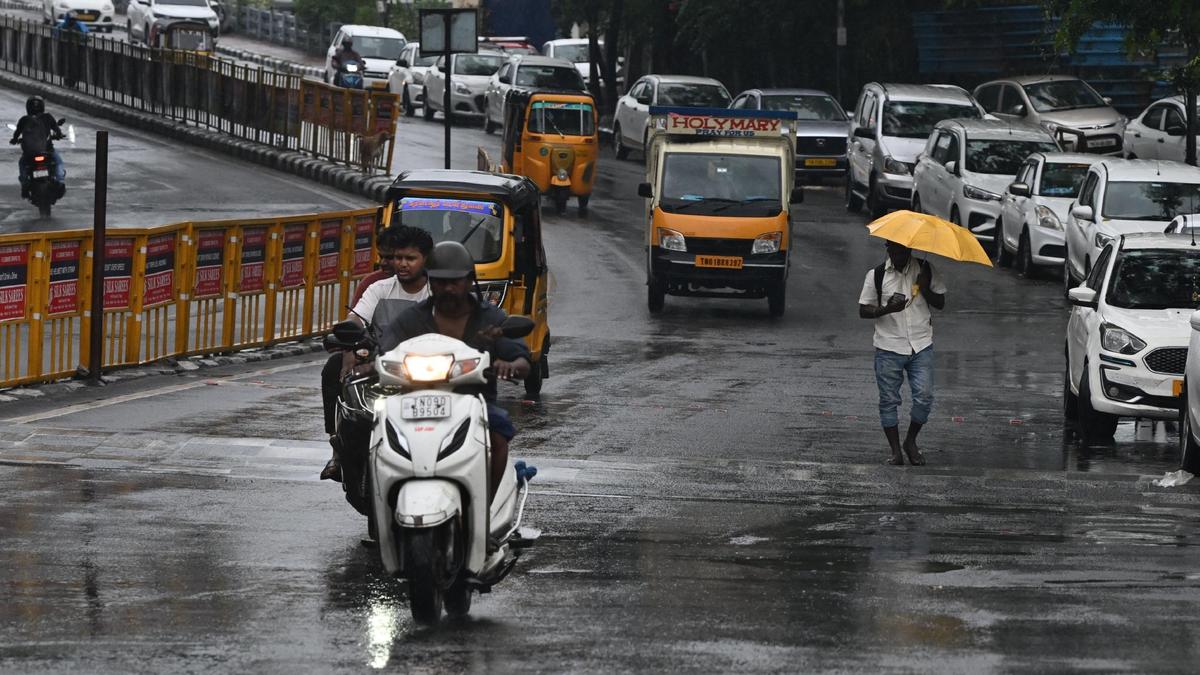
In the days before polling in Tamil Nadu, more than 4,000 candidates were clamouring for attention across 234 constituencies — on walls, on vehicles, on loudspeakers that crackled through the morning air.
But inside a quiet home off Dr. Radhakrishnan Salai in Mylapore, Chennai, a Grade 12 student was doing something that turned out to be far more powerful. He was building a website.
Kapil Bhaskar is 16 years old. He loves maths, coding, and like a lot of teenagers in an election season, loves debating politics with family and friends.
The website he built, Nee Yosi, did one thing with elegant simplicity: it told you everything worth knowing about every candidate on your ballot.
Their criminal cases, declared assets and educational background. All of it was pulled from official Election Commission affidavits, stripped of legalese, and laid out in plain Tamil and English — in seconds, for free, on any phone.
The problem no affidavit could solve
The problem he was solving was real. The Election Commission had published affidavits for every candidate, but reading them meant wading through hundreds of pages of dense legal documents per constituency.
With an average of 17 candidates contesting each seat, no ordinary voter was going to do that. “Political transparency is a key tool for any democracy,” Kapil said. “I got the idea through political discussions with my friends, my family, and consuming online content about elections and politics on YouTube.”
Once the idea crystallised, the build was almost feverish — four days sourcing data from the Association for Democratic Reforms (ADR), an NGO that digitises Election Commission records, followed by 48 hours of straight coding.
“I used Claude to scrape through various sources of data on the Internet, to give me the data in the structure I want,” he explained. “I then use Emergent to build the website.” Total cost: around ₹1,500.
He called it Nee Yosi — Tamil for “You think.” The name was a provocation as much as a title. This was not a platform to nudge anyone toward a particular candidate. It was a platform to hand the thinking back to the voter, fully armed with facts.
70,000 visitors, and counting
Within the first 24 hours of going live, 15,000 users had visited. By election day on April 23, that number had crossed 70,000.
Within 24 hours of launch, the website saw 15,000 visitors. Photograph: (Nee Yosi)
The response blindsided him. “It has been quite frankly humbling and pretty awesome to see the feedback that many people have conveyed to me about the website,” Kapil said. “Numerous people told me that they used my website to decide who they were going to vote for.”
Nee Yosi spread through WhatsApp groups and social media without any real push from its creator. First-time voters, seasoned citizens, people who had never looked up a candidate’s background in their lives, all found their way to it.
‘I went beyond my own constituency’
Naren Viswa, a young college student in Chennai, was one of them. “I loved it. The site is very user-friendly, so I went beyond my own constituency to look at others too, as it was a fun experience to learn more,” he says.
For Sudha, a five-decade-long resident of Adyar, it was something more profound. “My house help does not know English, so the simplified manner in which the website lists all the necessary information in Tamil was very useful to her,” she says. “I also chose my candidate by scanning through this site.”
What Kapil had stumbled upon, while solving what he thought was a small technical problem, was an engagement gap. Voters were not indifferent, but were simply underserved. Given a clean, fast, bilingual interface that distilled a candidate’s record into something digestible, they came in their tens of thousands.
A role in a historic turnout
Tamil Nadu’s election on April 23 recorded an unprecedented 85% voter turnout out of a total of 5.67 crore voters in the state.
No single cause can claim credit for a number like that. But somewhere in that figure are 70,000 people who paused before the ballot and looked something up first.
Kapil is not yet old enough to vote and he will get his first chance in two years. But he has already done something that many adult citizens never quite manage: he made an election legible.
‘I know this is along the lines of what I want to do’
He is candid about where he is headed. “I know that I want to put my own skills in statistics and computer science to use in a way that helps society,” he said, “but I’m not sure exactly which way.”
Kapil plans to expand the platform to track whether politicians fulfilled past promises. Photograph: (Nee Yosi)
Then, with the quiet certainty of someone who just watched 70,000 strangers use something he built in his bedroom: “I know that this is along the lines of what I want to do.”
The next version of Nee Yosi, he hopes, will go further — tracking each candidate’s past promises and whether they delivered on them. From who asked for your vote, to whether they ever earned it.
For now, a 16-year-old who thought he was working on “a minor project” has built something that changed how tens of thousands of Tamil Nadu voters walked into the polling booth, with cleanly presented information in the language of the people it was meant to serve.