“Should I quit now and move on, or give it one more try?”
It’s a question Union Public Service Commission (UPSC) Civil Services aspirant Anubhav Gupta posed on X, right after walking out of his Preliminary Examination centre on Sunday. Having prepared for the exam since 2022, with four attempts behind him, Gupta says he is wondering whether it was finally time to give up on the dream. Gupta is not alone.
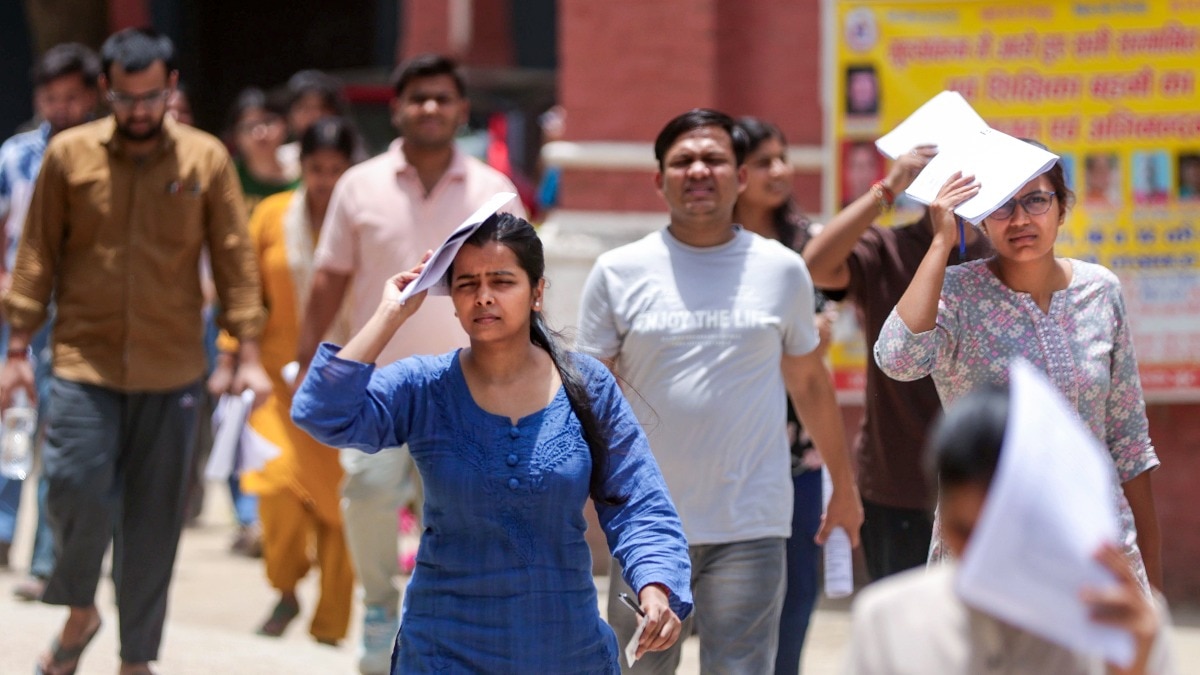
Candidates coming out of their examination centres on Sunday described the paper as one of the most confusing, exhausting and unpredictable Civil Services preliminary examinations in recent memory. Many said the General Studies (GS) Paper 1 was too tough.
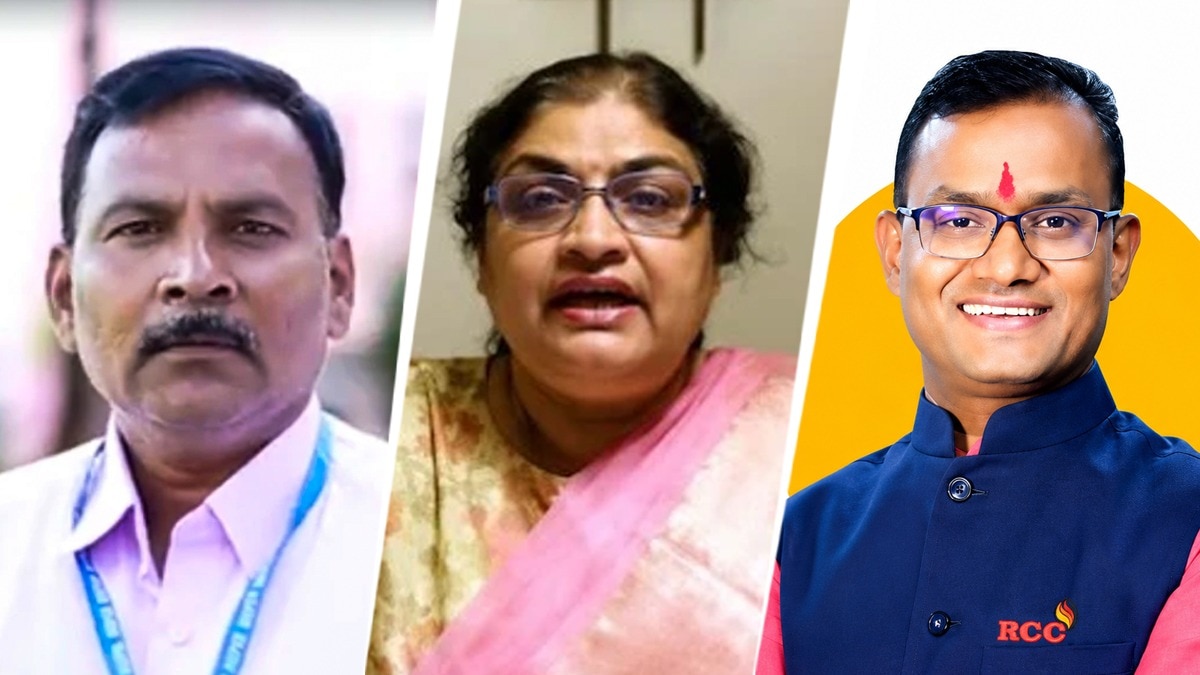
“One of the toughest UPSC Prelims ever,” Chandigarh-based UPSC mentor and Sleepy Classes founder Shekhar Dutt posted on X.
Speaking to India Today Digital, Dutt said, “The challenge was not just knowing the facts, but also understanding how they were connected to one another and applying that understanding under severe time pressure.”
Raipur-based IAS officer Awanish Sharan on X said, “UPSC Prelims 2026: The toughest ever.”
Even as toughness is subjective, Dutt told India Today Digital that “even some selected candidates (rank-holders) told him the paper was one of the toughest they had ever seen”.
Unpredictability has always been part of the UPSC’s identity. Every year, candidates enter examination halls knowing that the commission is capable of springing surprises. Yet many aspirants felt that this year’s General Studies paper pushed that unpredictability to a different level altogether. Though unpredictability has been a constant, the UPSC has outdone itself this year.
“Unprecedented Public Service Commission,” Dutt said on X, substituting the Union in UPSC with unprecedented.
While some aspirants spent their Sunday evening criticising the examination and the UPSC, others drowned their disappointment in memes. Beneath the humour, however, lay a serious concern. According to educators, the format of the Prelims paper on Sunday might have placed many otherwise well-prepared candidates at a disadvantage.
Is the UPSC demanding far more reading, processing and retention within the same two-hour window?
OVER 8 LAKH CANDIDATES APPEARED FOR UPSC PRELIMS EXAM
The UPSC conducted the Civil Services Preliminary Examination (CSE) 2026 on Sunday, May 24, for more than eight lakh registered candidates across the country.
The examination consisted of two papers. General Studies (GS) Paper 1 in the morning and the Civil Services Aptitude Test (CSAT) Paper 2 in the afternoon. Between the two papers, candidates endured several hours under intense summer heat before returning to the examination halls for the second session.
While reactions to the afternoon CSAT paper were mixed, much of the discussion centred on GS Paper 1, which was the first paper.
Several aspirants described the paper as unusually lengthy. One candidate said she could attempt only around 66 of the 100 questions despite knowing the topic well. Others reported leaving a significantly larger number of questions unattempted than in previous years because of the time consumed by reading and analysing lengthy questions.
UP-based social media activist Khurpench took a swipe, saying, “The people who set the UPSC paper would not be able to answer even 30 questions from it.”
This is also the first time that UPSC has announced it will release a provisional answer key “shortly” after the preliminary examination, allowing candidates to raise objections before the final key is published. It hasn’t been published even after over 12 hours of the conclusion of Paper 2. The copy will be updated when the key is published.
WHY UPSC PT ASPIRANTS FOUND GS PAPER SO LENGTHY?
According to Sleepy Classes founder, Shekhar Dutt, the most striking feature of the paper was not necessarily the difficulty of the questions, but the volume of text candidates were required to read.
“The main change this time was in the length of the paper. Earlier, the entire paper would be around 40 pages for 100 questions. This time it was around 56 pages, and on some pages there were only two questions,” he told India Today Digital.
“Just imagine. To solve a single MCQ, one had to read almost half a page. Earlier, one page would contain seven or eight questions. Now, a page has only two because the questions are so lengthy,” Dutt added.
The consequence, he argued, was that candidates were forced to spend more time reading the paper and less time on answering the questions.
“When questions become this long, the competition becomes much more intense. You may have studied the topic well, but you are still unable to complete the paper because you are forced to work in a rush and are not adequately trained for such a format,” Dutt told India Today Digital.
WAS UPSC PRELIMS 2026 DIFFICULT OR JUST UNPREDICTABLE?
Several CSE educators suggested that the defining characteristic of the paper was unpredictability rather than conventional difficulty.
New Delhi-based educator and Proxy Gyan founder, Vironika, sought to reassure candidates online after Paper 1 on Sunday afternoon. “If today’s paper felt difficult or unpredictable, you are not alone,” she posted on X.
Shekhar Dutt pointed out that some questions appeared to combine multiple facts, concepts and statements before asking them to establish relationships between them.
“Earlier, they would give a few facts and ask a straightforward question. This time, they took different facts, labelled them as A, B and C, and then twisted and interconnected them. They would ask you to establish links between different statements and facts,” Dutt told India Today Digital.
Delhi’s Mukherjee Nagar-based UPSC mentor Anil Narula, in a video on his X handle said, the Preliminary Examination is fundamentally a screening test and should focus on objectively assessing candidates through multiple-choice questions.
According to him, subjective evaluation is already built into the Mains stage. He criticised what he described as excessive unpredictability and case-study-like questioning, asking, “Which examination in the world makes its candidates face such unpredictability without clearly indicating it beforehand?”
DID SOME UPSC CSE PRELIMS 2026 QUESTIONS GO BEYOND THE SYLLABUS?
Another point of debate among aspirants and mentors concerned the syllabus.
Speaking to India Today Digital, 22-year-old, Ranjan Kumar said, “A question resembled topics from Ethics and Integrity, a subject formally included in the UPSC Mains examination but not in the Preliminary examination syllabus.”
For 22-year-old Ranjan Kumar, who had travelled overnight to Patna from Kishanganj district, nearly 360 km away, the shock came with the very first paper. Looking at the difficulty level of Paper I, he found himself thinking, “I wish my train had been delayed. It would have been better if I hadn’t appeared at all. At least one attempt would have been saved.” This was Kumar’s second attempt at the UPSC Civil Services Examination.
For General and EWS category candidates in UPSC CSE, the age limit is 21-32 years, with a maximum of six attempts.
The question in question has contributed to a perception among many that several questions were only loosely connected to the officially stated syllabus. “The Commission may well contend that the question was not from the Ethics syllabus, but from Indian Polity,” Kumar said.
That criticism was articulated sharply by New Delhi-based UPSC mentor Amit Kilhor, who rejected the idea that the paper should simply be labelled “tough”.
“A tough exam tests depth within a defined syllabus. What we saw here was obscurity and arbitrariness, with little anchoring to the syllabus,” he said in a video posted on X.
Kilhor also raised questions about the CSE Prelims syllabus provided by the Commission.
“Under History, it simply says ‘History of India and Indian National Movement’. Where in that description did they indicate the kind of questions they ended up asking?” he asked.
The larger concern was that parts of the question paper had drifted away from the syllabus.
Dutt said this format might have hurt even well-prepared candidates because success depended not only on knowledge but also on the ability to process unusually large volumes of information within a fixed time limit.
For aspirants like Anubhav Gupta, who is wondering whether to invest yet another year in the examination, the debates over the matter is of little consequence now. It offers little immediate comfort. Perhaps it is this uncertainty, or what Dutt called “unprecedented”, that continues to define the UPSC. The debates over the syllabus, vacancies, and preparation strategies must go on even as unpredictability remains a constant.
– Ends
Published By:
Sushim Mukul
Published On:
May 25, 2026 11:15 IST