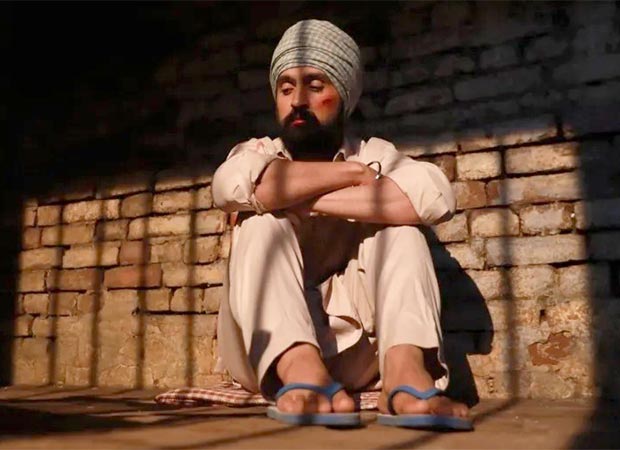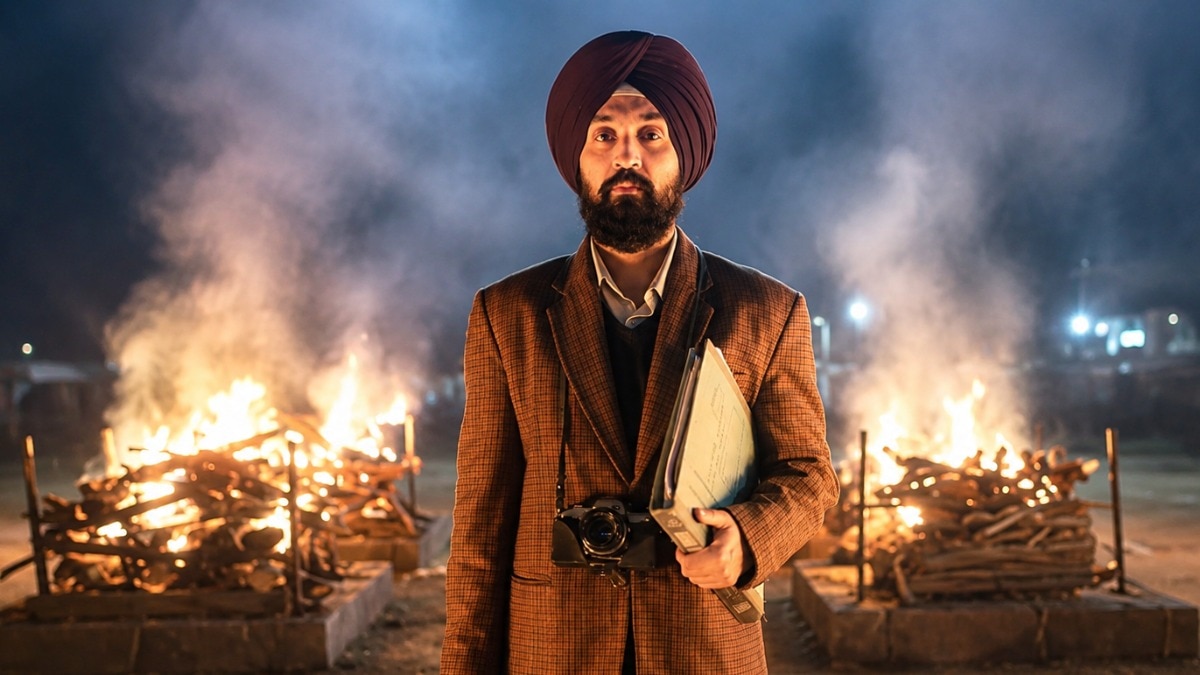
A film that took years to make and defend disappeared in just 48 hours. But, those two days on streaming platform ZEE5 might have ensured that Satluj reached more people than it otherwise would have. The Diljit Dosanjh-starrer, based on the life of human rights activist Jaswant Singh Khalra and the militancy-hit days of Punjab, appeared quietly on ZEE5 India on July 3 before vanishing from the platform within two days.
The film’s release on ZEE5 while the platform gained the broadcasting rights for the Football World Cup, its superfast withdrawal, Dosanjh’s remarks on its “downloads” being available with people, and the debate over freedom of expression, have fuelled controversies. People have raised important questions, some moral, some legal, and yet some other on intentions.
What prompted the makers of the movie to opt for an OTT premiere under a new title? Did the OTT platform know that the Censor Board had recommended 127 cuts? Didn’t it know what it was getting into? Did Dosanjh, even unintentionally, not promote piracy? Did the entire controversy benefit Satluj not financially but in terms of publicity and reach? And the biggest question — was there a motive behind the brief platforming of the uncut movie?
Here we will discuss the five biggest questions regarding Diljit Dosanjh’s Satluj and the controversy it has triggered.
1. WHY DID MAKERS RELEASE SATLUJ DESPITE BEING AWARE OF LEGAL HURDLES?
The decision to release and withdraw Satluj appears to be anything but impulsive. It was sent to the CBFC as Panjab ’95.
In fact, Satluj’s original title wasn’t even Panjab ’95. It was originally titled Ghallughara, a term that means massacre or genocide in Punjabi.
Panjab ’95 had been stuck for years after the CBFC reportedly demanded at least 127 cuts, along with changes to dialogues, visuals and even the film’s title. The producers challenged the certification process before the Bombay High Court. However, according to a BBC report, the petition against the suggested cuts was withdrawn later. It would be safe to infer that the theatrical release, in all likelihood, became impossible without accepting the extensive modifications.
Then, the makers renamed the film Satluj, and opted for a direct OTT release.
The move banked on an important distinction in India’s legal regulatory framework. While theatrical films require CBFC certification before exhibition, streaming platforms are governed by the Information Technology (Intermediary Guidelines and Digital Media Ethics Code) Rules, 2021. These rules rely on self-classification by platforms and a three-tier grievance mechanism rather than mandatory pre-certification by the CBFC.
Actor-writer Ghazal Thakur on X alleged that the makers “used a loophole” by changing Panjab ’95 to Satluj, skipping a theatrical release and opting for an OTT premiere. She further claimed the film was released “without any whiff to anyone” while the government was allegedly “kept under the impression that discussions regarding a movie named Panjab ’95 are still on”.
According to Thakur, “this is all planned and then executed”, and she questioned whether ZEE5 was “completely complicit in this planning”. She also called for the review of the government’s approach towards OTT platforms.
Director Honey Trehan has maintained that he never wanted audiences to watch a version altered beyond recognition. For the makers, an OTT release was the only remaining path to show what they considered the original film.
Whether that amounted to exploiting a regulatory gap or exercising a lawful distribution option depends on one’s reading of our digital content rules.
India Today Digital on Tuesday reached out to ZEE5 with a list of questions on Satluj. This article will be updated if and when the platform responds.
2. WHO ASKED ZEE5 TO REMOVE SATLUJ? WAS THERE ANY PUSHBACK?
As of now, these remains perhaps the biggest unanswered questions regarding the withdrawal of Satluj. ZEE5 brought in Satluj silently but promoted it big time on its home screen. This even as the OTT platform saw a surge in viewership because it is exclusively streaming the Football World Cup in India. However, it silently dropped it from its Indian catalogue within 48 hours.
The platform’s official statement merely referred to “current developments” and said it was exploring legal options to restore the film.
Government sources said they directed ZEE5 to take down the Diljit Dosanjh-starrer Satluj, citing “security concerns” and “obligations” under the Information Technology Rules, 2021. The sources added that there were apprehensions that the film could be used by Khalistani elements to recruit support for what they described as an otherwise “dwindling pro-Khalistan movement”.
“They kept sitting on the suggested cuts and eventually released the movie quietly on OTT with a new title. OTT does not come under the CBFC’s jurisdiction. When the matter came to the government’s notice, ZEE5 was asked to take it [the film] down. The direction was given due to security concerns. The OTT platform was asked to follow the obligations under intermediary guidelines. If they want to release the film in theatres and OTT, they should follow the laid-down norms,” a government official told PTI on Monday.
Now, what remains unclear is whether the platform received formal legal direction, informal communication or regulatory advice.
The government’s move came even as political parties in Punjab and the Shiromani Gurdwara Parbandhak Committee (SGPC) called for the film’s release, while Dosanjh urged people to watch it “wherever and however” they could.
Equally puzzling is why ZEE5 complied almost immediately despite standing by the film publicly. Unlike theatrical bans, where legal battles often follow, there has so far been no detailed public disclosure of the legal basis for the takedown.
The result has fuelled allegations of a “shadow ban”. That’s not because the government prohibited the film, but because audiences were left with little explanation about why the film disappeared. Interestingly, the film continues to be available for streaming outside India on the ZEE5 Global platform.
3. DID DILJIT DOSANJH END UP ENCOURAGING PIRACY?
Diljit Dosanjh’s reaction on his social media platform has become almost as controversial as the film. Soon after Satluj was taken down by ZEE5 in India, Diljit Dosanjh appeared to urge people who had managed to download the film during its brief availability to share it with others.
He argued that the film had reached people and should continue to circulate. “There was a fear that it could be removed. I think you might have downloaded the movie by now. So, now there is no fear,” Dosanjh said in an Instagram live broadcast.
“…Many people have already downloaded it. Once anything lands online, it never gets deleted,” he said.
The comment immediately triggered criticism because it appeared to encourage the sharing of copyrighted content outside authorised platforms.
A person on X, Arshdeep Singh Saini, said, “American citizen Dosanjh was encouraging Punjabi Sikh youth to download and watch Satluj,” a movie that he said, “glorified the assassination of a sitting Chief Minister and justified Khalistani extremism while portraying India as a nation violated human rights”.
“Enough is enough. I, as a Sikh citizen of India, demand a blanket ban on Diljit Dosanjh in India including his social media handles,” Saini posted on X, tagging the Union Ministry of Information and Broadcasting.
Legally, distributing copyrighted material without permission constitutes piracy, irrespective of the motivation behind it.
Meanwhile, ZEE5 said, “We are doing our bit to bring Satluj back. Please do yours. Don’t support piracy.” While Dosanjh’s comments expanded the film’s reach through Telegram channels, WhatsApp groups and file-sharing websites, both the producers and ZEE5 later urged audiences not to circulate pirated copies and instead await official restoration.
Now that’s pure irony. Dosanjh wants the film to be viewed, irrespective of the film print’s legal status. ZEE5 advises people not to support piracy.
4. DID SATLUJ MAKERS USE OTT TO BYPASS CBFC? DID THEY WANT TO RELEASE IT BY HOOK OR BY CROOK?
The Satluj episode has reopened an old debate over freedom of expression and the liberty given to OTT platforms. While India’s film certification regime is built for cinema halls, streaming platforms don’t need prior approval. Content on OTT platforms comes under regulatory purview only after it is streamed.
Under existing rules, OTT services classify their own content while remaining subject to the Information Technology Rules and government oversight after publication. That meant the makers could legally release Satluj online without first obtaining a CBFC certificate. So, in effect, the makers avoided implementing the CBFC’s requested cuts.
However, the events that followed also demonstrated that bypassing the CBFC did not necessarily shield the film from government intervention. After the film was streamed for around 48 hours, authorities invoked legal provisions concerning public order or national security to demand the film be taken down. But, as Dosanjh said, people had already downloaded it.
Will Satluj’s release and subsequent withdrawal shape the future of OTT regulation in India? Is the government limiting freedom of expression and artistic liberty with such takedowns?
5. SO, WHO REALLY GAINED FROM SATLUJ’S 48-HOUR RELEASE?
Having examined the four key questions, the most pertinent one is, who really gained from Satluj’s 48-hour release and its withdrawal? Ironically, almost everyone gained something. The filmmakers succeeded in putting their preferred version before audiences, even if only briefly. Without those two days on ZEE5, the uncut version might never have reached viewers in India.
In a way, the 48-hour platforming of Satluj legitimised a version of the movie that is out there to be downloaded. Satluj wasn’t leaked. It was streamed and then removed. So, people know there is a final version that the makers of Satluj or Panjab ’95 intended for their viewers.
To top it all, Diljit Dosanjh’s statement ensured the film remained a talking point. By urging people to watch it “wherever and however” they could, he arguably propelled many who might never have watched Satluj to seek it out.
It should also be noted that the controversy comes less than a year before the Punjab Assembly polls in February 2027. Opposition parties and Sikh organisations have found fresh grounds to attack the government over censorship and alleged suppression of Punjab’s history.
ZEE5 received publicity despite the film’s unavailability. A release that might otherwise have generated modest attention became a big controversy.
Piracy networks arguably benefited the most. Who has been the biggest casualty in all this? It’s not the one who the people think it is.
A person on X, posting under the name AD, argued that Satluj’s censorship was “the perfect example of how not to suppress content”. He said it “doesn’t bury a film. It makes it go viral overnight”. The person further jokingly added that “soon producers will be paying officials to ban their own movies for free publicity”.
The government, meanwhile, reinforced its willingness to intervene when content was perceived to carry national security implications, even in the OTT era. Ultimately, Satluj and its contents, which government sources said were “security concerns”, and could fan Khalistani sentiments, became the bigger film itself.
It is true that Satluj is no longer available for streaming in India. But its fast appearance and disappearance have spawned multiple questions. Are these questions likely to disappear anytime soon? Especially with Punjab polls around the corner. Each question is a debate in itself. Be it the government’s intervention, the makers’ decision to opt for an OTT release, ZEE5’s withdrawal, and Diljit Dosanjh’s remarks after the takedown.
– Ends
Published By:
Sushim Mukul
Published On:
Jul 8, 2026 07:00 IST