Uncontrolled bleeding is the leading cause of preventable death in trauma. It accounts for approximately 40 percent of all trauma deaths and roughly 35 percent of deaths from civilian gunshot wounds — the majority of which occur in the period before emergency medical services arrive. In those minutes, the tools currently available to bystanders and first responders are effective but imperfect: direct pressure, tourniquets for extremity wounds, and granular hemostatic agents that require technique and time to apply effectively.
The technology is in preclinical development. No products based on this research have been approved by the FDA or are available for use. But the mechanism it addresses — uncontrolled hemorrhage from wounds that are irregular, deep, or located where tourniquets cannot be applied — is real, and the preclinical results reported by the research team are promising enough to warrant attention.
Why This Matters
The specific gap the KAIST powder targets is not the scenario where direct pressure works well. It is the scenario where it does not.
Extremity wounds — arms and legs — can be managed with tourniquets, which are now widely available and taught in public Stop the Bleed training programs. The wounds that most commonly result in preventable hemorrhagic death are junctional wounds: groin, neck, and axilla (armpit), where tourniquet application is anatomically impossible. They are also wounds that are irregular — deep punctures, ragged lacerations, or gunshot channels through tissue that do not maintain contact with a flat hemostatic dressing.
Current granular hemostatic agents like QuikClot and Combat Gauze are effective but require packing the wound, maintaining sustained pressure, and a degree of technique that may not be available from a bystander with no training. A spray-on agent that works in one second without technique would fundamentally change the bystander capability for hemorrhage control.
What We Know So Far
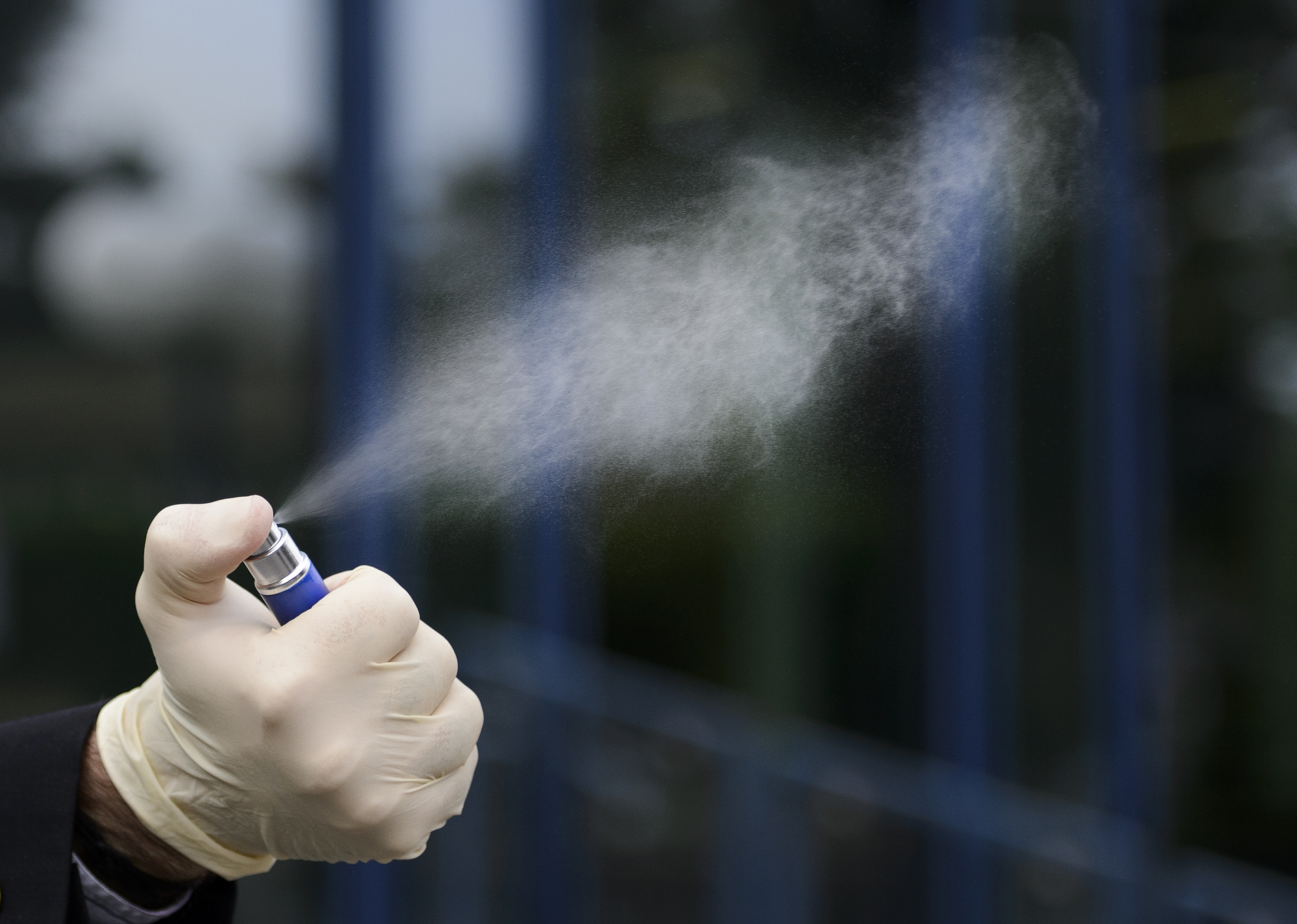
The powder is called AGCL — made from Alginate, Gellan Gum, and Chitosan, all biocompatible natural materials. When sprayed onto a wound, these materials react with calcium in blood to form a fast-acting hydrogel within approximately one second. The gel adheres to both wet and dry tissue, maintains contact under blood pressure and movement, and can absorb more than seven times its own weight in blood.
Preclinical results in animal models showed the agent stopped bleeding in approximately one second. The research team reported effective sealing of deep, irregular wounds that conventional pressure dressings had difficulty maintaining contact with. The powder also demonstrated stability under storage in conditions including heat and humidity — a limitation of current patch-type hemostatic agents.
What the Evidence Shows — and What It Does Not
MedicalDaily Evidence Check
- Research type: Preclinical — animal model studies
- Published in: Advanced Functional Materials (December 2025 / January 2026)
- Institution: KAIST (Korea Advanced Institute of Science and Technology)
- Researchers: Professor Steve Park (Materials Science), Professor Sangyong Jon (Biological Sciences), Army Major Kyusoon Park (Ph.D. candidate)
- What it found: AGCL hemostatic spray powder forms an adhesive hydrogel in approximately one second, stops bleeding in animal models including from irregular and deep wounds; absorbs 7× its weight in blood
- What it did not prove: Safety or efficacy in human patients; FDA approval has not been pursued or granted
- Clinical need it addresses: Junctional and irregular wounds where tourniquets and flat pressure dressings have limited effectiveness
- What readers should know: This technology is not available; it is in preclinical development. Current best practice for hemorrhage control remains direct pressure, tourniquets (for extremities), and Stop the Bleed training.
Who May Eventually Benefit?
If clinical trials confirm safety and efficacy, the patient populations most likely to benefit include:
- Civilian gunshot wound victims before EMS arrival
- Trauma patients with junctional wounds where tourniquets cannot be applied
- Military personnel in combat settings
- Industrial accident victims with complex wound geometries
- Patients in rural areas with extended EMS response times
What You Can Do Now
- Learn Stop the Bleed. Until any new technology is available, the most important hemorrhage control skill for bystanders is the Stop the Bleed curriculum taught in free community training sessions. Find a class at BleedingControl.org.
- Consider keeping a bleeding control kit at home, in your vehicle, and at your workplace. These kits, which include tourniquets, gauze, and gloves, are available from major retailers for $20 to $50.
- Apply direct pressure immediately to any actively bleeding wound while awaiting emergency services — sustained pressure with a clean cloth or clothing is the most important first step.
- Call 911 first for any wound with significant bleeding before attempting any first aid.
What Happens Next
KAIST researchers are expected to advance the technology toward preclinical toxicology studies and formal regulatory consultation as the next steps before any human trials could begin. The timeline from current preclinical results to potential FDA clearance would typically span multiple years. MedicalDaily will report on any FDA investigational new drug application or clinical trial announcement related to this technology.
The Bottom Line
KAIST researchers have developed AGCL, a hemostatic spray powder that stops bleeding in approximately one second in animal models by forming a strong adhesive hydrogel, including from the type of irregular, deep wounds where conventional tools often fail. The technology is preclinical and not available. But the problem it addresses — preventable hemorrhagic death from wounds that cannot be managed with current bystander tools — kills tens of thousands of people each year in the United States alone. While awaiting any future technology, the most powerful available action for any person is to take a Stop the Bleed course, carry a tourniquet, and know how to use both.