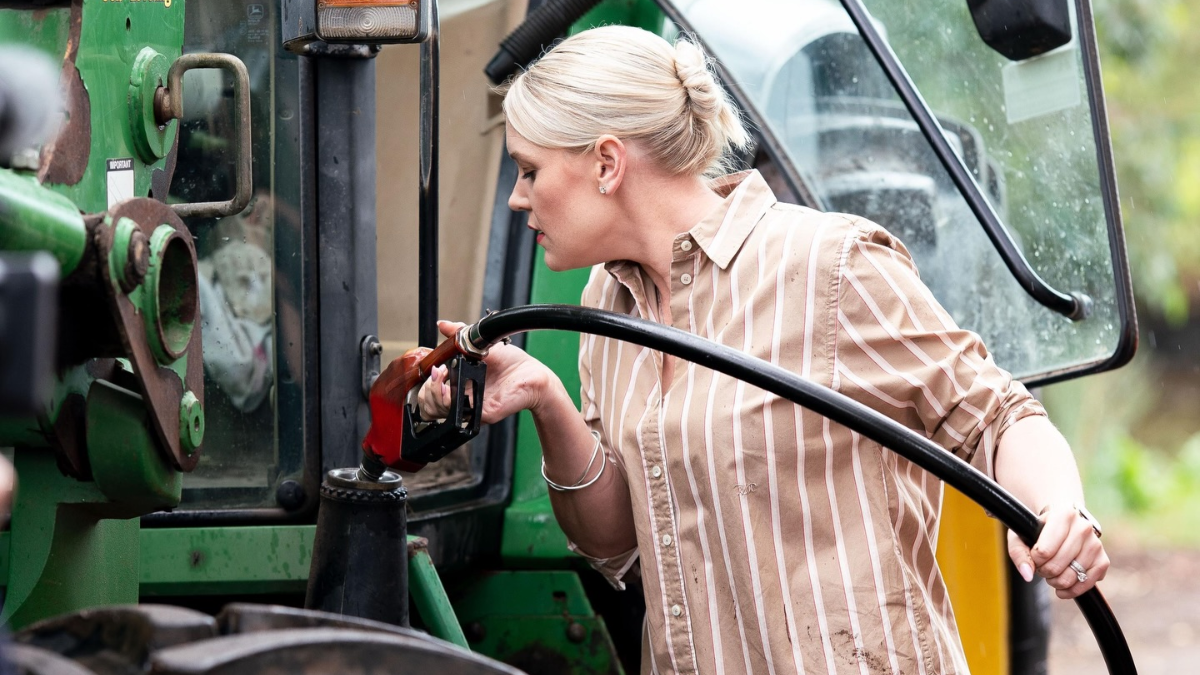
Image: Ashton Hurn/Facebook
Rising grocery prices have become the latest front in South Australia’s fuel security debate, with the SA Liberals renewing calls for a strategic diesel reserve to help protect farmers, freight operators and food supply chains from future fuel shocks.
The latest ABS Consumer Price Index data showed national CPI rose 4.6 per cent in the 12 months to March 2026, with food and non-alcoholic beverages up 3.1 per cent across the year. The Opposition has pointed to sharp annual increases across key grocery items, including lamb up 15.5 per cent, beef and veal up 11.8 per cent, coffee up 10.7 per cent, fruit up 4.3 per cent, milk up four per cent, and meals out and takeaway food up 3.9 per cent.
State Liberal Leader Ashton Hurn said the figures show the impact of fuel and fertiliser costs is now being felt well beyond the farm gate.
“Our farmers and producers do everything they can to absorb these costs, but this data is evidence that the pressure they face at the farm-gate is hitting at the checkout too,” Ms Hurn said.
“Everything from the meat on your dinner plate to your takeaway coffee is being impacted by the fuel crisis, making it vital that we support our farmers to weather this international storm.
“We need to back our farmers, because their hard work puts food on the table of every South Australian.”
The SA Liberals are calling for the State Government to adopt their State Fuel Security and Resilience Framework, which includes a strategic diesel buffer, expanded real-time fuel supply monitoring, greater protection for critical infrastructure and support for farmers to install or expand compliant on-farm diesel storage.
The framework also proposes a dedicated SA Fuel Security Coordinator, commercial storage incentives for logistics operators, manufacturers, mining companies and councils, and measures to support future fuel diversification, including research into bio-based products and oil development in the Cooper Basin.
“It makes sense to have a strategic reserve – other states are planning ahead and it would be smart for South Australia to do the same,” Ms Hurn said.
“These are the types of priority issues we want to see the government focused on, particularly as we face extraordinary economic uncertainty.”
Shadow Minister for Primary Industries and Regional Development Nicola Centofanti said diesel remains critical to South Australia’s food system, particularly for regional producers who rely on it for planting, harvesting and transport.
“Without support for primary producers, we face further shortages of critical food supplies, as farmers scale back on plantings to bring down their costs,” Dr Centofanti said.
“Diesel is essential to our economy. Without it, crops aren’t harvested, goods aren’t transported and services can’t operate.
“Farmers have long been forced to put up with piecemeal, band-aid solutions, what they need is ongoing certainty that support will be there when they need it.
“We want to see the government support our farmers in their time of need.”