The heat was unforgiving in the national capital, the trains were cancelled, and even a lemon soda came with an unexpected problem. At New Delhi Railway Station on Saturday, 23-year-old Abhinav had one more thing to worry about after finding out that he had forgotten his wallet. With internet services suspended, completing a UPI payment for the drink he had already consumed became a struggle.
“I forgot to carry my wallet and now, with no mobile internet, payments through mobile are also not possible,” Abhinav told India Today Digital.
The Varanasi-bound commuter said he realised he had left his wallet behind only after buying the drink. And just when he thought he could wait for his train, another announcement dashed his hopes. The train he was supposed to board had been cancelled, leaving him waiting at the station until after 2 pm.
For Abhinav, and hundreds of other rail commuters in the national capital, it was a total disruption.
The disruptions at New Delhi Railway Station and Hazrat Nijamuddin Railway Station were part of a wider security clampdown in the national capital amid the proposed demonstration by the Cockroach Janata Party (CJP). The CJP is protesting, seeking the resignation of Chief Election Commissioner Gyanesh Kumar over alleged issues related to the Special Intensive Revision (SIR) exercise of voter rolls.
Across the station, announcements in Hindi continued to echo through the speakers. “Varanasi ke liye jaane waali train radhh ki jayi hai (The train to Varanasi has been cancelled).” Another announcement followed, informing passengers that the Pune Express had also been cancelled.
These were not isolated announcements. More than 170 trains had been cancelled for the day, a railway official at New Delhi Railway Station, speaking on condition of anonymity, told India Today Digital.
Abhinav said he had no prior information that the train would be cancelled, and that is why he landed up at the station in New Delhi. With mobile internet suspended in the station area, it wasn’t possible for him to keep updated on the train schedule.
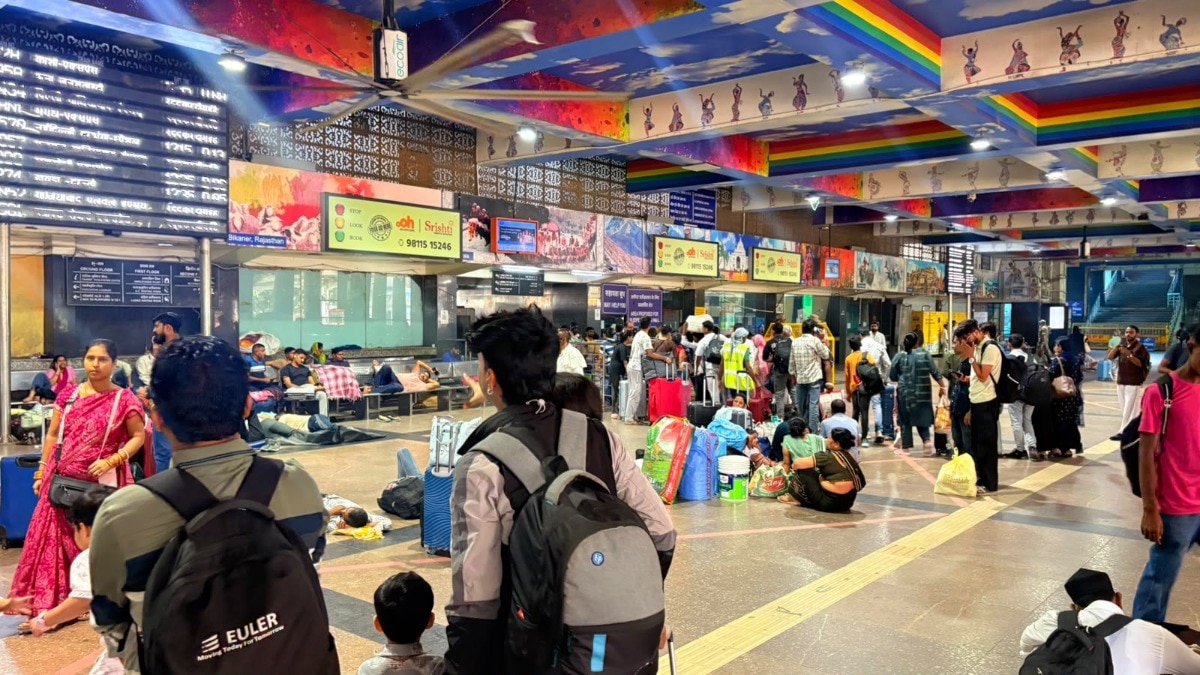
Passengers at New Delhi Railway Station face disruption as train cancellations and security curbs ahead of the CJP protest throw travel plans into disarray. (Image: Avinash Kateel)
WHEN POLITICAL PROTEST BY CJP DISRUPTED TRAIN JOURNEY
With authorities invoking Section 163 of the Bharatiya Nagarik Suraksha Sanhita (BNSS), central Delhi was placed under extensive restrictions. Barricades appeared at major intersections and across roads leading to sensitive areas, with police personnel deployed in large numbers to prevent crowds from gathering.
In New Delhi, the sight of barricades guarded by groups of police personnel became routine. Several routes were diverted or restricted on security grounds, adding to the difficulties of people trying to move through the capital.
My team member Anand Singh, who was reporting from Jantar Mantar and Connaught Place told me that there were more security personnel than civilians. Police personnel were checking ID documents of people who were trying to reach the New Delhi Railway Station and allowing them to move on only when they were convinced they were genuine travellers.
While the proposed protest was centred on a political demand by the CJP, its effects extended beyond the protest venue. Railway passengers, many of whom had no connection to the demonstration, found themselves caught between security restrictions, cancelled trains and disrupted digital payments.
At New Delhi Railway Station, the crowd remained substantial, but people working at the station said the footfall appeared lower than usual. The station is typically packed with passengers moving between platforms, waiting areas and exits. On Saturday, the restrictions and cancellations appeared to have changed the usual rhythm of the station.
Delhi Police personnel directing commuters to an alternate route following road closures on the day of a protest by the Cockroach Janta Party (CJP) on October 10. (Image: Reuters)
WHY THE RAILWAYS CANCELLED TRAINS IN NEW DELHI
The cancellations were not limited to last-minute operational changes. In a letter to railway zones on Friday (October 9), the Railway Ministry cited the likelihood of “severe road traffic congestion in the capital”.
The Railways anticipated that large crowds surrounding railway stations amid the CJP protest could make passenger movement difficult and disrupt access to stations. Consequently, all Mail and Express trains scheduled to arrive at New Delhi and Hazrat Nizamuddin railway stations between 4 am and 2 pm on Saturday were cancelled.
The decision followed disruptions a day earlier. According to the Railway Ministry, more than 5,000 passengers missed their trains on October 8 because of severe traffic jams and road blockades linked to political protests in the capital.
Passengers travelling on services such as the Dibrugarh Rajdhani, Mumbai Rajdhani and Vande Bharat trains were among those affected.
The cancellations were intended to address the anticipated congestion, but they also left passengers scrambling to revise their travel plans. For those who had arrived at the station expecting to board their scheduled trains, the disruption meant waiting, seeking information and, in some cases, making alternative arrangements at a short notice.
Cancellation of trains led to inconvenience amongst passengers. New Delhi Railway Station witnessed low footfall of commuters.(Image: Avinash Kateel)
CJP’S DIPKE AND TOP LEADERSHIP DETAINED AS SECURITY TIGHTENS
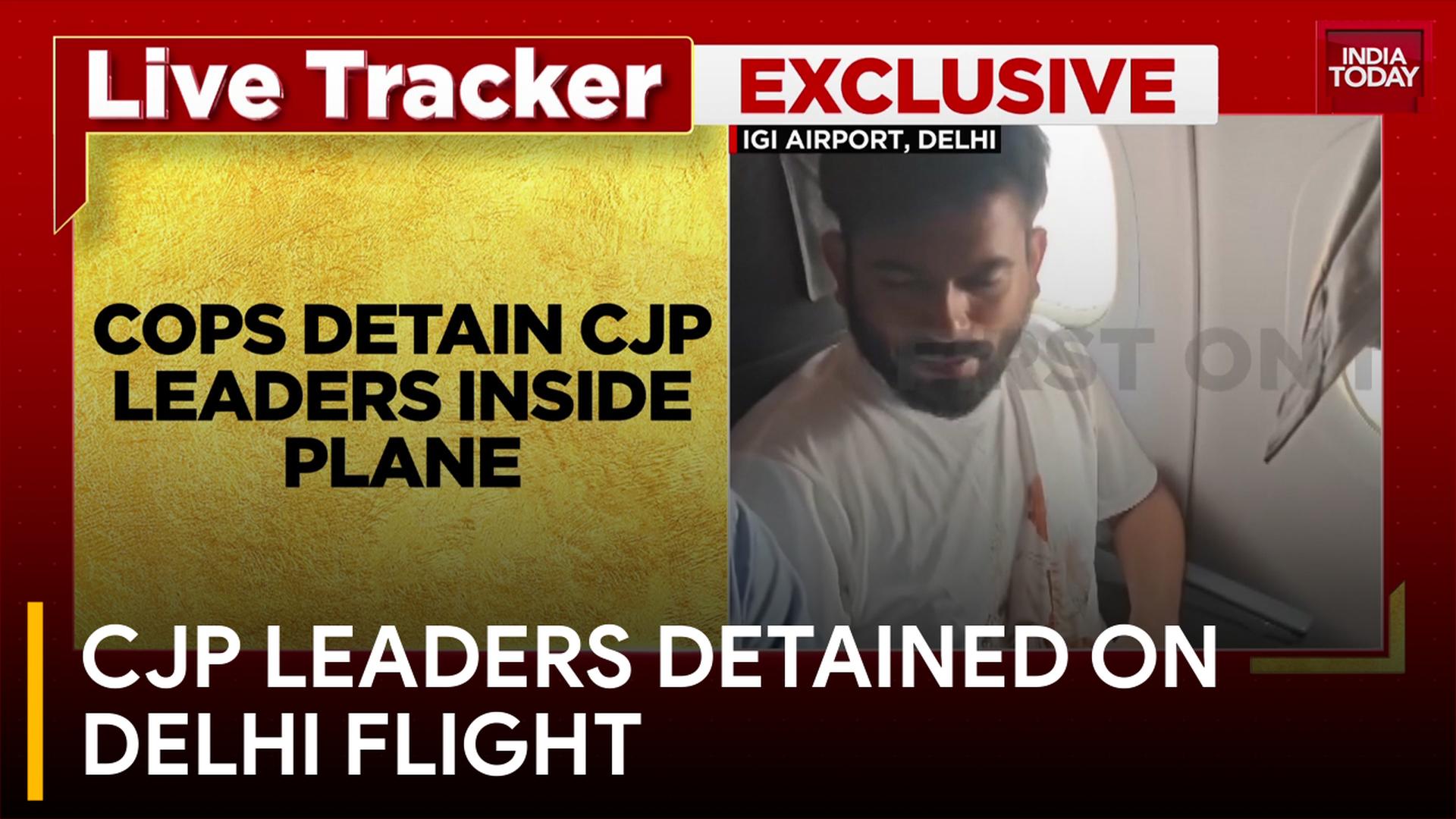
The security operation extended beyond railway stations and traffic management. CJP leaders Abhijeet Dipke, Saurav Das and Ashutosh Ranka were detained after arriving in Delhi on Saturday to attend the protest demanding Gyanesh Kumar’s resignation.
Earlier, CJP legal affairs head Ratna Singh claimed in a social media video that she had been detained outside her residence in Jangpura as police intensified their action ahead of the demonstration.
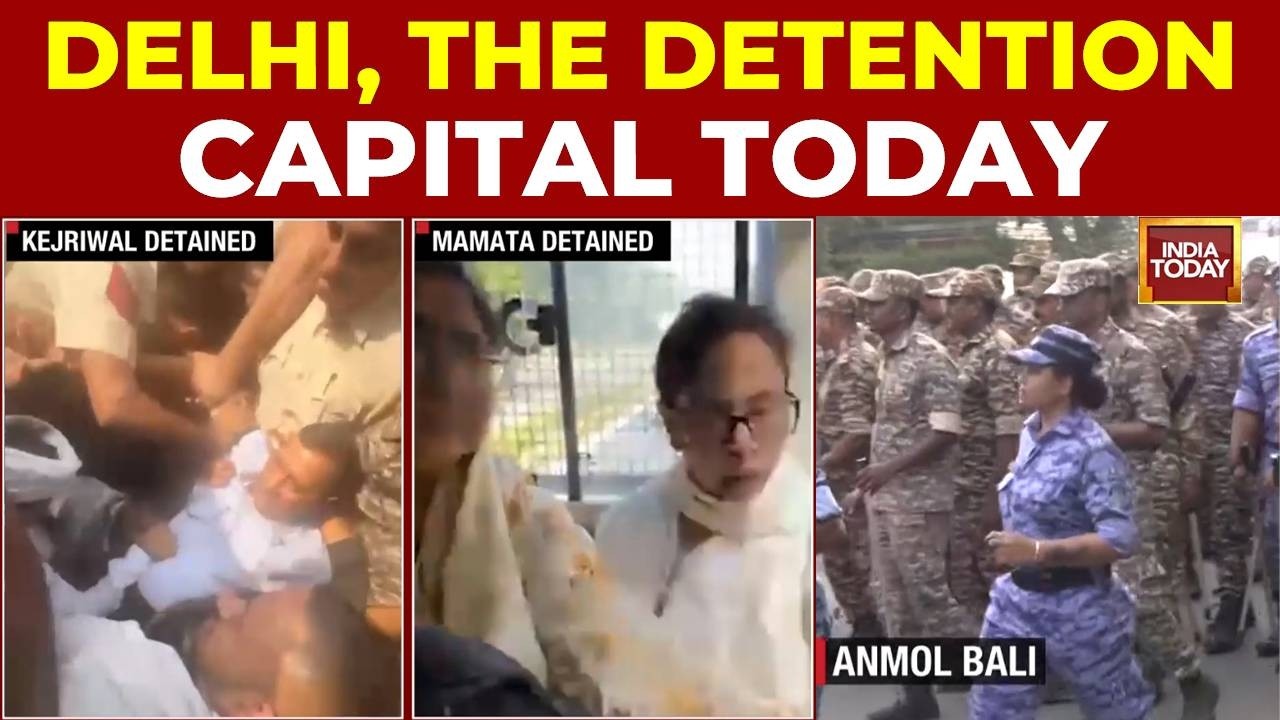
Delhi Police detained more than 500 protesters across the city before the planned agitation, according to reports.
The situation also turned tense near Akashwani Bhawan. According to PTI, officials said a group of protesters allegedly toppled barricades on Imtiaz Ali Marg around noon and pelted security personnel with stones.
Around 25 to 30 protesters reportedly jumped the barricades and threw stones at police personnel. Some protesters were detained, while two police personnel were injured in the incident, officials said.
The developments added to the security pressure across central Delhi, where restrictions and diversions affected movement on roads leading to key government buildings and public spaces.
However, most passengers at New Delhi Railway Station seemed to be unaware of the CJP leaders being detained or the stone-pelting because there was no mobile internet. More importantly, the political confrontation unfolding outside translated into a series of immediate, practical problems. Cancelled trains meant uncertainty over departure times, while road restrictions made reaching or leaving the station more difficult. The suspension of mobile internet services added another layer of inconvenience for people relying on mobile payments.
At New Delhi Railway Station, the loudspeaker announcements continued. For passengers like Abhinav, each cancellation was another reminder that a political confrontation elsewhere in the capital had become an obstacle in them getting home.
– Ends