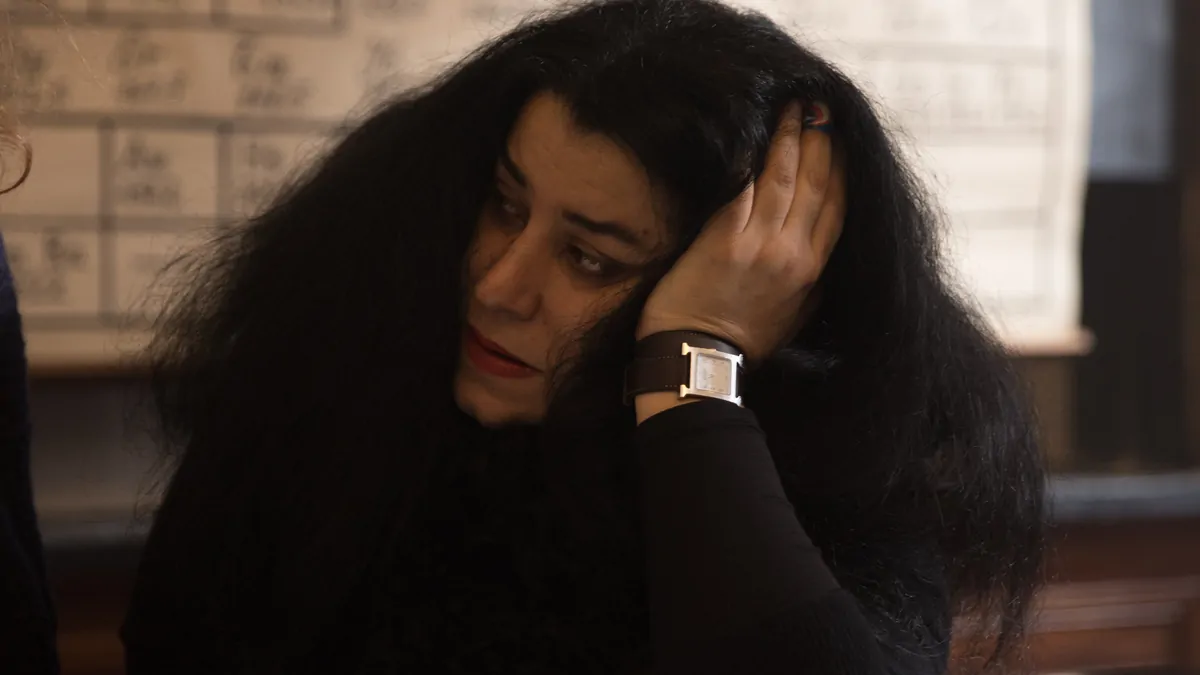
The French-Iranian author and artist Marjane Satrapi, the mind behind hit graphic novel series and Oscar-nominated film Persopolis, has died aged 56.
The French presidency revealed her passing on Thursday, NBC reported.
Satrapi was famous for her graphic novel series which depicted her childhood and early years in Tehran amid the 1979 revolution.
Sign up to The Nightly’s newsletters.
Get the first look at the digital newspaper, curated daily stories and breaking headlines delivered to your inbox.
By continuing you agree to our Terms and Privacy Policy.
She was subsequently sent to Europe by her parents where she worked on the series and became a fierce critic of Iran’s theocratic government as well as a fierce proponent for women’s rights.
The presidency of France, the nation where she arrived in the 1990s before being granted its citizenship in 2006, released a statement claiming that her passing “marks the loss of a leading figure in French culture and an artist deeply committed to freedom.
It also described Satrapi as “a great artist who transformed an Iranian childhood into a universal fable”.
Her family told the Agence France-Presse news agency that Satrapi “died of sadness” following the death of her husband Mattias Ripa, describing the Swedish producer, actor and screenwriter as “the love of her life”.
NBC reported that further details of her death were not immediately known.
Ripa passed away in April, 2025.
Published at the turn of the millenium, Persepolis went on to sell millions of copies, quickly making Satrapi one of Iran’s best-selling authors.
The motion picture adaption of her series also led her to become the first woman to be nominated for an Oscar in the animated feature film category.
Apart from the statement from the French Presidency, tributes also poured in from figures in the international arts and culture community, including Thierry Fremaux, director of the Institut Lumière, the body behind the Cannes Film Festival.
He described her as “a charming woman who embodied the joy of creation and the sorrow of exile and painful memories.”