Politics
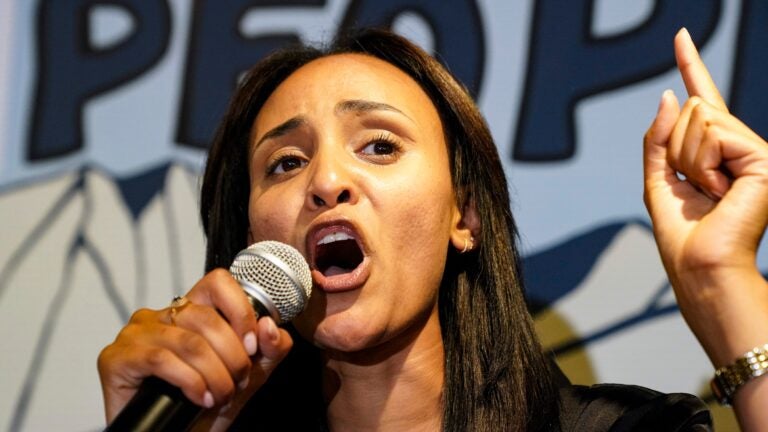
Melat Kiros, a 29-year-old democratic socialist, unseated Rep. Diana DeGette in a Democratic primary to represent the Denver area.
Melat Kiros speaks after winning the Democratic nomination during a primary election night watch party at The Broadway, Tuesday, June 30, 2026, in Denver. Rebecca Slezak / AP
updated on July 1, 2026 | 11:18 AM
2 minutes to read
Melat Kiros, a 29-year-old democratic socialist, defeated Rep. Diana DeGette on Tuesday in the Denver area, according to The Associated Press, in a show of force for the progressive wing of the Democratic Party.
The triumph by Kiros unseats a 15-term incumbent and further propels the insurgent coalition that swept a series of congressional contests last week in New York.
Kiros, an immigrant and first-time candidate, was born the year after DeGette, 68, took office. Her victory in the solidly Democratic district all but ensures her election in November.
A lawyer and doctoral student in public affairs, Kiros cast herself as a political outsider capable of addressing the affordability crisis that she argued the Democratic establishment had failed to resolve. Her opposition to U.S. support for Israel was also a cornerstone of her campaign and central to her political identity.
Her grassroots campaign overcame a fundraising advantage held by DeGette, who was helped by a last-minute influx of spending from outside groups. Early Wednesday, Kiros was leading by nearly 10 percentage points with more than 90% of votes counted.
In her campaign biography, Kiros highlighted the fact that the Manhattan law firm where she once worked had fired her in 2023 after she refused to take down a letter that raised questions about Israel’s historical legitimacy, defended pro-Palestinian campus protesters and challenged the firm’s response to activist law students.
She has faced criticism for declining to call antisemitic a fatal firebombing attack in Boulder, Colorado, on people who were marching in support of Israeli hostages.
Her victory “is part of a pattern of our democratic socialist politics resonating across the country,” said Ashik Siddique, a co-chair of the Democratic Socialists of America, of which Kiros is a member. “It just shows that Americans want politicians who are going to address the cost of living with universal policies that apply to everybody.”
If she prevails in November, as she is expected to do, Kiros will join a growing group of left-wing Democrats in Congress who want to see universal, single-payer healthcare, bans on corporate donations to political campaigns and an end to U.S. support for Israel. Her campaign was bolstered by an endorsement from Sen. Bernie Sanders of Vermont.
A longtime progressive, DeGette leads a powerful subcommittee overseeing healthcare and had said she would push to pass “Medicare for All” if Democrats retook the House. She campaigned heavily on her liberal credentials, running a TV ad that featured Rep. Alexandria Ocasio-Cortez of New York praising her support of universal healthcare. Ocasio-Cortez did not endorse anyone in the race.
But DeGette appeared to find herself increasingly at odds with her own district on issues including U.S. support for Israel and the acceptance of corporate donations to her campaign.
DeGette in the past has called herself a “strong supporter” of Israel. Her campaign got a boost from late spending by outside groups, including some with connections to pro-Israel PACs. Kiros argued that those donations made her opponent beholden to special interests rather than to her own constituents.
Denver and its suburbs are far younger and more diverse than they were when DeGette first won the seat in 1996.
This article originally appeared in The New York Times.