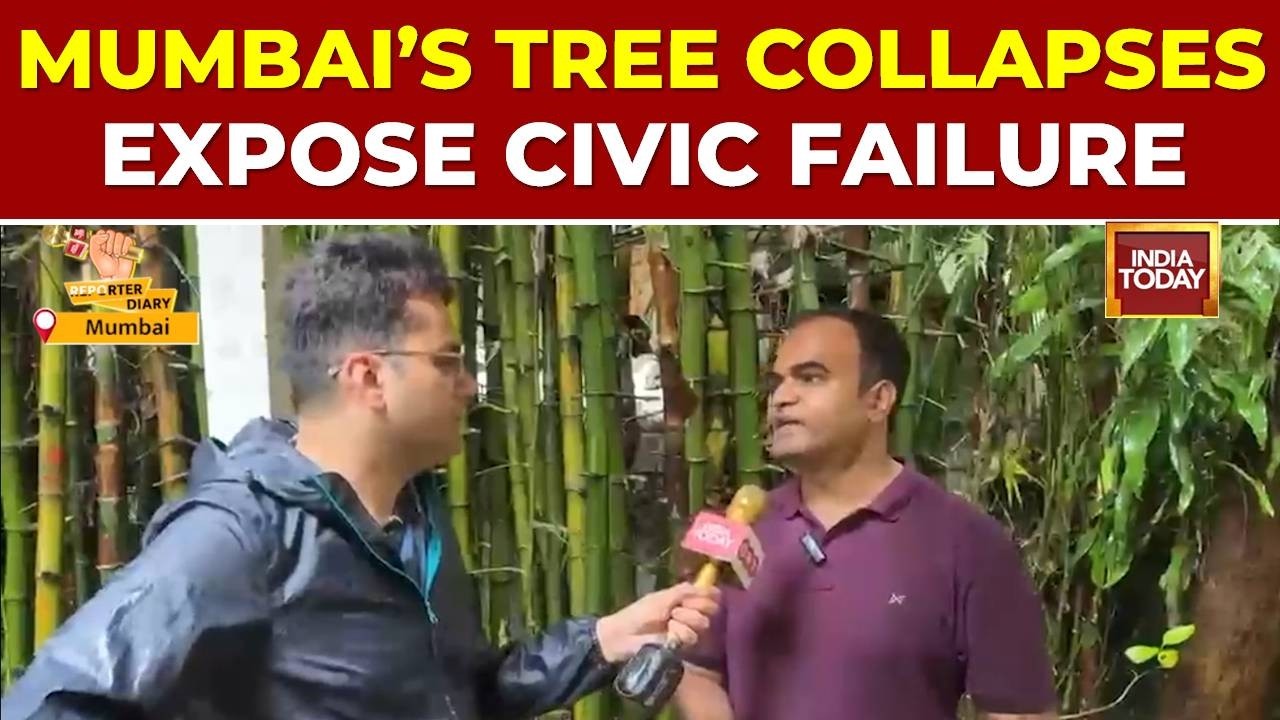
Every monsoon, the first signs of severe weather are easy to spot — towering trees swaying in strong winds. Most withstand the storm. Some don’t.
When an old tree crashed onto a school bus in Mumbai in July 2025, killing 11-year-old Vihan Srivastava, it became a heartbreaking reminder that falling trees can cost lives.
While extreme weather is often blamed, arborists and environmental experts point to another, less visible reason: concrete.
In Dehradun, that understanding has inspired a simple but effective change in the way the city cares for its trees.
Instead of sealing tree trunks in cement, authorities and citizen groups are removing the concrete around their bases, allowing roots to breathe, absorb rainwater and grow stronger.
The solution is simple, but it could change how Indian cities prepare for increasingly intense monsoons.
What lies beneath
In many Indian cities, pavements and roads are built right up to the base of roadside trees.
While the finished streets look neat, the concrete blocks the soil that trees rely on to survive.
Tree roots need oxygen, water and loose soil to stay healthy and anchor the tree firmly in the ground. When cement and paving tiles cover the soil, rainwater cannot seep in, air cannot reach the roots, and the ground gradually hardens.
Over time, even healthy-looking trees can become unstable. During heavy rain and strong winds, weakened roots may struggle to hold the tree in place, increasing the risk of it toppling over.
Giving trees room to breathe
To tackle this problem, Dehradun has adopted a practice known as deconcreting.
The initiative is being led by environmental organisation Citizens for Green Doon in collaboration with local authorities, following directions from the National Green Tribunal (NGT). Together, they identified roadside trees whose trunks had been completely encased in concrete and carefully removed the cement around their bases.
The process creates an open ring of exposed soil around each tree.
That small change makes a big difference.
Rainwater can once again soak into the ground instead of flowing off the pavement. Air reaches the roots, soil organisms begin to return, and trees can develop healthier, deeper root systems that improve their stability during storms.
The NGT has repeatedly stressed the importance of this practice.
In a recent order, it directed an applicant to submit photographs of concretised tree trunks in Dehradun to the Divisional Forest Officer and the urban local body. The tribunal reiterated that concrete should be removed within a one-metre radius of tree trunks, asking authorities to act on the representation within four weeks and submit a compliance report.
Benefits beyond preventing trees from falling
Deconcreting does far more than reduce the risk of trees being uprooted.
Open soil allows rainwater to recharge groundwater instead of flowing straight into drains. It also supports earthworms, microorganisms and other forms of life that keep the soil healthy. During summer, exposed soil remains cooler than concrete, helping reduce heat stress around trees.
Healthier roots also help mature trees continue providing the benefits cities depend on every day — shade, cleaner air, lower temperatures, and habitats for birds and insects.
That matters because mature trees cannot be replaced overnight. While planting saplings is essential, it takes decades before they provide the same ecological benefits. Protecting existing trees is often one of the most effective ways to strengthen urban green cover.
Rethinking tree care
The initiative also challenges another common pre-monsoon practice: heavy pruning.
While removing dead or dangerous branches is sometimes necessary, experts caution that excessive pruning, combined with root damage during road construction, can weaken trees further.
Instead of reacting to perceived risks, Dehradun’s approach focuses on improving a tree’s long-term health.
When cement and paving tiles cover the soil, rainwater cannot seep in, air cannot reach the roots, and the ground gradually hardens. Photograph: (Facebook/iStock)
The idea is beginning to gain attention elsewhere too. Earlier this month, the Bombay High Court directed the Brihanmumbai Municipal Corporation (BMC) to consider a survey submitted by an intervenor alleging that road concretisation work was harming the city’s trees.
As climate change brings stronger storms and more unpredictable rainfall, Indian cities are looking for practical ways to become more resilient.
Dehradun’s model offers a science-backed solution that requires neither expensive technology nor major infrastructure.
By simply giving tree roots the space to breathe again, the city is showing that protecting urban forests isn’t just about planting more trees. It’s also about caring for the mature trees that have lined our streets for decades, so they can continue protecting us for years to come.