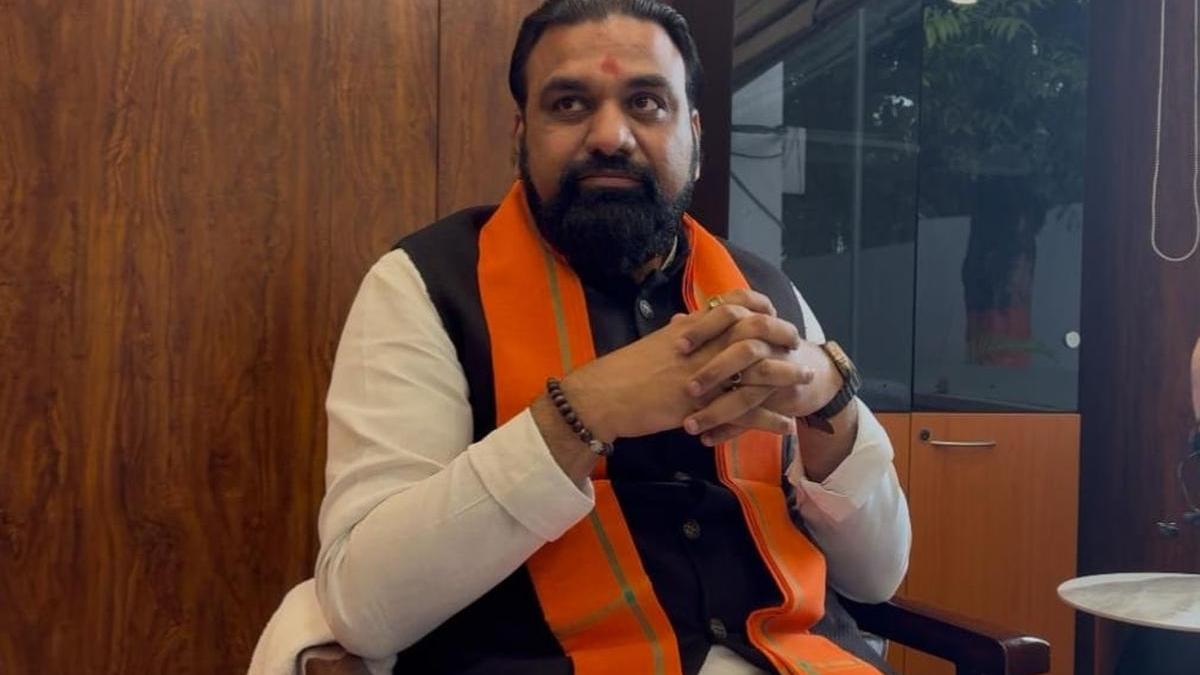
By the time many patients reach Dr Bhavin Patel’s hospital in Surat, their stories have already followed a familiar pattern.
A blurred eye was ignored for months. A cataract was dismissed as “just old age”. An infection was treated at home until it became too painful, or too advanced, to overlook.
For the retina specialist, these delays are among the hardest parts of his work. Over the years, he has seen patients lose vision to conditions that could have been treated earlier, if only care had reached them in time.
“Patients who didn’t have money would go to government hospitals in Ahmedabad,” Dr Patel says. “They would wait for months. By the time their appointment came, many had already lost their vision.”
That realisation shaped the work he has spent nearly 18 years building: taking eye care closer to Gujarat’s villages before treatable conditions turn into permanent vision loss.
When treatment comes too late
Born into a family of doctors and trained at Sankara Nethralaya, Dr Patel returned to Gujarat in 2008, troubled by how many people were losing vision to conditions that could be treated in time. In Surat, where he began practising, the shortage of retina specialists meant that early intervention was rare. Over the years, he watched patients arrive too late, their conditions having progressed beyond recovery.
Patients identified during village screenings are transported to Surat for further treatment and surgery. Photograph: (SVNM Trust)
India’s National Blindness and Visual Impairment Survey (2015–19) found that nearly 93% of blindness is avoidable, with cataract alone accounting for over two-thirds of cases. Among people aged 50 and above, the prevalence of blindness stands at 1.99%, while a much larger share live with visual impairment.
In Gujarat, too, rural and tribal regions face a higher risk because of delayed diagnosis, low awareness, and limited access to timely care. “The problem goes beyond treatment,” Dr Patel explains. “It is access, awareness, and timing.”
Taking eye care closer to the people who need it
Dr Patel realised that waiting for patients to reach hospitals would leave many behind. So, he began building a system that could reach people earlier.
Starting with his hospital, Swami Vivekananda Netra Mandir in 2008, he gradually expanded into rural outreach, launching eye camps across South Gujarat, including remote villages in Navsari, Bardoli, Vyara, and the interiors of Valsad district.
Dr Patel went on to establish the non-profit Swami Vivekananda Netra Mandir Trust in 2021, through which his team conducts nearly 40 rural camps every month.
Patients are brought from villages to Surat for treatment and dropped back home after surgery. “They cannot always come to us because access is limited, so we simply go to them,” he says.
At the heart of Dr Patel’s model is a coordinated camp-to-care system that begins in villages and continues through treatment and follow-up. Camps are organised with the help of temple networks where local volunteers mobilise residents and build trust.
A team of 8 to 10 members, including optometrists, support staff, and trained local tribal community members, conducts on-site screenings. They check vision and identify cataracts, retinal issues, and other conditions.
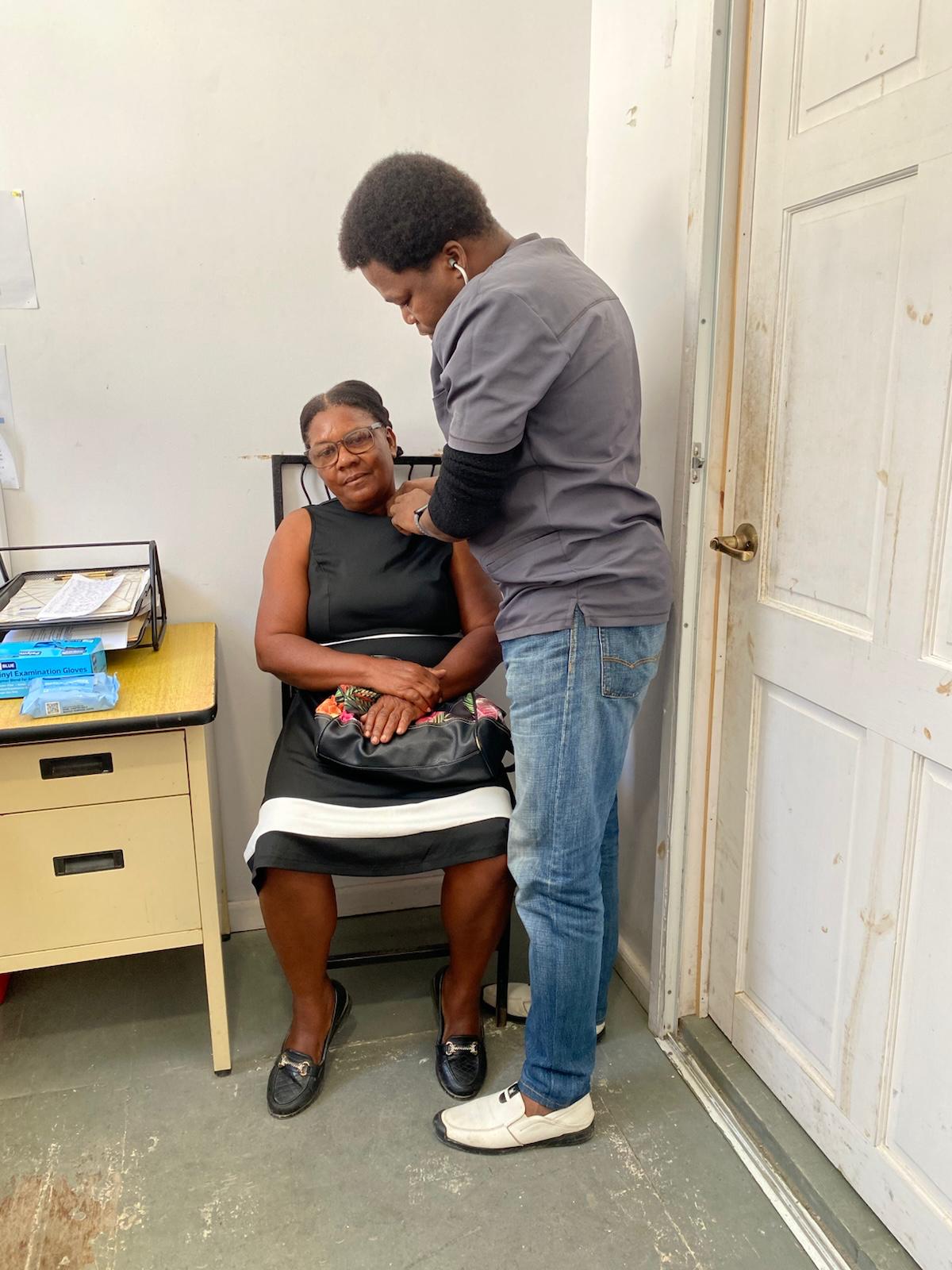
Medical staff and volunteers assist patients during free eye care outreach programme in Gujarat. Photograph: (SVNM Trust)
“They are not always doctors, but they are trained to detect problems early,” Dr Patel explains. Patients needing only basic care are given glasses on the spot, while those requiring surgery are transported to Surat in the hospital’s ‘Drishtiratha’ vehicles.
Once admitted, they receive treatment with no mandatory fee. “If they can pay, they do. If not, we still treat them,” he says. Patients stay for around four days post-surgery, during which the hospital provides meals and care, and even provides support for families back home to offset lost income.
Follow-up care is often coordinated through repeat village visits or temple gatherings, ensuring patients are monitored even after they return.
The numbers reflect the scale of the intervention. Since the trust’s inception in 2021, over 30,000 surgeries have been conducted free of cost. The team also conducts around 1,000 free cataract surgeries every month, with outreach extending to slums, jails, old-age homes, and shelter homes.
But behind these numbers are lives changed in different ways. For some, sight has returned. For others, recovery has been partial. But in each story, timely care, support, or even a second chance has meant something deeply personal.
The people behind the numbers
For 62-year-old Nathuram Makwana from Ahmedabad, the journey began after a painful loss. A construction worker, he lost vision in both eyes following a work-related injury in 2017. “I spent Rs 50,000 on one operation in a private hospital,” he recalls. “But there was no improvement. That eye became completely blind.”
When he eventually reached Dr Patel’s hospital nearly a decade later in 2025, he underwent another surgery at a reduced cost. The results were limited, but he could see faint light and shadows in one eye. The experience changed his outlook.
But the experience changed his outlook. “At least here, someone tried to help,” he says. Today, he lives at home, dependent on his family for mobility, doing small tasks with assistance. Even then, his experience has made him more alert to others around him who may be delaying treatment.
“Whenever someone in my village has an eye problem, I tell them to not delay doctor visits like I did,” he says. “I have sent 10–15 people to the doctor. Many of them got good results.”
For Dr Patel, such community connections are critical. “Awareness spreads through people like him,” he says. “That’s how we reach more patients.”
After delayed treatment and partial vision loss, Nathuram Makwana now encourages others in his village to seek timely eye care. Photograph: (SVNM Trust)
In another part of Gujarat, Paresh Ramani recalls being told his premature newborn might never see. Born at seven months and kept in an incubator for over a month, Vihana was diagnosed at six weeks with Retinopathy of Prematurity (ROP), a condition in which abnormal blood vessel growth in premature babies can lead to severe vision loss and, in some cases, retinal detachment.
“They told us her vision would keep getting worse without surgery,” her father says. “But wherever we went, either they refused or the cost was too high.”
By then, the family had already spent Rs 3–4 lakh across hospitals, with no solution in sight. It was through a chain of recommendations — a supervisor, a friend, a salon owner — that they heard of Dr Patel. When they arrived, they were expecting another rejection.
Instead, Dr Patel agreed to help.
“He told us, ‘Don’t worry about money, I will treat your daughter here,’” her father recalls. “That gave us hope.”
The surgery, performed on both eyes, was successful. Today, Vihana is one and a half years old and has normal vision. “Now she can see well,” he says, his voice filled with relief. “For us, that is everything.”
Stories like these often hinge on moments of urgency and the people who act in time. Ajay Vaghani, an embroidery business owner and volunteer who has worked closely with Dr Patel since 2024, has witnessed this first-hand.
“The parents were crying out of joy,” he says. “That is something you will never forget, and it personally makes me content with the cause we are working toward.”
When vision loss affects an entire family
But even as such successes accumulate, Dr Patel is acutely aware of what delayed intervention can do to a family. He recounts the story of a man who lost his vision and, with it, his independence. “Earlier, he was earning for the family,” he says. “After blindness, he sat in one corner of the house like a flower vase.”
The consequences extended beyond him. “His daughter had to stop her studies. His wife started stitching clothes to earn,” Dr Patel adds. “He told me he felt like a burden.”
Kapil Mulchandani, a former trainee, now trains visually impaired participants at the rehabilitation and skill development centre in Surat. Photograph: (Svnm Trust)
For Dr Patel, this loss of dignity comes up repeatedly in his work. “When one person goes blind, the whole family is affected,” he says. “It becomes a medical, social, and economic problem.”
This is why his work has expanded from treatment to rehabilitation. In 2025, he helped establish a training centre within the trust in Surat, where visually impaired people learn practical skills for independent living and employment. The programme includes computer literacy, smartphone training, and mobility support.
So far, 10 individuals have successfully completed the programme, while 12 are currently undergoing training.
Kapil Mulchandani, a 25-year-old trainer at the centre who is visually impaired himself, describes its impact. “Many people think life is over once they lose vision,” he says. “But we show them that they can still work, travel, and live independently.”
The training has already begun to change lives. One participant, Yash Ravaliya, had spent years trying to find direction after completing his degree. “For three years, I tried different things like music and MMA, but nothing worked,” he says. “I felt like no one would hire me.”
Eventually, he came across the centre online and decided to reach out. “I just called and asked, ‘Will you give me a job?’” he recalls. He was told he needed computer skills first. After joining the training programme, he began to regain confidence.
Baby Vihana’s treatment journey highlights the importance of early diagnosis and access to specialised eye care for premature infants. Photograph: (Snvm Trust)
Today, he is on a six-month paid internship at the centre, earning a stipend and assisting others. “Now I feel like I am doing something meaningful,” he says. “Once I get a job, I want to help others who are in the same situation.”
Kapil says the centre is designed to support people beyond training. “We don’t just train them and leave them,” he says. “We help with internships, placements, and building confidence.”
Community trust is central to Dr Patel’s approach. By partnering with local groups and organising camps in familiar spaces such as temples, his team has been able to reach people who may otherwise hesitate to visit a hospital. “People feel comfortable coming to these places,” he says. “That is how we bring them into the system.”
Over time, the impact of his work has drawn support from donors and organisations. Ajay recalls the case of a worker whose vision was restored. “His employer saw the change and later donated Rs 1 crore,” he says. “When people see real impact, they come forward.”
A race that continues
For Dr Patel, these contributions help expand services, increase the number of surgeries, and reach more people. Plans are also underway to strengthen corneal transplant facilities through an eye bank, which could help address another major cause of preventable blindness.
Despite the scale of what has been built, the challenge remains vast. “Preventable blindness in rural areas is still very high,” Dr Patel says. “Awareness is low, and people come late.”
And so, the race continues.
“As long as someone is going blind from something we can treat, our work is not finished,” he says.
Follow-up care and post-surgery support form a key part of the trust’s rural eye care model. Photograph: (Svnm Trust)
In Gujarat’s villages, timely eye care can decide whether a child grows up seeing her parents, whether a worker returns to earning, whether an elderly person walks without being led, and whether one family is spared the weight of preventable blindness.
That is the fight Dr Patel continues every month, through village camps, free surgeries, rehabilitation, and trust built one patient at a time.
Because when sight is saved, a family does not simply get a patient back. It gets back movement, work, dignity, and the chance to plan a future.