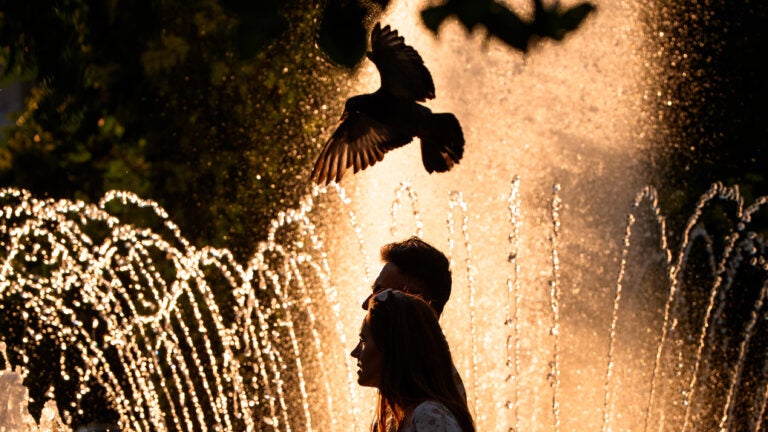
Near India Gate this April, a black kite dropped from the sky.
It was an ordinary afternoon when the call reached the rescue desk at Wildlife SOS.
When the team arrived, they found the bird lying still on the ground. Its wings were intact and its feathers unbroken, yet its body had almost given up. There were no visible injuries to explain the collapse.
The rescuers moved quickly. They placed the bird in the shade, administered fluids and monitored it closely. Within a few hours, the kite had regained enough strength to spread its wings and fly again.
Before that rescue had ended, another call came in from Chattarpur.
A juvenile black kite had collapsed. By the time rescuers reached it, the symptoms were almost identical: dehydration, heat stress and complete exhaustion.
Data from Wildlife SOS’s Rapid Response Unit shows that in April 2026 alone, the organisation recorded nearly a 40 percent increase in wildlife rescues across Delhi-NCR compared to the same month in 2025. Photograph: (Wildlife SOS)
Soon, a ring-necked parakeet was found grounded in a Delhi residential colony, unable to lift itself back into the air. In Uttar Pradesh, a juvenile flamingo was found struggling after prolonged exposure to extreme heat.
The list continued to grow over the following weeks.
Rock pigeons were picked up from railway stations, unable to move. Indian peafowl wandered into residential colonies. Mynas and owls appeared inside office buildings, embassies and institutional campuses, either too weak or too disoriented to find their way out.
Many of the birds were entering human-made structures in search of shade, water or relief, as though the city’s buildings had become their last refuge from the heat.
Experts say this changing behaviour reveals a much larger story about what rising temperatures are doing to wildlife in India’s cities.
The hardest weeks of summer began in April
For years, rescue teams across north India prepared for May and June as the most difficult months of summer. That was usually when temperatures peaked and wildlife distress calls surged.
Earlier this summer, that familiar calendar no longer held.
The crisis began in April.
Along with common urban birds such as pigeons and parakeets, rescue teams are now attending to owls, peafowl, raptors, and even migratory birds. Photograph: (Press Trust Of India)
Data from Wildlife SOS’s Rapid Response Unit shows that, in April 2026 alone, the organisation recorded nearly a 40 per cent increase in wildlife rescues across Delhi-NCR compared with the same month in 2025. These were the highest April rescue numbers in its history.
Bird rescues rose even more sharply, increasing by nearly 49 per cent. Rescues involving mammals and reptiles collectively rose by almost 24 per cent.
The trend continued through May.
Bird rescue cases across Delhi and Agra remained high. Taken together, April and May 2026 saw nearly a 21 per cent increase in bird rescues compared with the same period in 2025.
“The heat this summer has been unlike anything we’ve experienced before,” says Wasim Akram, Director of Sustainability & Special Projects at Wildlife SOS, speaking to The Better India about what his teams have witnessed over the past few months.
“Our rescue teams had been responding to more than a dozen distress calls every day, and most of those involve birds suffering from extreme heat stress and dehydration. It often feels as though the city’s wildlife is reaching a breaking point.”
The change, he says, has developed over several years.
“Over the years, we have noticed a clear shift in both the timing and severity of these cases,” he says. “What were once peak summer rescues are now beginning much earlier in the season, and the intensity of cases has increased significantly.”
That shift, Akram says, may be one of the clearest visible signs of a changing climate.
Why birds are flying into offices and homes
The locations of many of the rescues recorded earlier this summer were especially striking.
During April and May, rescuers found birds inside office lobbies, railway stations, apartment complexes, institutional campuses and embassies, rather than in trees, parks or open grounds.
Kartick Satyanarayan, Co-founder and CEO of Wildlife SOS, explains that this movement forms part of a larger urban heat pattern.
“Urban heat is driven by concrete, asphalt and glass that absorb and retain solar heat, forming ‘heat islands’ far hotter than surrounding areas,” he says.
Cities, in effect, create their own localised weather conditions.
Concrete and asphalt absorb solar radiation throughout the day and continue releasing heat after sunset. Glass surfaces reflect and trap heat. Dense buildings reduce airflow, while shrinking tree cover removes natural sources of shade and cooling.
The result is an urban heat island, where temperatures can rise between 5 and 7 degrees Celsius above those in nearby areas.
For birds, that difference can become life-threatening.
Instead of trees, parks, or open grounds, rescuers are increasingly finding birds inside office lobbies, railway stations, apartment complexes, institutional campuses, and even embassies. Photograph: (Wildlife SOS)
“Birds searching for water and shade enter dangerous urban spaces like buildings, railways and offices, where they collide with glass or get trapped,” Satyanarayan says.
These buildings are becoming emergency shelters for birds trying to escape the heat.
Yet the same structures can expose them to fresh dangers. A bird entering a building for shade may collide with a glass surface, become trapped inside or grow too disoriented and exhausted to find its way out.
What extreme heat does to a bird’s body
The progression from heat exposure to physical collapse can happen rapidly.
“Heat stress in birds causes dehydration, exhaustion and hyperthermia. In urban areas with limited water and shade, birds reach critical dehydration rapidly,” says Dr S Ilayaraja, Deputy Director of Veterinary Services at Wildlife SOS.
Birds cannot sweat to cool their bodies. They rely on panting, seeking shade and conserving energy.
When water sources dry up, trees become sparse and high temperatures continue for long periods, these limited options begin to disappear. The bird’s body gradually loses its ability to cope.
This explains why so many rescued birds display similar symptoms. Some become too weak to fly. Others grow disoriented and collide with buildings. In severe cases, their organs may begin to fail.
“Early intervention and immediate rehydration are critical to survival,” Dr Ilayaraja says.
The timing of a rescue can determine whether a bird recovers. A bird found early may regain its strength with fluids, medical care and rest. A bird that remains unseen may never receive that chance.
The parakeet whose rescue stayed with Akram
Among the dozens of rescues this summer, one case has stayed with Akram.
A resident in a south Delhi colony had noticed a parakeet collapsed on the ground and barely breathing. They immediately contacted the Wildlife SOS rescue team.
By the time the team arrived, the bird’s condition was serious.
“A resident noticed the bird collapsed on the ground, barely breathing, and immediately contacted our team. When we arrived, the bird was severely dehydrated. Its eyes had sunken, its feathers were ruffled and it could barely stand. We rushed it to our facility, administered fluids and carried out a complete medical examination. Thankfully, with timely treatment and supportive care, the bird recovered,” Akram recalls.
The resident’s decision to pay attention and make the call gave the parakeet its chance to survive.
“The parakeet case succeeded because the resident acted quickly,” he says. “But many birds don’t have that chance. They die in hidden corners before anyone finds them.”
The changing pattern of these rescues points to climate shifts. Heatwaves are arriving earlier and becoming more intense, exposing wildlife to conditions they are not adapted to withstand. Photograph: (Wildlife SOS)
The range of affected species has also widened over the years.
Alongside common urban birds such as pigeons and parakeets, rescue teams are now attending to owls, peafowl, raptors and migratory birds.
“I’ve seen black kites collapse mid-flight and crash into buildings,” Akram says. “Rock pigeons found in office lobbies, unable to leave because it’s cooler inside. In one incident, a rescued eagle was so dehydrated its organs were beginning to shut down.”
The heat is reaching birds across species, including those that have lived alongside people in cities for generations.
What rescue numbers tell us about a changing climate
Wildlife rescue data records immediate moments of distress. It can also serve as an ecological warning system.
According to Wildlife SOS, the timing and nature of these rescues reflect wider climate shifts, as heatwaves arrive earlier and grow more intense. Heatwaves are arriving earlier and becoming more intense, exposing wildlife to conditions that many species struggle to withstand.
Periods that once brought moderate temperatures are now producing the kind of physical stress previously associated with peak summer.
For birds, this creates a chain reaction.
Unlike mammals, birds do not have the same mechanisms for cooling themselves.This explains why so many birds being rescued show similar symptoms. Photograph: (Preeti Mummigatti -Via faceebook)
Water sources dry up earlier. Vegetation experiences heat stress. Insects and seeds become harder to find. Seasonal feeding cycles are disrupted.
The range of affected birds, from pigeons and parakeets to owls, raptors and migratory species, shows how widely urban heat can travel through an ecosystem.
Even species long considered well adapted to city life are reaching their physiological limits.
How cities can become safer for birds
Satyanarayan believes cities must be cooled in ways that also make them habitable for wildlife.
Expanding green cover is an important first step. Planting native trees along streets and within parks and campuses can restore shade while reducing surrounding temperatures.
Existing water sources need protection as well. Lakes, wetlands and ponds offer vital refuge during periods of extreme heat.
Smaller actions can also become lifelines. Shallow bowls of water placed in shaded areas, along with earthen pots on balconies and terraces, can help birds survive the hottest parts of the day.
Urban design must also account for wildlife. Bird-safe buildings fitted with anti-collision glass, insulated power lines and connected green corridors can reduce both heat exposure and the risk of injury.
Community action remains one of the strongest tools available, Akram says.
It may begin with a resident placing water outside, a child noticing a bird in distress or someone making a timely phone call.
The parakeet in south Delhi survived because one resident noticed that something was wrong and chose to act.
Across India’s warming cities, that moment of attention can still change the outcome for a bird fighting to survive.