Local News
The state’s twice-a-year basic service “supply rate” reset will push prices higher, though most residents now get their power elsewhere.
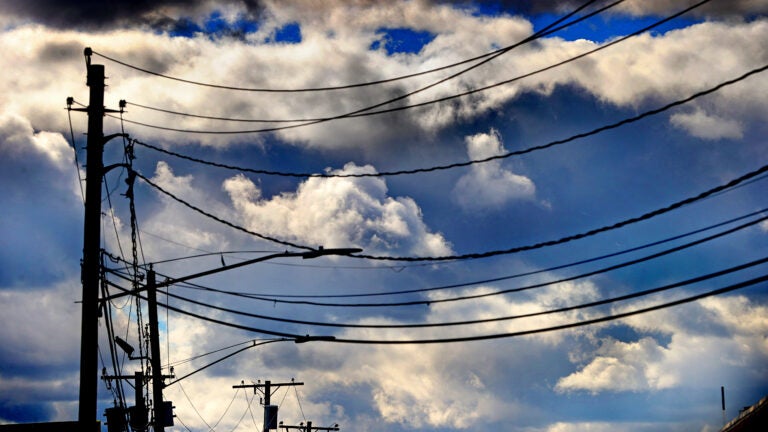
Utility poles and wires on Topeka Street near Southhampton Street in Boston. (David L Ryan/ Boston Globe Staff)
July 29, 2026 | 1:02 PM
2 minutes to read
Massachusetts electric customers are bracing for another rate increase this year. Starting Aug. 1, National Grid, Eversource, and Unitil will reset the supply price they charge for electricity, but thanks to a shift in how residents get their power, the increase will land on a shrinking share of the state’s households.
The change involves what utilities call the “supply rate,” meaning the price a utility pays to buy electricity on the open market, which it then passes along to customers at cost. Massachusetts utilities reset their rates twice a year, in February and August, per state law.
For Eversource customers on the “basic service” rate, the price will jump from 15.6 cents to 17.3 cents per kilowatt-hour. National Grid’s rate is set to rise from 15.546 cents to 16.074 cents per kilowatt-hour under its variable pricing option, while customers on the utility’s fixed option will see a steeper jump, from 15.372 cents to 17.185 cents per kWh.
On its website, Eversource attributed the higher costs largely to market conditions rather than any decision by the company. The utility said an unusually cold winter drove up demand for natural gas, and that international instability — including the ongoing conflict in Iran — further strained energy markets. Eversource said it earns no profit on the supply charge, since it simply passes through what it pays.
Despite the increase, state data suggests most Massachusetts residents shouldn’t see their bills move because of it. According to the state Department of Energy Resources, just over a quarter (26.6%) of electric customers statewide were on basic service as of March 2026 (the latest data available) — the group directly exposed to the Aug. 1 hike.
The rest have moved to one of two alternatives. About 51% of customers are enrolled in municipal aggregation, a program in which a city or town negotiates its own electricity contract with a competitive supplier on residents’ behalf. Another roughly 22% of customers have instead chosen a supplier on their own through what’s called the “competitive electric utility supply market.”
Eversource’s website says the majority of its customers now fall into one of those two categories, meaning “adjustments to the Basic Service supply rate does not impact them.”
Buying from an individual competitive supplier isn’t without downsides, however.
Since 2018, state regulators and the attorney general’s office have flagged a pattern of complaints against some suppliers and published reports on the competitive electric supply market. State officials have estimated that customers who left basic service for competitive suppliers have, in aggregated net losses, paid hundreds of millions of dollars more over the past decade than they would have paid staying on basic service.
Even with lower-cost options available, many Massachusetts residents say their electric bills are “outrageously high,” and a 2025 Suffolk University/Boston Globe poll found that more than 20% of respondents said utility bills were the single largest strain on their household budgets.
Massachusetts residents can check whether their community offers a municipal aggregation program through the state Department of Public Utilities, or compare competitive suppliers through the state’s Energy Switch website.
Summer 2026 electric bills
Annie Jonas is a Community writer at Boston.com. She was previously a local editor at Patch and a freelancer at the Financial Times.
Sign up for the Today newsletter
Get everything you need to know to start your day, delivered right to your inbox every morning.