Overview:
Haiti’s qualification for the 2026 FIFA World Cup — its first since 1974 — has sparked pride and reflection among Philadelphia’s Haitian community ahead of the team’s June 19 match against Brazil in the city. Community members describe complicated emotions tied to the milestone, citing both Haiti’s resilience amid ongoing crisis and the symbolism of playing in Philadelphia, a city tied to themes of independence and revolution.
By Jensen Toussaint
PHILADELPHIA – It was late on the night of Tuesday, Nov. 18, 2025, that Haiti accomplished an unlikely feat, clinching a spot in the 2026 FIFA World Cup tournament.
A 2-0 win over Nicaragua helped the Caribbean island win Group C and qualify for the World Cup for the first time since 1974 and just the second time ever.
A lot has happened in the more than half-century since Haiti last played in the tournament.
Haiti clinching a spot in this year’s World Cup brought out a mix of emotions among many in Philadelphia’s Haitian and Haitian American community.
From relief to pride to excitement and joy — and many emotions in between — Haiti’s entry into the World Cup served as a win and a glimmer of hope for a nation that desperately needs it.
“I didn’t think it would happen in my life,” said Josephys Dafil, a Philadelphia-based social work professional, community organizer, and founder of local nonprofit, Haitian American United for Change.
A World Cup moment decades later
For many Haitians in Philadelphia, the end of the 52-year drought without qualifying for the World Cup is far more than a typical sports story. It can also serve to push back against narrow portrayals of the Caribbean island.
When Irma Joseph Wilson first arrived in Philadelphia over 25 years ago, she remembers constantly watching news broadcasts about Haiti and the only thing she’d see being reported on was poverty.
“We are more than being poor,” she said. “We are citizens of the world.”
By being in the World Cup, Haiti and its national team have a chance to showcase the many beautiful things the nation has to offer — from the food to the music, to its culture, athletes, and much more.
Kareem Edouard, originally from Dade County, Miami, who is now a professor at Drexel University, said Haiti’s World Cup appearance is a microcosm of its history of perseverance and resourcefulness.
This is especially true because Haiti is among the only nations in the tournament not to play a single game on its home turf in five years.
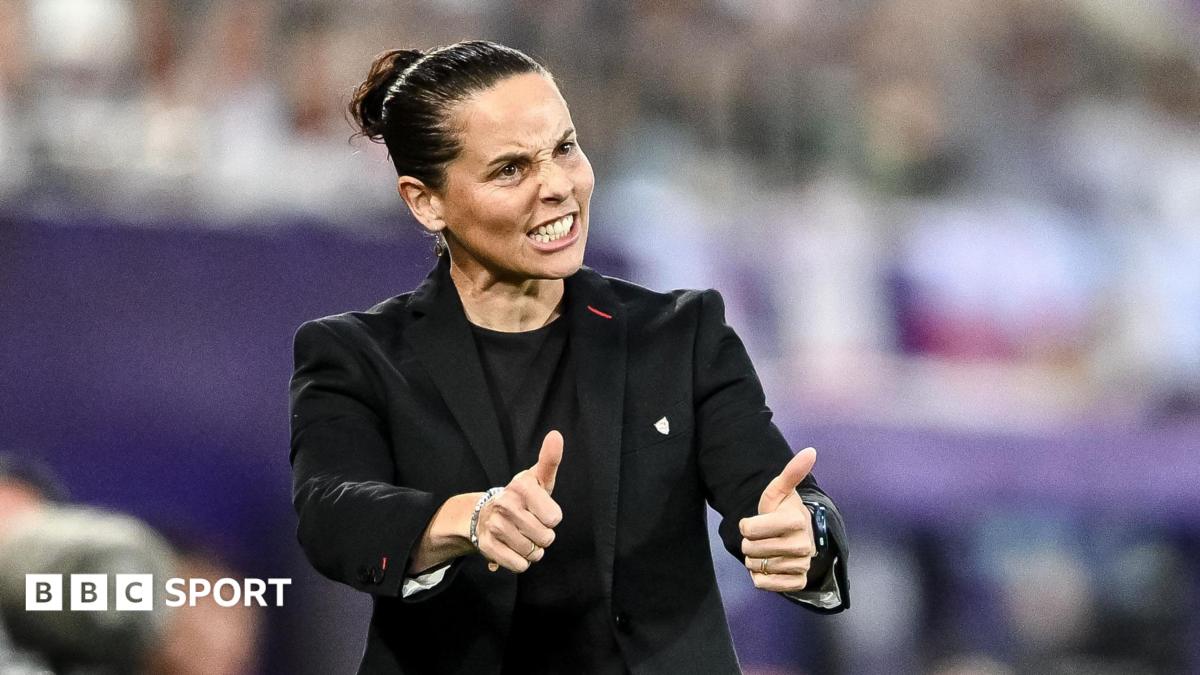
Haiti national team coach Sébastien Migné speaks with players during a training session before the June13 match with Scotland. Fredner Cayemitte / The Haitian Times
Due to its yearslong struggle with unrest and conflict, Haiti had to play all its “home” games in Curaçao, about 500 miles away from the island.
While they never had the typical home-field advantage that other nations had, Haiti’s national team showed the necessary grit needed to overcome it.
Edouard said he was also inspired by the fact that Haiti’s coach Sébastien Migné has yet to ever set foot in Haiti due to its current situation.
“So, the ability to lead this team … I see it as ‘it doesn’t matter what you are at. [It’s about] what’s in here,’” Edouard said, pointing to his heart.
Complicated emotions
Jennifer Joseph, a Haitian American pastor born and raised in Philadelphia, recalls being overwhelmed with pride and emotion when she first learned that Haiti had qualified for the World Cup.
“Seeing Haiti on the world stage is a reminder that excellence can rise from adversity,” she said.
For Wilson, while there is joy and excitement at Haiti’s participation in the competition, the emotions are more complicated than they appear on the surface, as it is not easy to completely separate them from the crisis at home.
“I was filled with pride and sadness at the same time,” Wilson said. “Because it’s proven over and over again that we always rise from the ashes.”
She said that, as she reflects on this victory, she thinks about Haitians all over the world and how this is a moment that can shine a bit of light, hope, and positivity on a country that desperately needs it.
Philadelphia as a symbolic stage
Alain Joinville, the child of Haitian immigrants who has lived in Philadelphia for over 20 years, said sports have a way of rallying people and bringing them together.
Having previously worked for Philadelphia Parks & Recreation — which organized a World Cup-style soccer tournament — he found that Philadelphia has a strong soccer culture.
“Everybody’s your brother or sister when you’re cheering for the same team. It’s the drama of it, whether you win or you lose,” he said. “Watching some of the top athletes perform is exciting.”
Philadelphia will serve as one of several host cities for the 2026 FIFA World Cup.
While Haiti’s appearance in the World Cup is a source of great pride, the opportunity to play one of its matches in Philadelphia adds another layer of significance.
“It truly feels poetic,” said Joseph. “Philadelphia represents the birth of American independence, and Haiti represents the first successful Black republic and the first nation to permanently abolish slavery through revolution.”
The fact that Haiti is also playing against Brazil on June 19 is not lost on Philadelphia’s Haitian community.
With Haiti having a national team with little history in the World Cup, many Haitian fans have rooted for other national teams in past years — Brazil being among the most popular.
“I remember as a kid seeing Haitians celebrate only one of two teams, Brazil, Argentina,” said Edouard.
To this end, an interesting dynamic will be at play in this upcoming matchup.
“For Haitians, [it] will be interesting, because a lot of Haitians are Brazil fans or fans of Brazil soccer. So it’ll be interesting to see who Haitians are rooting for,” Joinville added.
Dafils’ loyalty, however, is very clear: “Haiti only,” he said.
When the dust settles and the World Cup is over, many in Philadelphia’s Haitian community hope the team’s inclusion will set the stage to shift the narrative about Haiti and serve as a source of both national and local pride.
“I would love to see the community come together and really celebrate this and show the world that Philadelphia has Haitians, and we’re here to support them and we are proud of them,” Wilson said.