How To
John Paul, AAA Northeast’s Car Doctor, hears from a reader who is seeing online ads for gas savers.
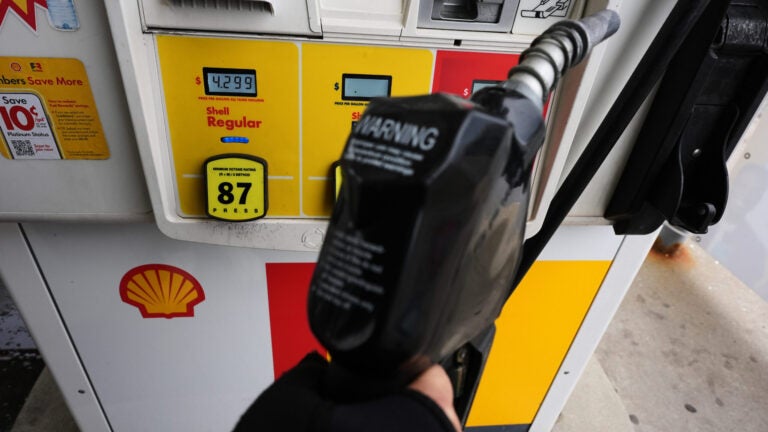
The Car Doctor hears from a reader who is seeing a lot of online ads for gasoline savers. AP Photo/Nam Y. Huh, file
Q. Gas is expensive, and I keep getting Facebook ads for gas-saving pills, air filters, magnets, and even plug-in computer system programmers. Do any of these work?
A. None that I have ever seen or tried. None of the claims can usually be verified. They all seem to be invented by some unnamed NASA scientist, and if they did work, wouldn’t a vehicle manufacturer use them? If you want to save money on fuel, go easy on the gas and brake, drive the speed limit, and combine trips to be more efficient.
Q. I own a 2022 Volkswagen Atlas with about 79,000 miles. The issue is that the driver’s-side AC vent sporadically blows very warm air instead of cold air. I took it to the dealer, and they could not find anything wrong. Do you have any ideas what might be causing this?
A. There is a left and right vent temperature sensor that provides information to the HVAC control module, which then controls the blend doors. I believe the only way to test for an issue is to catch the sensor reading when the vent is warm to see what the reading is and whether the system is commanding the temperature blend door to open or close. As a DIY diagnosis, when it does it again, change the temperature setting (go up and down) and see if the vent returns to cool air. If it does, the issue is one of the sensors, the blend door, or some sort of calibration issue. If it does not, it may be that the system is low on refrigerant. Although I have not seen this on this model, I have seen it on other makes and models where the charge is low and the air coming out of the vents has a different temperature from side to side.
Q. I am thinking of buying a 2026 BMW 330i. The base model comes with standard tires on 18-inch wheels, but very soon after choosing a few options or colors, you wind up having to get run-flat tires on 19-inch wheels. I have heard in the past that run-flat tires result in a harsher ride. Is this still true? Have they improved the way they perform? I know they are more expensive to replace but am considering them as a safety measure to avoid changing a flat at the wrong time and place.
A. Run-flat tires have improved dramatically over time, but the ride is still a bit harsher than that of conventional tires. I recently spent a week in a 550e with run-flats, and the ride was firm but not uncomfortable. In this case, I was in Florida, where the roads are generally smoother than where I am now in the Northeast. The other issue with run-flats is a somewhat shorter life and a higher replacement cost. As an example, looking online, 18-inch Michelin tires are about $225 each, while 19-inch Michelin run-flats are about $400 each. This is something to keep in mind, depending on how long you keep your cars.
Q. I have a 2002 Honda Accord with 90,000 miles and just realized it has a timing belt. When does it need changing? I called my local shop, and they gave me an estimate of $1,000 to $1,200 for the timing belt and water pump. I live in the city, and the car has plenty of dents and dings but runs well. Should I put the money into the car?
A. Even though the mileage is relatively low, the belt is far beyond its age limit and should be replaced as soon as practical. At 24 years old, if the car is structurally sound and safe, in my opinion it is a good investment. Also, there is something nice about a car that you don’t need to worry about every little door ding and bumper scuff.
Q. I have a 2013 Nissan Rogue, and it needs front brakes. How much would you charge at your shop?
A. The Car Doctor repair shop is virtual. I am here (not AI, as some readers have guessed) to help people with car problems. I like to think of my answers as a second opinion from a trusted friend or relative. The typical cost for front brakes, including rotors — which is typical given the vehicle’s age — is about $550 using factory original equipment parts. There are quality aftermarket parts available, but be cautious of very cheap parts. I recently spoke with someone who replaced their front brakes and rotors with online parts. The total cost of two rotors and a brake pad kit was $40. One month later, they were replacing the brakes again due to vibration and noise.
Q. I have seen you recommend Techron fuel system cleaner in the past. Two questions, and please don’t take any offense to the second question. Would Techron be a good product for my new Hyundai Tucson, and do companies pay you to endorse their products?
A. Techron is a good product and has been around forever. In fact, Hyundai recommends a fuel additive every 30,000 miles. Hyundai has recommended fuel additives supplied by Chevron, the maker of Techron, for certain vehicles and service schedules. I have never received payment for products I mention. From time to time, companies will send a review sample. If it is good, I will mention it. If not, I will let readers know that as well.
John Paul is AAA Northeast’s Car Doctor. He has over 40 years of experience in the automotive business and is an ASE-certified master technician. E-mail your Car Doctor question to [email protected]. Listen to the Car Doctor Podcast on Apple Podcasts or other popular podcast sites.
Sign up for the Today newsletter
Get everything you need to know to start your day, delivered right to your inbox every morning.