

Local News
The museum’s president and CEO discussed its future following layoffs, financial uncertainty, graffiti, and an incident involving a package set on fire outside one of its locations.
For more than 60 years, the Museum of African American History has preserved and shared Black history in Boston and Nantucket, including through historic sites such as the African Meeting House and Abiel Smith School on Beacon Hill.
But the institution is now facing a challenging chapter.
The museum has dealt with racist graffiti at its Nantucket location, a suspected hate crime after a package containing Juneteenth-themed puzzles was set on fire outside its Boston campus, and financial strain after seeing a nearly $500,000 federal grant pulled in 2025. It was later restored after the museum appealed the decision, but the uncertainty led to the layoffs of three director-level employees.
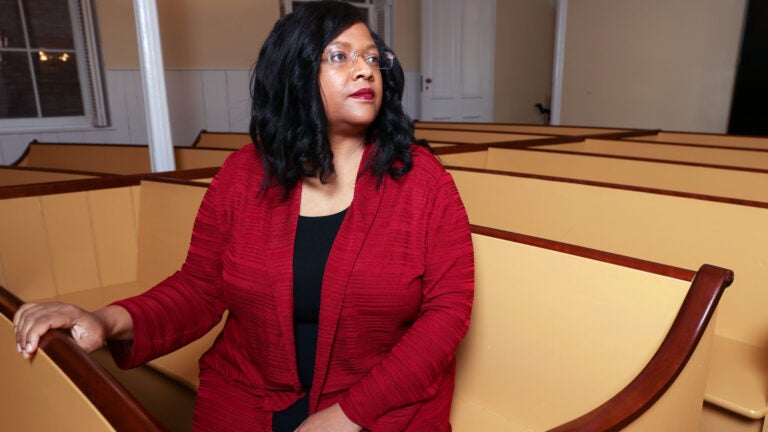
Noelle Trent, the museum’s president and CEO, took over in 2023. A Boston native and historian, Trent has spent much of her career preserving and interpreting Black history, including at the National Civil Rights Museum in Memphis and the Smithsonian’s National Museum of African American History and Culture.
Now, she is tasked with guiding the museum through this difficult period while figuring out what comes next for an institution whose mission is to make sure these stories are not lost.
Boston.com spoke with Trent about the challenges facing the museum, its financial future, and why preserving this history remains important.
The interview was edited and condensed.
Where do you see the museum going in the next two or three years, and what do you think you need to do to get there?
What do the next two to three years look like for this institution?
I think one of the things that we have done tremendously well under my tenure has been to enhance our offering for schools. We have gone from serving 800 students to somewhere closer to 3,000 through different types of programming, school field trips, and now through a curriculum that is accessible online through PBS, which is a partnership that was funded by the National Trust for Historic Preservation. So I expect to see more of that work.
My long-term goal has always been to ensure that every child in the communities we serve has at least one encounter with the museum during their K-12 education. Our more immediate goal is to ultimately serve at least 10% of the Boston public school system.
I think we’re moving very quickly to be able to reach that number, because this history is important to them. It reflects their community. I think we’ve seen that they’ve responded to that as well.
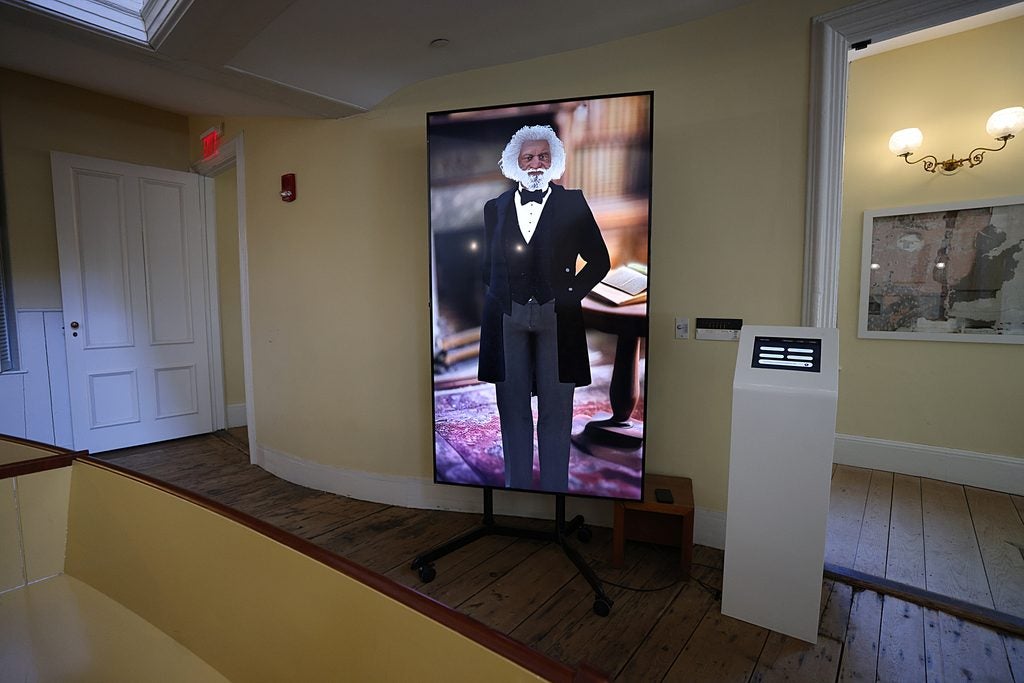
I know there are a lot of questions around AI. We look at AI as a tool, using it very conservatively to enhance our work, not to replace any of our wonderful staff or the great minds who help us do the programming we do. But I think there are opportunities for us to help present the history, provide people access to our collections in ways that they haven’t had it before (e.g., holograms).
My ultimate goal is to move from a space where people say, ‘I’ve never visited that museum,’ or ‘I’ve never heard of that museum,’ to creating greater awareness around it. I tell my team we want to go from a hidden treasure to a well-known gem.
The museum has seen some resistance in the past, with the graffiti and then the Amazon package incident. Why do you think it’s important we preserve this history here in Boston and Nantucket?
To quote the great Lonnie Bunch, “African American history is American history.” We are part of this community. People of African descent, Black people, have been part of Boston since its earliest years, and so we have a responsibility to preserve not just buildings, but the history of the community and the people who were here.
Our responsibility is not just to keep the buildings in shape, [although] that’s a huge part of the work that we do. But we also feel a deep responsibility to make sure people know who these people were, what their perspectives were, and to present them within the fullness of their humanity.
That means that there’s always more research for us to do.
We cannot deny that there is opposition to this work and that opposition isn’t new, right? We cannot deny that as we do this good work, as we move forward.
The latest incident forced us to take a necessary step back and assess where we are as an institution in terms of our security issues. What do we need to enhance? What needs to change? That remains a big priority.
If we’re going to continue to do the work, particularly in this social, economic, and historical moment, we have to be fully equipped to handle whatever comes towards us.
How do you balance preserving the museum’s historic mission with evolving to attract new audiences?
My glib answer is very carefully.
It is something that we continue to walk through. I think that’s a larger question for all historic sites throughout the country. It’s important that we preserve the buildings because we firmly believe in the power of place.
Being able to say that you are standing in a place where William Lloyd Garrison spoke, and Frederick Douglass spoke, and the abolition movement in this country was essentially born … is incredibly important.
And that has value, but if we get too restrictive with that interpretation, it’s very hard for people to see the relevance in their own lives. So what we’re constantly balancing is looking at the mission, looking at the original intent of the buildings, and looking at the interest of the modern visitor and our modern audience.
Do you think that the museum has enough financial resources to continue moving forward?
Every nonprofit will always welcome more support. That’s fundamentally who we are. What the last several months have made very clear to me is that the landscape of nonprofits in America has changed. The landscape of museums has changed, and, even more so, the landscape for Black museums has changed.
We have to consider our funding and financial needs in the context of the fluidity we find ourselves in. The ground is constantly shifting, and so we’re constantly having to make readjustments.
What I will say is, we need continued support as an independent 501(c)(3) that specifically caters to interpreting African American history.
Historically, we have not seen the same level of support as our peer museums of similar size. That’s just the inequity of the system.
We are a space that, if people value us and want to see us here year after year, quite frankly [that] means we need annual support from people — not just when we’re in crisis — because we’re important and they want to see us here.
We are in an unprecedented time. We are at a frontier for nonprofits in America. I don’t think we know solidly what the path forward is.
What are some of the biggest challenges that you’re looking at, and do you think the museum will come out stronger and better because of them?
The organization began as a vision of a woman, Sue Bailey Thurman. When she arrived in Boston in the 1950s, she was the one who put together what is known as the Black Heritage Trail, and then began to pull people together to create a museum, which was founded in 1964 and established in 1972.
I look at what lies before us. So many of the decisions I make on a daily basis are informed by the one question: how to sustain this institution so that it will be here for the next generation.
People have done tremendous work to keep this institution alive over the last 60-plus years; it is my responsibility, for however long I am in this seat, to continue that work and to set it up so that we can be here for another 100 years.
My hope is that, sooner rather than later, we are in a much stronger position to do that. That we can set up those things that ensure the organization’s sustainability.
You cannot understand Black America without understanding Blacks in New England, and more specifically Blacks in Boston and Nantucket. Without us, you have an incomplete understanding of this country and a very significant community in American history.
Is there anything you would like to add?
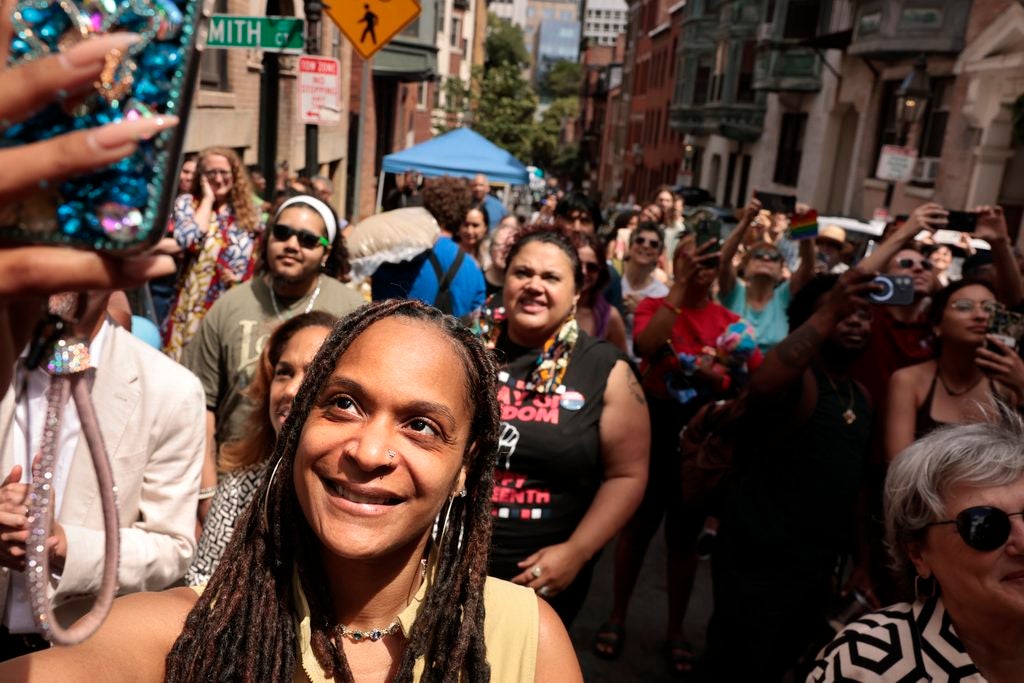
I’m cautiously optimistic about the future. I can’t predict it, but I will say this: in the midst of everything that has gone on, there are always bright spots, like our Juneteenth celebration this year.
We have our MAAH Stone Book Award [on Oct. 8], which is the largest book prize for nonfiction writing about African American history and culture in the country.
We received recognition from the World Monuments Fund this summer as one of America’s irreplaceable sites.
So it means that even in the midst of some serious challenges, there are bright spots and hope in this work, and that is ultimately what sustains me.
For information on how to donate to the museum, visit maah.org/give.

Sign up for the Today newsletter
Get everything you need to know to start your day, delivered right to your inbox every morning.
