How To
John Paul, AAA Northeast’s Car Doctor, hears from a reader who wasn’t happy with a recommendation they got from a quick lube shop.
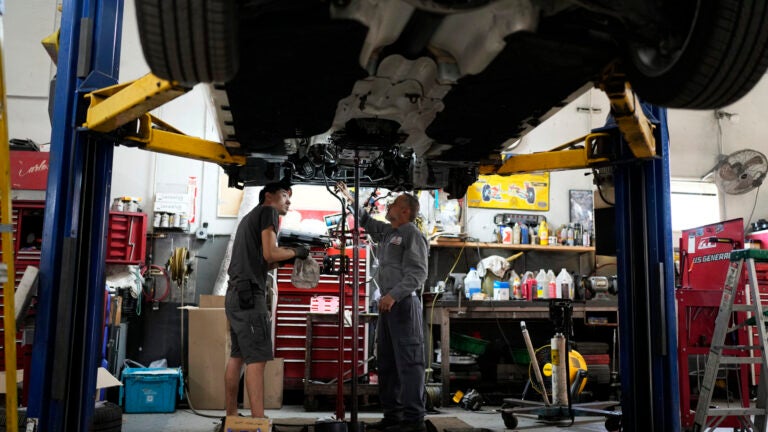
The Car Doctor hears from a reader who wasn’t happy with a recommendation they got from a quick lube shop. AP Photo/Nam Y. Huh, File
Q. I am getting older and starting to question everyone’s honesty. Recently, I was at a quick lube, and they told me I needed both cabin and engine air filters. I said no, just an oil change. When I got home, I remembered the filters were changed nine months ago. Why is it that seemingly everyone is dishonest?
A. I don’t think everyone is dishonest. At a quick lube – and in fact at some other shops – recommendations are often based on the service history in their system. Chances are the advisor looked in the computer, didn’t see any record of filter changes, and made the recommendation based on that rather than an actual inspection of the filters. As an example, a neighbor of mine went to a dentist in Florida, and while there, they recommended two crowns. When he got back up north, his local dentist said everything looked fine. The bottom line: whenever you’re in doubt, it’s always a good idea to get a second opinion.
Q. I have a 2023 Mercedes C 300 convertible with 26,500 miles. I am getting the Service B alert on the instrument cluster. When I look it up, it calls for an oil change and a brake fluid change. I’m okay with the oil change, but why a brake fluid change on a three-year-old car with 26,000 miles? It seems a bit excessive.
A. Many car manufacturers – especially European brands like Mercedes – now recommend brake fluid changes about every three years, regardless of mileage. Brake fluid is hygroscopic, which means it absorbs moisture over time. That moisture can lead to internal corrosion and affect braking performance. It’s not just moisture, though. As brake fluid ages, its protective additives break down, which can lead to copper contamination inside the brake lines. That contamination can accelerate wear and affect the performance of the anti-lock braking system (ABS). For that reason, regular brake fluid replacement is considered preventive maintenance – even if the mileage is low.
Q. I have a 2020 Subaru Forester and have a recurring issue with the rear hatch. It opens intermittently. Twice in the last few months, I’ve gone into the garage in the morning and found the rear hatch open – and the battery dead. I’ve had AAA come twice already to jump the battery. A couple of times during the day, when the car is parked outside, I’ve noticed the rear hatch open as well, but I catch it before the battery dies. Is it the key fob or the rear latch? Is this a known issue with this car?
A. Since the rear hatch is opening on its own, I’m assuming the vehicle is equipped with a power liftgate. If so, there have been some cases where switches or controls can stick, including the dash or hatch release button. If you have more than one key fob, try using the one that gets the least use. If the problem goes away, the remote may be the cause. If it still happens, the issue could be in the latch or one of the release switches. One other thing to keep in mind: Subaru electrical systems, like many modern vehicles, can behave unpredictably when the battery is getting weak. Given the dead battery incidents, it would be worth having the battery tested as part of the diagnosis.
Q. My neighbor knows I go to car shows and that I’m a fan of classics. She is asking my advice on how to sell her dad’s collection, as he has gotten ill. The cars include a 1979 Mustang Pace Car, a 1972 Cutlass convertible, a Mercury Capri convertible, an “old MG,” a BMW 3 Series, and a 2000 Indian motorcycle. She wants to find a broker or collector rather than try to sell each one on her own. I remember the Chasing Classic Cars TV show. Is there anyone in real life who does that? Can we offer her some advice?
A. That sounds like a great collection. There are brokers who specialize in buying and selling classic cars, and that may be the easiest route for her. Before doing anything, though, it would make sense to have the collection appraised so she has a good understanding of its value. As for Chasing Classic Cars, the host, Wayne Carini, is very much active in the hobby and still buys, sells, and brokers classic cars. His shop is F40 Motorsports (www.f40.com) in Portland, Conn., (860) 342-5705.
Q. I purchased a 2019 Genesis G80 with 20,000 miles from a friend. It hasn’t been driven much in the last year – about 500 miles – and was kept outside in a driveway. I would start it every couple of weeks and drive it around the block occasionally. The annual inspection showed it to be in great shape. I changed the oil and all filters. Is there anything else I should do to keep it running well and help it last longer? It will be driven about 6,000 miles a year.
A. At about six to seven years old, the key is to keep an eye on the car’s overall condition and stay ahead of age-related wear. If they haven’t already been replaced, I would plan on tires and a battery. Batteries typically last around five years, and tires, once they reach about six years old, can begin to deteriorate—even if the tread looks fine. Because the car sat for a while, take a close look at the brakes, as rust can build up on the rotors. Even with low mileage, plan on annual oil changes going forward. At upcoming services, check the cabin and engine air filters again. And while not urgent, changing the engine coolant and doing a transmission fluid drain-and-refill within the next year or so would be good preventive maintenance.
John Paul is AAA Northeast’s Car Doctor. He has over 40 years of experience in the automotive business and is an ASE-certified master technician. E-mail your Car Doctor question to [email protected]. Listen to the Car Doctor Podcast on Apple Podcasts or other popular podcast sites.
Sign up for the Today newsletter
Get everything you need to know to start your day, delivered right to your inbox every morning.