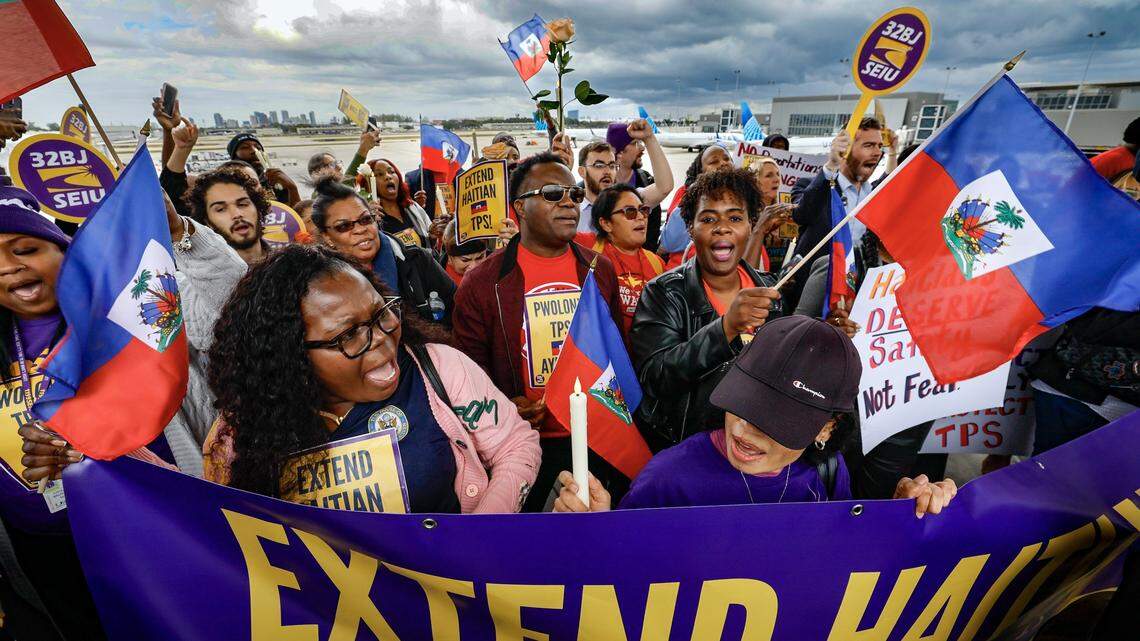
Families across South Florida are anxiously awaiting oral arguments before the U.S. Supreme Court tomorrow, Wednesday, April 29, in the high-stakes case Trump v. Miot, which could determine the future of Temporary Protected Status (TPS) for more than 350,000 Haitian nationals living in the United States.
The case, consolidated with a challenge involving Syria, centers on whether the Trump administration can legally terminate TPS for Haiti. A ruling against Haitian TPS holders could have life-changing consequences for tens of thousands of families in Miami-Dade, Broward, and Palm Beach counties.
In February 2026, a federal district court blocked the administration’s attempt to end TPS for Haiti, ruling that the decision was “arbitrary and capricious.” That stay remains in effect, meaning current TPS protections and work permits (Employment Authorization Documents) continue to be valid, with automatic extensions through at least July 1, 2026.
The Supreme Court granted expedited review of the case. While oral arguments will take place tomorrow, no immediate changes will occur. A final decision from the Court is expected by late June or early July 2026.
The Trump administration maintains that conditions in Haiti have improved enough to no longer justify TPS designation and that proper procedures were followed in attempting to end the program.
Challengers argue that the decision ignored the ongoing severe humanitarian crisis in Haiti, including widespread gang violence, the displacement of over one million people, and extreme instability. They contend the termination violates the Administrative Procedure Act.
Many Haitian TPS holders have lived legally in the United States for 15 years or more. They have built careers — particularly in healthcare, elder care, and essential services — paid taxes, and raised American-born children.
Over the past week, rallies and advocacy events have taken place in South Florida and Washington, D.C., as community leaders and Democratic lawmakers urge the Supreme Court to preserve TPS protections.
A negative ruling could result in the loss of work authorization, the start of deportation proceedings after any wind-down period, painful family separations, and significant economic disruption in communities that heavily rely on Haitian TPS holders.
For now, TPS for Haiti remains fully active. South Florida’s large Haitian community will be closely watching tomorrow’s oral arguments and the Court’s final decision this summer — a ruling that could reshape thousands of lives almost overnight.
This landmark case may also set an important precedent regarding executive authority over TPS designations for other countries facing humanitarian crises.