Chinese spies stealing trade secrets from Japanese companies. Japanese soldiers unknowingly using USB drives infected with Chinese malware. A cyberattack on Japan’s space agency by hacking groups linked to the Chinese military.
For decades, Japan has struggled to crack down on other countries taking advantage of its weak intelligence apparatus, and to respond in kind.
Now, in a major break from historical taboos linking intelligence-gathering to wartime activities, the Japanese government is looking to undertake systematic spying of its own, overhauling its intelligence capabilities for the first time since World War II, in a move current and former Western officials said their governments would welcome.
Sign up to The Nightly’s newsletters.
Get the first look at the digital newspaper, curated daily stories and breaking headlines delivered to your inbox.
By continuing you agree to our Terms and Privacy Policy.
The massive effort, which began this summer and is expected to take years, comes as President Donald Trump urges Japan and other allies to take on a greater share of their defense and security, stoking long-standing concerns in Tokyo over the extent of the country’s dependence on the United States.
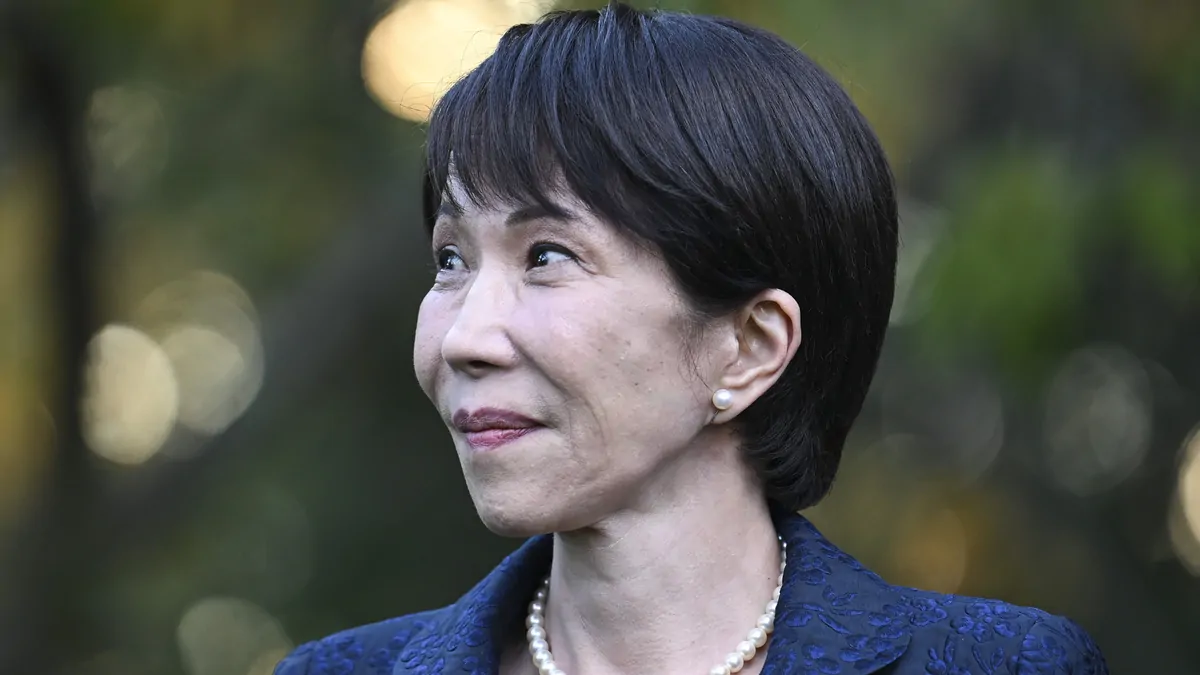
The change is a key part of ultraconservative Prime Minister Sanae Takaichi’s goal to improve Japan’s security standing in an increasingly menacing environment, with threats in the region from China, North Korea and Russia. Takaichi, a security hawk, has also increased the nation’s defense budget and lifted the ban on lethal arms exports.
The first step has been to establish a national intelligence bureau to serve as a coordinating body. It reports to the prime minister, an attempt to impose order on agencies that have at times operated like competing fiefdoms.
But Tokyo also has more operational ambitions, with plans to establish its own version of the CIA to carry out espionage missions beyond its borders, to invest in communications-intercepting capabilities and to pass laws making it easier to prosecute Chinese and other spies targeting Japan’s government and industries.
“The security environment has become the most severe and the most complex since the end of World War II,” said Keitaro Ohno, a Japanese politician who leads the ruling party’s Intelligence Strategy Headquarters. “Our objective is to make Japan a safer country.”
The issue has become even more urgent as the U.S. spy agencies and their counterparts in Europe, Australia and New Zealand seek to bolster their ability to monitor potential Chinese incursions in Taiwan and other security threats in the region.
Japan’s “intelligence capacity has not matched its strategic throw weight,” said a former U.S. official who worked on Asia policy, and who like other current and former officials interviewed for this article spoke on the condition of anonymity because they were not authorized to share sensitive details. “And that creates a drag on what the U.S. and other allies can do with [Japan].”
Some Japanese leaders have long called on Japan to forge deeper ties to the “Five Eyes” intelligence network made up of the United States, United Kingdom, Canada, Australia and New Zealand. But Japan’s capabilities have fallen short.
Current and former Western intelligence officials said that the U.S., Britain and others have been urging Japan to rebuild its intelligence capabilities for years.
In time, Japan could contribute valuable intelligence on some of the most difficult espionage targets in the region, including China and North Korea, but “they’re years away from that,” a former senior Western intelligence official said. “This is the beginning of a long process of capacity building and deep cultural change if they are to pull it off.”
Japan faces obstacles on several fronts, former Western security officials said. Its existing security agencies often seem to operate at odds with one another, with no clear central authority to set priorities and compel cooperation.
At the same time, the officials said, success of a new spy service will also depend on the appetite for risk in a country and culture with a reputation for caution.
“If you’re setting up a [human intelligence] service, financing and achieving skills and capability is one thing,” one of the former officials said. “But [human intelligence] services live or die by whether those at the top – either the service leadership or their political overseers – are prepared to take occasionally jaw-dropping risks.”
China has taken note: Chinese officials have warned Japan against its efforts, evoking its militaristic past. The U.S. State Department did not respond immediately to a request for comment on the new approach in Tokyo.
Japan does already have some limited intelligence capabilities. Its police agencies, military officials and diplomats gather and analyze sensitive information on foreign governments and activities of terrorist and extremist groups in Japan.
But there is no known comprehensive effort to gather intelligence through human sources, intercept communications, conduct surveillance or prosecute suspected espionage activities on its own soil.
“The reality is that Japan is currently unable to grasp even the fact that information has been stolen [through espionage] in most cases,” said Ken Kotani, national security and intelligence expert at Nihon University in Tokyo. “We simply don’t know.”
It’s a stark contrast to the nation’s leading security threat, China, which has a sweeping intelligence-gathering operation that taps even ordinary citizens to gather sensitive information on behalf of the government.
Over the years, Japan has taken steps to improve its security gaps, beginning in 2013, with the passage of a comprehensive secrecy protection law that set out how to handle classified information. Former prime minister Shinzo Abe, who advocated that Japan rewrite its pacifist constitution largely drafted by U.S. occupiers in the ashes of the Second World War and build a competitive military, pushed for the change.
Takaichi is following the footsteps of Abe, her political mentor. Japanese officials say increasing threats from China have been a key motivator for the country to overhaul its intelligence system.
Given the importance of supply chains of critical minerals, semiconductors and other advanced technology to Japan’s national security, there is also a need for Japan to expand its overseas intelligence activities to economic security, said Shigeru Kitamura, former national security adviser to the cabinet.
“It is a natural new venue to pursue given the other things they’re doing with their own defense,” said Emma Chanlett-Avery, director for political-security affairs at the Asia Society Policy Institute. “They’ve been so reliant on a fragmented approach to intelligence, and then relying on the United States for other piecemeal bits of intelligence.”
Although fears of militarism had stymied previous efforts to improve Japan’s intelligence, there has not been the same type of pushback to Takaichi, whose party won an overwhelming mandate earlier this year.
This has allowed Takaichi and her party to pursue once-taboo goals, like the anti-espionage law, which was last proposed four decades ago but failed after fierce resistance over concerns of privacy infringement.
“The international security environment has deteriorated significantly, with countries such as China, North Korea and Russia,” Kotani said. “The tide has turned, and now the voices calling for the necessity of such [anti-espionage] legislation have become stronger.”
Still, critics are concerned that Takaichi is going too far and risks subjecting ordinary citizens to government surveillance.
“Simply put, citizens’ freedoms would be significantly restricted,” said Tetsufumi Hirai, a human rights lawyer who leads the Japan Lawyers Association for Freedom, which opposes the creation of a new Japanese intelligence agency.
“Intelligence warfare is itself a part of war. So the problem is that Japan is stepping into that realm,” Hirai said.
Lee reported from Seoul, Tanaka from Tokyo and Miller from London. Rudy Lu in Taipei contributed to this report.