As Iran and the United States traded limited strikes this weekend, both sides made clear they were eager to avoid a return to full-scale conflict. Less clear was whether the moment was ripe for a deal to end hostilities.
Senior US and Iranian negotiators were set to travel Tuesday to Qatar, nearly two weeks into a 60-day window to negotiate a deal that would limit Iran’s nuclear program. But Iranian hard-liners have balked at making significant concessions, and Iranian Foreign Ministry spokesman Esmaeil Baqaei said that officials from his country did not plan to meet directly with Americans this week, despite President Donald Trump saying earlier that there was a meeting at Iran’s request.
Trump has made clear that his primary focus for now is on gasoline prices. He has lauded the decline in crude oil prices, which has bought him some breathing room since he signed an agreement with his Iranian counterpart earlier this month.
Sign up to The Nightly’s newsletters.
Get the first look at the digital newspaper, curated daily stories and breaking headlines delivered to your inbox.
By continuing you agree to our Terms and Privacy Policy.
At the same time, he has complained that gas prices haven’t followed suit.
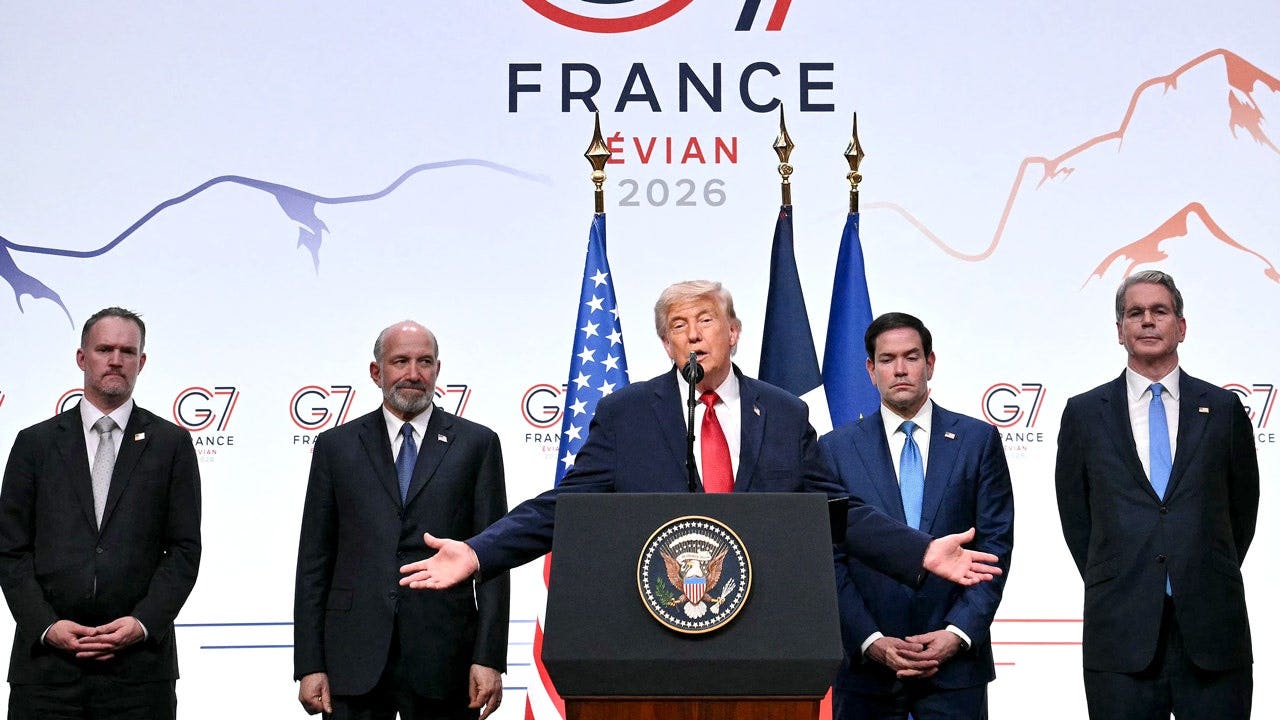
“Oil prices are way down. We hit $69 today. It was higher than that prior to the denuclearisation of Iran fight that we had, which we’re doing very well,” Trump told reporters in the Oval Office on Monday. “The meeting in Doha is going to be perhaps important, perhaps not,” he added.
Later in the day, however, he complained angrily about gasoline, which currently averages close to $3.90 per gallon.
“Gasoline Retailers must get their Prices down, IMMEDIATELY! They’re too high considering that Oil is now at $68 a Barrel, and heading south,” he wrote on his Truth Social site. “If Retailers don’t do this, big problems lie ahead! Start targeting around the $2.50 a Gallon number,” he wrote.
That goal may not be reached any time soon, energy analysts said. Although crude oil prices have dropped, refineries are not able to get all the crude they need. Moreover, some refiners shifted to making jet fuel to make up for shortages in Europe, leaving less capacity to produce diesel and gasoline ahead of the peak summer driving season.
With oil markets continuing to be top of mind, Trump has signalled he is willing to let negotiations play out. But the central challenge facing the US team remains unchanged: Though battered by weeks of intense US and Israeli airstrikes, Iran emerged from the war with new leverage and little obvious incentive to give it up.
Rather than engaging deeply on major limits to its nuclear program, Tehran has focused on the prize it won as a result of the months of conflict: its ability to control shipping traffic through Hormuz, once a theoretical threat but now a demonstrated power. It has been able to close the waterway cheaply, using mines and low-cost drones against tanker traffic that carries 20 percent of the world’s oil.
Tehran last week used a drone to attack a cargo ship that it said was using an unauthorised route. Then Washington and Iran traded strikes on targets in the region before declaring they would resume talks.
“As far as we’re concerned, we’re holding up our end of the ceasefire. Violence will be met with violence,” White House press secretary Karoline Leavitt told Fox News on Monday. She said the US side continued to seek diplomacy.
But it wasn’t clear that the conditions were in place for each side to yield a deal.
“Iranians are trying to push the envelope to maintain as much control of the strait as they possibly can,” said Suzanne Maloney, an expert on US-Iran relations at the Brookings Institution.
“But neither side is escalating in a way that would make it impossible to sustain the diplomacy. There’s a clear preference on both sides to continue the diplomacy,” she said. “I think that will be true for the administration almost in perpetuity. There’s no pressure on either side, I think, at this point for escalation or a return to the full war.”
With Iranian hard-liners signalling little willingness to eliminate their stockpile of highly enriched uranium or accept other major US demands, many diplomats and analysts were sceptical a deal could be reached within the 60-day window – or anytime soon.
And Iran has shown that it can more easily close the strait than the US military can keep it open, according to diplomats watching the dynamic.
Even as the risk of attempting to move oil through the strait remained high, prices for crude are not surging to the levels they hit earlier in the war. They remain relatively flat at roughly $73 a barrel – well below the wartime peak of about $120.
Traders remain confident that some peace framework will hold. Even with Iran continuing to attack ships, crude is moving through the strait. Shipping companies are trying to move dozens of vessels that have been stranded in the area since the war began at the end of February, helping keep prices in check.
Experts say traders are reluctant to bet on prices going up while the White House continually says a resolution to the war is around the corner. They also remember how markets overestimated the lasting impact of Russia’s invasion of Ukraine. Prices eventually collapsed as countries found alternative supplies and shortages proved less severe than expected.
The same has been playing out in this conflict. China, a major importer of oil from the Middle East, leaned on its immense reserves and alternative sources of energy to cut those imports dramatically, relieving pressure on global markets. Reserves were also tapped around the globe, including big drawdowns from the United States Strategic Petroleum reserve. Exports of oil from the US also rose substantially, pushing prices up domestically, but helping make up the shortfall abroad.
“After Russia invaded Ukraine, crude prices remained high for four months,” said Bob McNally, who was an energy adviser in the George W. Bush administration and founded the research firm Rapidan Energy Group. “The market assumed the worst. When data came out in 2022 showing we did not lose as much supply as anticipated, prices collapsed.”
“With Iran, the market assumed the worst for the first few weeks,” McNally said. “After a ceasefire it then decided there is nothing going on here and spent most of the wartime shrugging off the war.”
But McNally said the relatively stable prices for oil futures at the moment mask a major challenge in energy markets: As Trump has complained, refined gasoline and diesel remain stubbornly high. Those prices better reflect current conditions than oil futures, which are based on expectations months ahead.
Refineries and other energy infrastructure damaged during the war have not been fully repaired, and the risk of moving gasoline and diesel through the Strait of Hormuz remains high. Inventories have dwindled, leading energy executives to warn that prices would surge again to as much as $150 per barrel or more if the strait were not reopened.
Analysts warn those underlying problems have not been solved. Production has not resumed to anything close to prewar levels in the Gulf states. Most of the oil moving through the strait is the product that was stranded when Iran closed it. Shipping companies remain reluctant to send new tankers in, and producers are anxious about ramping back up production.
“If the transits through the strait are just emptying the oil that was trapped there, that is not spiking the ball in the end zone,” McNally said. “Spiking ball in end zone is when producers restart their fields and get production going.”
Tommy Inglesby, head of Americas Oil, Gas and Power at the consulting firm Oliver Wyman, said the outlook for oil prices is hardly settled.
“We are still in the crisis right now,” he said. “We are in a new world where it feels like disruption in the Middle East is not a one and done.”
© 2026 , The Washington Post