Source: Wikipedia
Philadelphia holds a central location in the history of American medicine. The city was home to the first medical school, the first hospital, and the first medical library in the United States. During the eighteenth and nineteenth centuries, these institutions established the foundation for modern clinical practice. However, this same system systematically excluded Blacks from formal medical education and professional hospital privileges. Medical universities restricted admissions. Mainstream hospitals largely refused to hire Black doctors or admit Black patients to equal wards.
This exclusion led to the creation of an independent medical infrastructure in Philadelphia. Black physicians and community leaders responded to these barriers by establishing their own hospitals, training programs, and clinical practices. This parallel system provided essential care to a growing population and trained generations of medical professionals. The history of these doctors provides essential context for understanding how marginalized communities navigate public health systems. It is a factual record of institution building that addresses ongoing disparities in the medical field today.
Philadelphia Medical Gatekeepers and the Black Doctors Who Broke Through
The history of Black medical practitioners in Philadelphia began long before formal university degrees became the standard for practicing medicine. During the 1793 Yellow Fever epidemic, wealthy White citizens and local physicians fled the city to escape the contagion. Mayor Matthew Clarkson struggled to maintain order and called upon the Free African Society for assistance. In their absence, Black residents served as the primary medical responders. Leaders like Richard Allen and Absalom Jones mobilized the community. They acted as nurses, transported the sick, and managed the burial of the dead. Their organized response saved countless lives and demonstrated early public health leadership within the Black community.
In this same era, individual practitioners like James Derham demonstrated advanced clinical expertise. Born into slavery in Philadelphia in 1762, Derham, enslaved by a series of doctors who trained him in compounding medicines and assisting with complex procedures. He eventually purchased his freedom and established a highly successful medical practice in New Orleans. He spoke French, Spanish, and English fluently, which allowed him to treat a diverse patient population. He treated infectious diseases and managed chronic conditions effectively. In 1788, Derham returned to visit Philadelphia. His extensive knowledge caught the attention of Dr. Benjamin Rush. Rush was a prominent signer of the Declaration of Independence and a founding member of the College of Physicians of Philadelphia.
In a letter to the Pennsylvania Abolition Society, Rush documented that he conversed with Derham about acute and epidemic diseases. Rush expected to suggest new medicines to Derham, but found that Derham suggested many more to him. Despite such documented expertise, the nineteenth century brought a shift toward formal medical schools that systematically barred Black applicants from receiving credentials.
It took nearly a century for those university barriers to break. In 1882, Dr. Nathan Francis Mossell became the first Black to graduate from the University of Pennsylvania School of Medicine. Mossell was born in Canada to parents who had fled slavery. His journey through medical school was marked by intense discrimination. Records indicate Mossell was forced to sit behind a physical screen during lectures so his presence would not offend white classmates. He completed his coursework under these isolating conditions and graduated with second honors.
Black women faced even steeper hurdles as they navigated both racial and gender restrictions in the sciences. Philadelphia offered a rare pathway through the Woman’s Medical College of Pennsylvania. In 1867, Dr. Rebecca Cole graduated from this institution, becoming the second Black woman physician in the United States. Following her graduation, Cole focused heavily on community public health. According to Drexel University, she worked with Dr. Elizabeth Blackwell in New York as a sanitary visitor. Cole traveled to tenement neighborhoods to teach hygiene to families lacking basic municipal resources. She later returned to Philadelphia and opened a Women’s Directory Center to provide legal and medical services, practicing medicine for fifty years.
Dr. Caroline Still Anderson followed a similar path of community care. She was the daughter of William Still, a prominent local abolitionist who managed the Underground Railroad network in Philadelphia. After earning her degree in 1878, Anderson managed dispensaries throughout the city, providing necessary care at the Berea Presbyterian Church clinic. These early physicians proved their clinical capabilities, but graduating did not grant them access to hospital facilities to treat their patients.
The Institutions They Built When Mainstream Medicine Would Not
Securing a medical degree was only the first step for Black physicians in the late nineteenth century. Upon graduation, they encountered a deeply entrenched hospital system that universally denied them admitting privileges and residency placements. White hospitals refused to allow Black surgeons to use their operating rooms. When they did admit Black patients, they frequently placed them in segregated basement wards where they received substandard care.
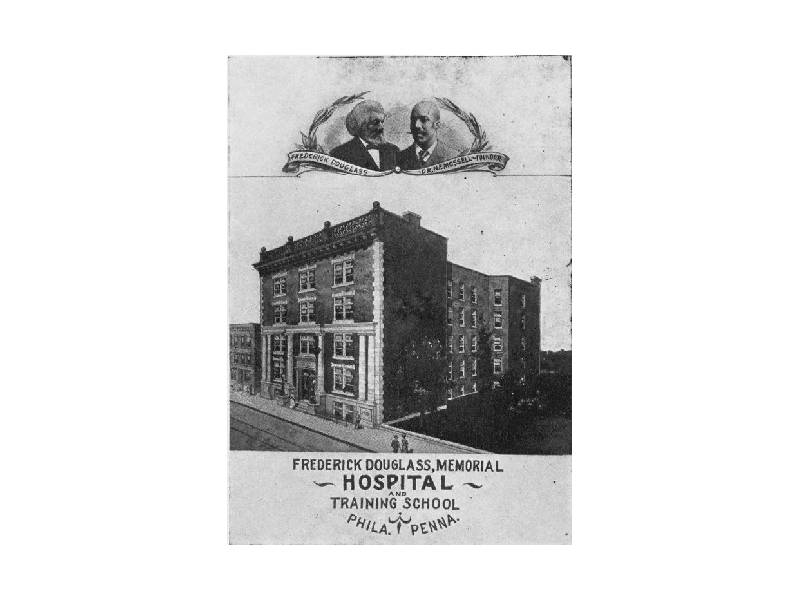
Recognizing that the physical health of the Black community could not rely on segregated facilities, Dr. Nathan Francis Mossell took definitive action. In 1895, he founded the Frederick Douglass Memorial Hospital and Training School. Located at 1512 Lombard Street with just fifteen beds, the hospital served dual purposes. It provided a dedicated space for Black physicians to perform surgeries safely and established a critical training ground for Black nurses excluded from white programs,
Mossell envisioned a modern facility governed by Black expertise that offered standard medical care. The Douglass Hospital quickly became an important center for professional development and clinical excellence. It attracted talented medical practitioners like Dr. John P. Turner, who completed his residency there in 1906 and eventually became the chief of its surgery department. The facility allowed these doctors to practice advanced medicine, including groundbreaking thoracic surgeries performed by Dr. Frederick Douglass Stubbs in the late 1930s.
The rapidly growing Black population necessitated further expansion. During the Great Migration, thousands of Black people moved to the city, straining existing public health resources. In 1907, Dr. Eugene Theodore Hinson and a group of community leaders established a second institution called Mercy Hospital. Mercy Hospital offered additional beds and expanded clinical training opportunities.
For decades, both Douglass Hospital and Mercy Hospital operated simultaneously, serving the complex health needs of the community. These institutions were largely funded by the Black community itself. Working class families, church congregations, and civic organizations pooled their resources to keep the hospitals running. Their survival depended entirely on local organizing and a commitment to public health.
By 1948, ongoing financial challenges prompted the two facilities to merge, forming Mercy Douglass Hospital. This consolidated medical center provided specialized care until shifting healthcare economics forced its closure in 1973. The legacy of these hospitals extends far beyond their physical brick buildings. They established a permanent pipeline of skilled medical professionals who dispersed across the country to work in other communities. By creating their own clinical spaces, Philadelphia Black doctors proved they could manage complex healthcare organizations and deliver high-quality care in the face of widespread institutional exclusion.
Source: Mercy – Douglass Lectureship and Awards Program | Mütter Museum
Why Their Legacy Still Matters in 2026
The integration of mainstream hospitals in the mid twentieth century eventually allowed Black patients to access larger facilities. However, this integration process often resulted in the systematic closure of Black owned medical centers like Mercy Douglass Hospital. The loss of these institutions removed important centers of healthcare leadership and culturally aligned care.
Today, the structural challenges present in the medical profession reflect the ongoing impact of these historical closures. The current data clearly shows that representation remains a major hurdle in the modern public health system.
Current Medical Representation Statistics (March 2026)
- 1895: The founding year of Frederick Douglass Memorial Hospital, which created an important early pipeline for Black medical professionals in Pennsylvania.
- 5.2%: The approximate percentage of current United States physicians who are Black, a stark contrast to the nearly 14 percent Black population nationwide.
- 11.6%: The recorded drop in Black medical school enrollment in recent years, according to data from the Association of American Medical Colleges.
Research indicates that a shared background between patients and physicians leads to better communication, increased trust, and improved health outcomes. The severe shortage of Black doctors directly impacts the quality of care available to marginalized populations. This shortage contributes to persistent disparities in chronic disease management, infant mortality rates, and maternal health outcomes across the United States.
The history of James Derham, Rebecca Cole, and Nathan Francis Mossell is directly relevant to these modern clinical challenges. Their professional work demonstrates that equitable access to healthcare requires deliberate institution building and sustained financial investment in medical education pipelines. They addressed a massive public health crisis by establishing concrete facilities that prioritized the dignity and survival of their patients.
The blueprint left by Philadelphia Black physicians remains highly relevant for modern policymakers. Their history underscores the fact that equitable healthcare requires diverse representation at every level of the medical system. The institutions they built serve as a factual reminder of how marginalized communities can effectively organize to protect their own health and secure a better future for the next generation.
Anand Subramanian is a freelance photographer and content writer based out of Tamil Nadu, India. Having a background in Engineering always made him curious about life on the other side of the spectrum. He leapt forward towards the Photography life and never looked back. Specializing in Documentary and Portrait photography gave him an up-close and personal view into the complexities of human beings and those experiences helped him branch out from visual to words. Today he is mentoring passionate photographers and writing about the different dimensions of the art world.