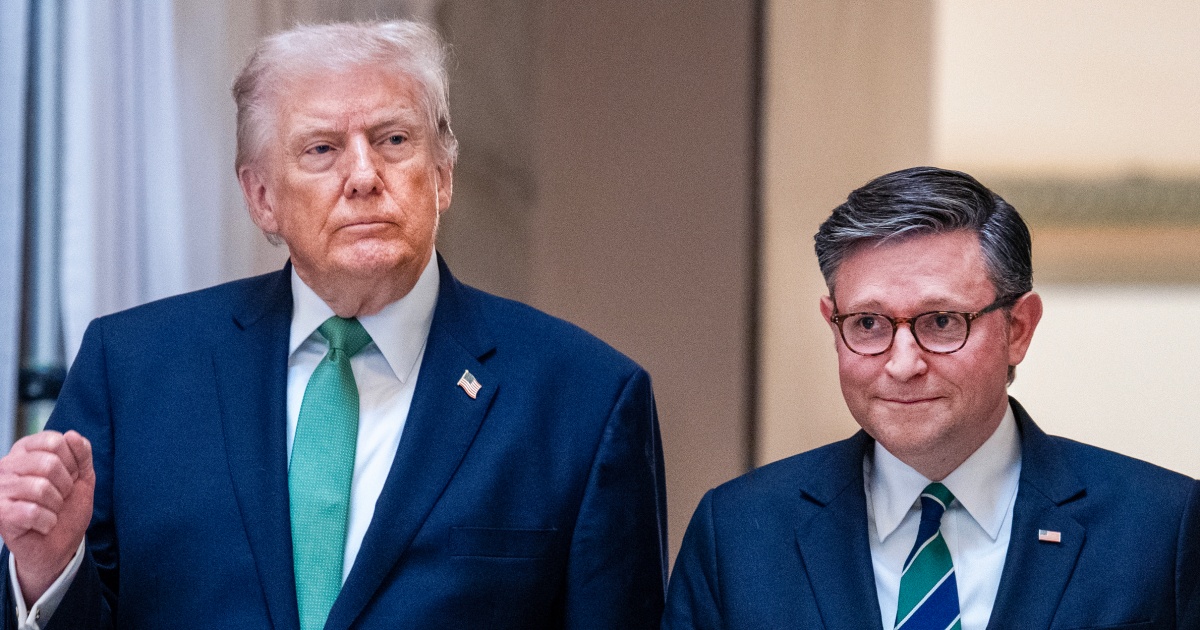
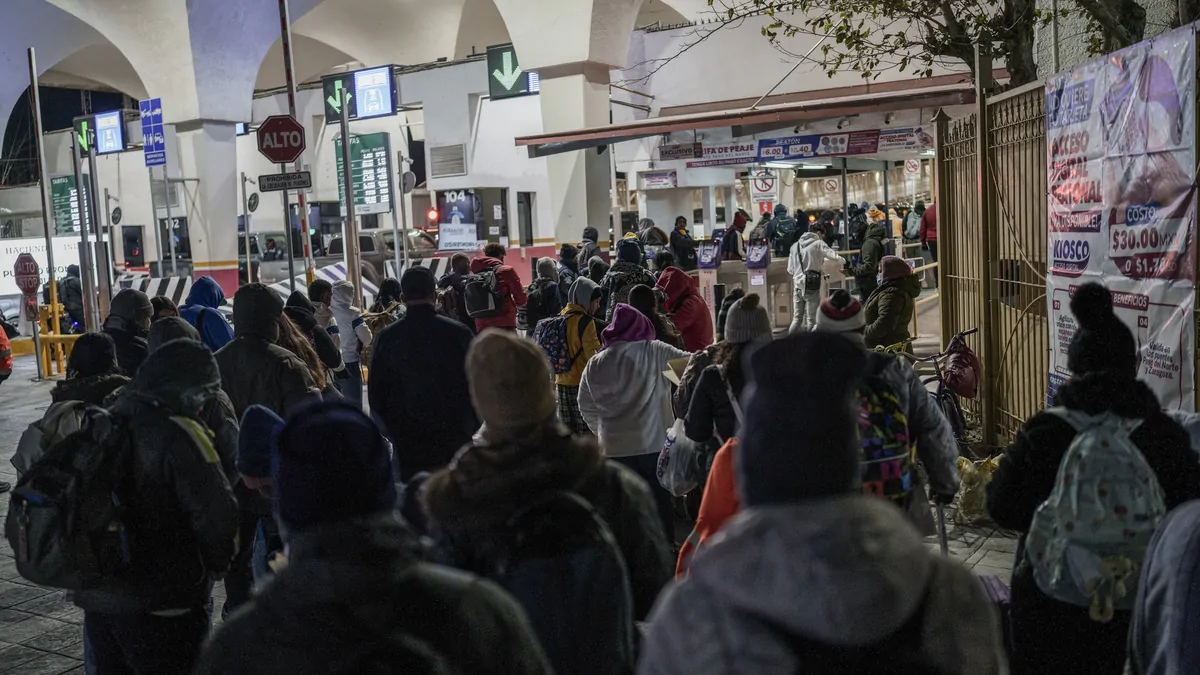
Adalee Belizaire, 4, holds on to her father, Adaley Belizaire, while the pair attend a rally in April in South Florida calling on federal officials to extend Temporary Protected Status for Haitian nationals.Carl Juste/Miami Herald/ZUMA
Get your news from a source that’s not owned and controlled by oligarchs. Sign up for the free Mother Jones Daily.
On Thursday, the Supreme Court dealt a blow to a humanitarian program that protects immigrants who can’t safely return to crisis-stricken countries. The decision effectively allows the Trump administration to move forward with terminating Temporary Protected Status (TPS) for more than 350,000 nationals of Syria and Haiti who are living and working in the United States.
It also paves the way for the administration to potentially end the protection for several other countries experiencing wars, environmental disasters, and extraordinary circumstances. That push, which the American Civil Liberties Union (ACLU) has called the “largest de-documentation event in US history,” could strip away legal status from more than 1.3 million TPS holders from 17 designated countries.
In a 6-3 decision, the Court’s conservative supermajority sided with the federal government’s arguments that the executive branch’s determinations about TPS aren’t subject to judicial review. The Trump administration claimed that Congress, in enacting the 1990 statute that created the program, gave the Department of Homeland Security secretary full discretion to designate a country for protection, as well as to extend or terminate that designation.
The justices held that the federal law bars the courts from reviewing “non-constitutional” claims related to the humanitarian program. They took a broad view of the judicial bar provision in the TPS statute, which states that “[t]here is no judicial review of any determination of the [Secretary of Homeland Security] with respect to the designation, or termination or extension of a designation, of a foreign state.” They said “determination” encompasses not only the secretary’s final decision, but also the process to get there.
The majority also found that the Haitian TPS holders challenging the termination of the protection were likely to fail when they argued that the Trump administration violated the Equal Protection Clause by discriminating against them based on race. “None of the cited statements by either the President or the Secretary was overtly racial,” Justice Samuel Alito, who wrote the majority opinion, said of the Trump administration’s disparaging public comments about Haitian migrants, “and in substance all expressed policy views that could rest on race-neutral justifications.”
The consequential ruling comes in a case that consolidated two lawsuits—Trump v. Miot and Mullin v. Doe—challenging the termination of TPS for more than 300,000 Haitians and 6,000 Syrians. The Court agreed to hear the case in March after the Trump administration applied for a stay of lower court decisions postponing the terminations. Unlike in other similar TPS cases, the justices preserved the status quo, keeping protections against deportation for these groups in place while reviewing the government’s arguments.
Under the statute, the DHS secretary can designate a country for TPS for up to 18 months, after which time they’re required to conduct a review and assess whether country conditions continue to merit this designation before determining if it should be terminated, extended, or re-designated. Haiti was first designated for TPS in 2010 after a devastating hurricane, and its designation has been repeatedly extended.
On June 16, lawyers representing Haitian immigrants asked the Supreme Court justices to dismiss the case and allow the lower courts to resolve it in light of new evidence supporting their arguments that then-DHS Secretary Kristi Noem’s termination of TPS for Haiti was a “preordained outcome” and that she had moved to end the protection even without receiving a recommendation from the State Department.
During her tenure, Noem tried to end the program for as many as 13 nations, including Venezuela, Yemen, and Afghanistan. District courts found that Noem violated requirements of the statute when terminating or, as in the case of Venezuela, vacating an existing extension of TPS designation, including by failing to properly consult with other relevant federal agencies on country conditions.
Then-Secretary Noem took “a hatchet to the TPS system,” US District Court Judge Katherine Polk Failla of New York wrote in her decision finding that the termination of TPS for Syria was arbitrary and capricious. “Once the Secretary was confirmed, she endeavored to terminate TPS status whenever presented with an opportunity to do so, resulting in termination decisions that are grounded not in law and not in fact, but that are in political considerations simply not relevant under the TPS statute.”
In the case concerning Haiti, District of Columbia federal Judge Ana C. Reyes concluded earlier this year that the evidence suggested that Noem’s decision to end the protection for that population was motivated, at least partially, by racial animus, given President Donald Trump’s disparaging comments about Haitian migrants. She also noted that while Congress gave the secretary ample discretion to make determinations about TPS, the goal in passing the statute was to standardize discretionary temporary protections and insulate them from political whims.
Last year, the Supreme Court twice tossed district court rulings blocking Noem’s actions against TPS for Venezuela, allowing the Trump administration to revoke protected status from hundreds of thousands of people pending appeal. In a dissent last October, Justice Ketanji Brown Jackson chastised the Court for granting the government’s application for a stay in the Venezuela case.
“I cannot abide our repeated, gratuitous, and harmful interference with cases pending in lower courts while lives hang in the balance.”
“I view today’s decision as yet another grave misuse of our emergency docket,” Justice Jackson wrote. “This Court should have stayed its hand. Having opted instead to join the fray, the Court plainly misjudges the irreparable harm and balance-of-the-equities factors by privileging the bald assertion of unconstrained executive power over countless families’ pleas for the stability our Government has promised them.” She added: “I cannot abide our repeated, gratuitous, and harmful interference with cases pending in lower courts while lives hang in the balance.”
During the oral arguments for Trump v. Miot and Mullin v. Doe in April, the liberal justices expressed skepticism at the government’s theory that the secretary’s decision-making process regarding TPS isn’t reviewable by the courts. “What was the point of Congress putting this statute into being and having requirements for the Secretary if there was no ability for anyone to challenge the Secretary’s compliance?” Justice Jackson challenged Solicitor General D. John Sauer. Justice Sonia Sotomayor noted that Congress could have been explicit about terminations of TPS being unreviewable, but it didn’t.
The lower courts found that Secretary Noem had failed to adequately consult with the State Department about country conditions, in violation of procedural requirements. Justice Jackson offered a hypothetical, asking if the secretary could use a Ouija board when deciding to terminate the protection, or randomly pick countries for designation from slips of paper in a hat.
They also addressed the plaintiff’s claims that the government’s push to terminate TPS for Haiti had been motivated by racial animus against non-white migrants. Justice Sotomayor said it was hard to see how Trump calling Haiti and other countries “shithole” places and accusing migrants with TPS of “poisoning the blood” of the United States as indicative that a “discriminatory purpose may have played a part in this decision.”
The conservative justices, on the other hand, appeared receptive to the government’s arguments that TPS “determinations” are beyond the federal court’s review power. The plaintiffs counter-argued that the DHS secretary’s final decision about terminating TPS may be immune to judicial review, but the procedural steps to make such a determination aren’t.
“After today,” Justice Elena Kagan dissented in Thursday’s ruling, “a Secretary can announce to the world that she didn’t consult with anyone—more, that she didn’t evaluate country conditions at all—before making, extending, or terminating a TPS designation.”
Todd Schulte, president of the advocacy organization FWD.us, called the Court’s decision “an astonishing human tragedy.” The ruling, he said in a statement, was “an awful harbinger for what we expect this administration to try to do for other TPS designations. Hundreds of thousands of people who have lived here for decades now see heartbreaking chaos ahead.”
“We’re talking about the power to mass expel people who have done nothing wrong to countries that remain unsafe,” said Ahilan Arulanantham, the attorney arguing for the Syrian plaintiffs. “And our view is it is unlikely that a refugee protection statute would have given that power to the Secretary.” The question before the Court, Arulanantham said in a statement following the April oral arguments, was whether the government could “ignore the law when it tries to take away someone’s immigration status.” Judging by the justices’ ruling on this case, the answer appears to be yes.