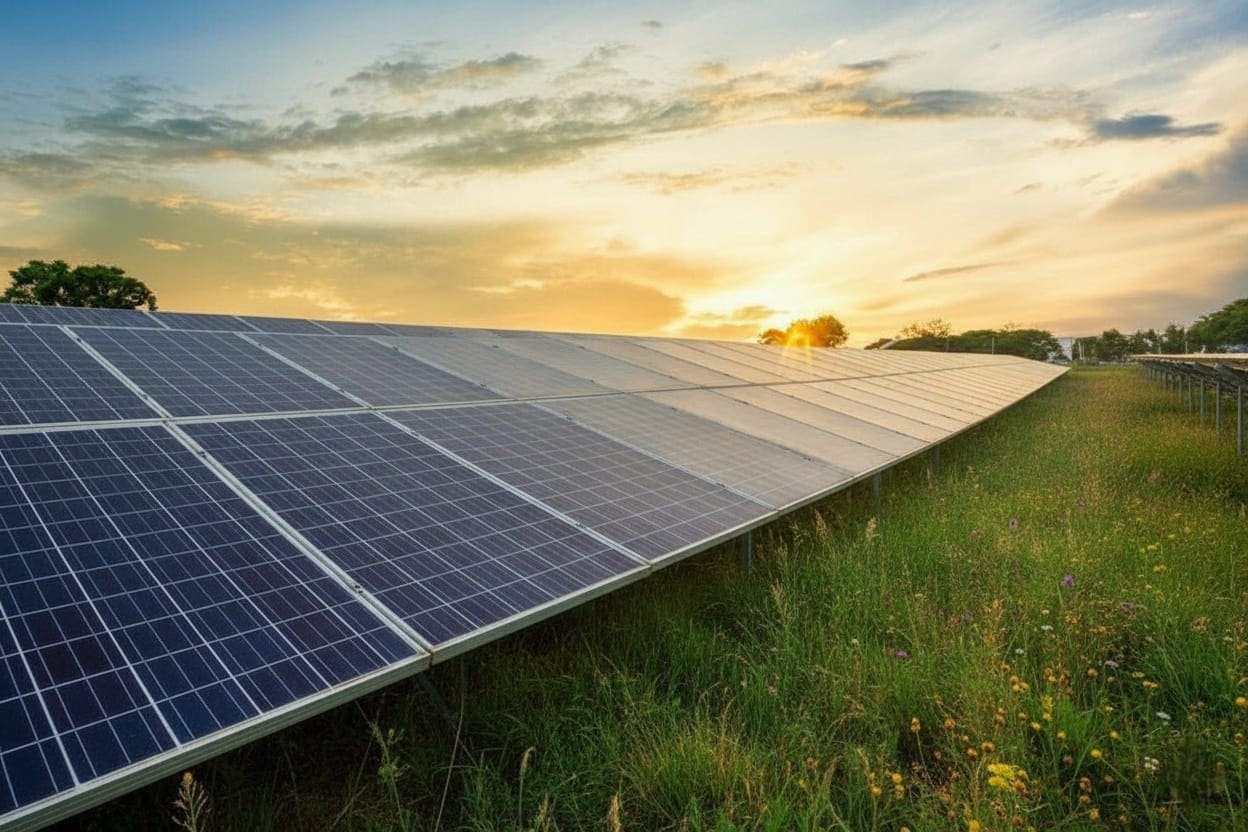
When we think about solar energy, most of us picture large solar farms or panels on rooftops. But that’s the beauty of innovation: it can turn imagination into something tangible, something that fits into everyday life in the most unexpected ways.
One such powerful innovation is quietly making its way through the village roads of Gujarat.
From scrap to solar: A village innovation
In a small corner of Gujarat, Sadhulbhai Chawda has built something remarkable, a fully functional solar-powered car made entirely from scrap. At a time when rising fuel prices are a constant concern, his creation runs on something far simpler and infinitely sustainable: sunlight.
Using discarded bike parts, iron, and tyres, this homemade vehicle turns everyday waste into a working solution.
What makes this story even more compelling is how it came to life. Using old electric bike components, scrap iron, and even scooty tyres, Sadhulbhai pieced together his vehicle with sheer ingenuity and determination.
Every part was carefully assembled and welded at home, turning what many would consider waste into a working solution.
Powering possibilities with the sun
The car runs on two 100-watt solar panels that charge its batteries throughout the day, even while it’s on the move. Once fully charged, the vehicle can cover a distance of 50–60 kilometres without a single rupee spent on fuel.
Designed for village roads, the three-seater includes simple comforts like a fan and music system, making sustainable travel practical.
The most amazing part is that the utility doesn’t stop when the sun sets, and the stored energy keeps it running at night as well.
With a top speed of 30–40 km/h, the car is perfectly suited for village roads. It comfortably seats three people and even includes small but thoughtful features — a fan to beat the heat and a music system that often plays bhajans during the ride.
Built at a cost of just Rs 25,000 – 30,000, the car has required minimal maintenance, with only one battery replacement in four years.
Redefining “Make in India”
Sadhulbhai’s solar car is more than just a vehicle; it’s a powerful example of grassroots innovation. It challenges conventional ideas of mobility, proving that sustainable solutions don’t always require high-end technology or massive investment.
Sometimes, all it takes is resourcefulness, resilience, and the courage to think differently.
Built for under Rs 30,000, this solar car reflects how local innovation can shape affordable and sustainable futures.
In a world searching for cleaner alternatives and affordable mobility, stories like this remind us that solutions can emerge from the most unexpected places. From scrap to solar, this is not just a car; it’s a movement on wheels.
Perhaps it leaves us with a simple but powerful question: what if the future of innovation isn’t just built in labs but in homes, villages, and the hands of people who dare to create.