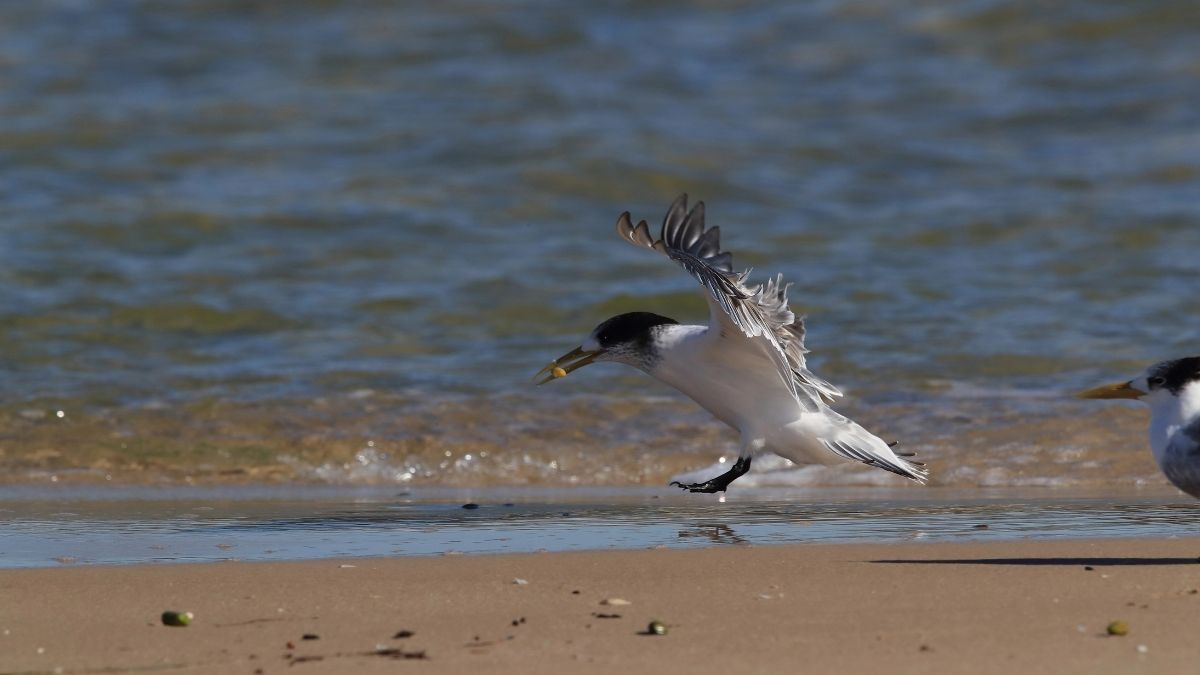
Feature Image: Greater Crested Tern. (Deposit Photos).
Seven greater crested terns found along South Australia’s Limestone Coast have tested positive for H5 bird flu, bringing the state’s total number of confirmed cases to 14.
The birds were found at three locations, with one collected from Cape Jaffa, one from Port MacDonnell and five from around Southend Jetty, near Beachport.
Four of the birds found near Southend Jetty were sick, while the fifth had died. The birds found at Cape Jaffa and Port MacDonnell were also deceased.
Members of the public reported the birds to the Emergency Animal Disease Hotline before they were collected and sampled by the Department of Primary Industries and Regions SA.
Initial testing returned suspected detections on Monday, with the results now confirmed by the CSIRO’s Australian Centre for Disease Preparedness in Geelong.
Genetic sequencing is being finalised to determine whether local transmission of the virus is occurring in Australia.
Minister for Primary Industries and Regional Development Clare Scriven said the detections were concerning, but demonstrated the importance of people continuing to report sick and dead wildlife.
“We can today confirm positive H5 bird flu detections in seven wild seabirds collected from the Limestone Coast,” Scriven said.
“While this is not good news, we remain encouraged by the South Australian public’s vigilance and the extent to which they are taking the threat of H5 bird flu seriously.”
The latest detections follow suspected cases announced on Monday at the same Limestone Coast locations. At that time, authorities said the seven birds had been sent to the national laboratory for confirmation.
There continue to be no confirmed cases in poultry, captive birds, pets, livestock or other wildlife in South Australia. Poultry meat and eggs remain safe to eat when handled and cooked correctly, while the current risk to human health in Australia is considered low.
The State Government is increasing targeted surveillance in areas visited by greater crested terns, while continuing aerial and ground surveys of the coastline.
More than 2,700 reports have been made to the Emergency Animal Disease Hotline since June 20, while more than 1,170 bird samples have been tested across South Australia since the beginning of the year.
Community information forums have already been held at Glenelg, Goolwa, Kangaroo Island and Yorketown. Further sessions are planned for Parham, Berri and Robe throughout August.
South Australians who encounter sick or dead birds or other wildlife are urged not to touch them or allow pets to approach them.
People should record the location and details of what they have seen before reporting it to the 24-hour Emergency Animal Disease Hotline on 1800 675 888.
For the latest South Australian information, visit birdflu.sa.gov.au, while national updates are available at birdflu.gov.au.