Source: KohanTextileJournal
Dakar, in late March, looked less like a stage set for fashion than a test case for industrial ambition. RTS reported that Senegal hosted the African Sourcing and Fashion Week for the first time, with the government using the occasion to promote local cotton transformation and attract investment; the event drew visitors from more than a dozen African and European countries and nearly 90 exhibitors. That is the surface story, but the deeper one is harsher and more interesting: who makes the cloth, who moves it, who marks it up, and who gets to call it culture once it reaches the diaspora market in the United States.
Senegal’s own industrial language is not subtle about the stakes. In the country’s 2050 industrial policy, President Bassirou Diomaye Diakhar Faye set out the governing ambition in a phrase that is already becoming a slogan of industrial sovereignty: “Produire ce que nous consommons.” The full line goes further, produce what we consume, consume what we produce, and make Senegalese products visible internationally. That is the argument Dakar is making to itself and to anyone buying into the African textile future: value should not leave the continent in the form of raw fiber and return as an expensive finished product.
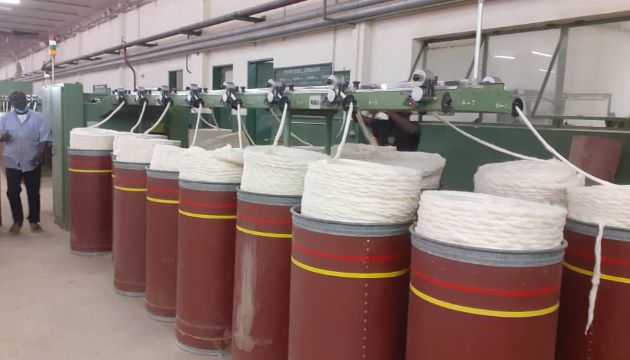
The problem is that the numbers still show a lopsided system. Style & Sustain, drawing on International Trade Centre data, reported that West Africa produces an estimated 100 million metres of fabric each year, while the region imports close to US$5 billion worth of textiles annually. That gap is the whole story in miniature, such as production exists, demand exists, but the middle is where value leaks away, in freight, finance, standards, power, and retail markups. Senegal’s policy says it wants to close that gap by satisfying local needs first and increasing the share of manufactured exports. Whether that happens will depend on whether the region can convert political language into mills, logistics, and contracts.
The point of Dakar is not simply that Africa can host a trade fair. It is that African fashion is being recast, by African media, as a systems story rather than a style story. In Twyg’s May 2026 coverage of Woven Threads in Lagos, founder Omoyemi Akerele said Africa is not just participating in fashion’s future but “actively shaping it.” The exhibition itself was split into Labour, Heritage, and Reimagined Systems, an editorial decision that matters because it treats cloth not as a cute aesthetic object but as the end result of land, labor, skill, and recovery. Twyg’s reporting makes the underlying thesis plain: the continent is debating production, repair, weaving, and reuse, not just color palettes.
That matters in Senegal because the country’s industrial pitch is not abstract. It is being voiced by officials and by textile operators who want a domestic market that buys domestically.
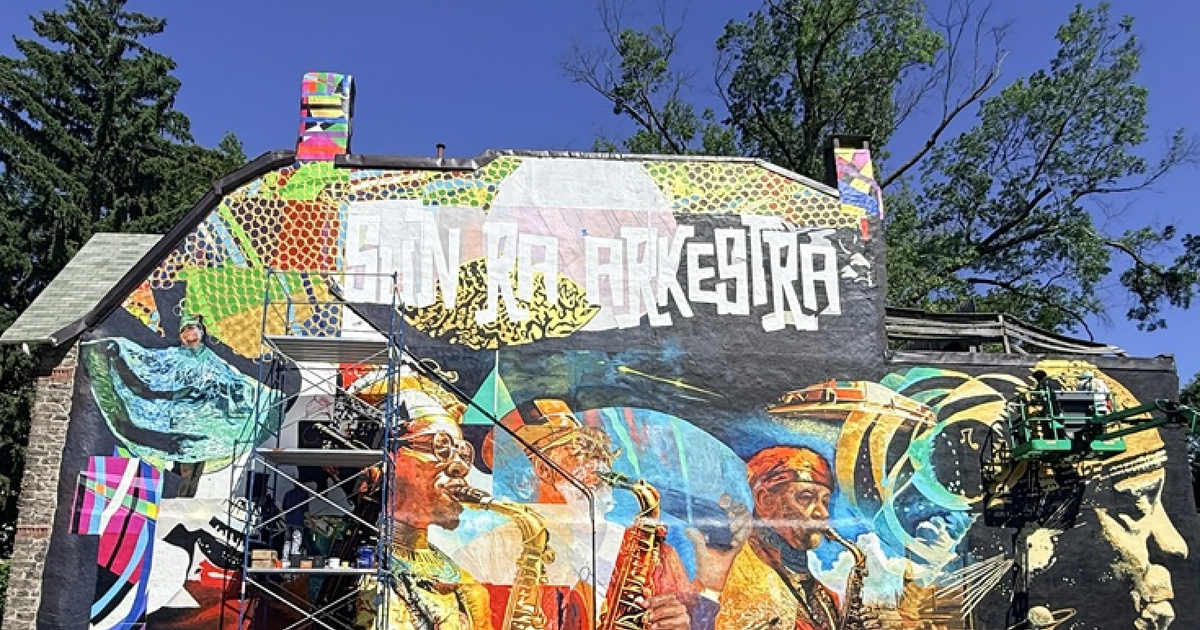
Philadelphia enters this story not as a random U.S. city, but as a symbol of diaspora demand and Black retail memory. ESSENCE has portrayed South Street as part of that ecosystem: in one 2024 piece, Repo Records on South Street appears as a beloved Black cultural stop in a city whose music identity is inseparable from its Black communities; in another, ESSENCE wrote that Odunde turns South Street into a Black civic and commercial theater, taking over nearly 15 blocks and drawing about 500,000 attendees each year. The city even renamed the 2300 block of South Street in honor of Lois Fernandez. That is not a textile supply chain on paper; it is the market environment into which African cloth is sold: a place where shopping, identity, memory, and community all travel together.
Source: Boursenews.ma
And that, in turn, explains why the middle of the chain is where the power sits. ESSENCE’s reporting on Nigerian fashion was blunt about the hidden tax: one designer admitted, “I spend more time managing logistics than designing.” The same report described budgets distorted by diesel, supply conversations happening across three countries through WhatsApp, and a demand for garments that arrive on time and fit right every time. Twyg’s Woven Threads gave the aesthetic version of that same reality: craft survives only when materials, people, and the earth are treated with respect. Put together, the reports suggest that African fashion’s bottleneck is not imagination. It is infrastructure.
That is the counterargument against the easy romance of “Made in Africa.” Yes, Senegal and West Africa have visible capacity. Yes, Dakar is trying to make itself a sourcing hub. Yes, African fashion media is documenting a serious shift toward repair, heritage, and circularity. But none of that erases the practical obstacles. A chain that depends on reliable electricity, industrial zoning, shipping schedules, customs clearance, quality control, and affordable working capital remains fragile if any one of those components fails. The slogan “produce what we consume” is compelling precisely because it names an economic truth; it is also incomplete unless the state, the private sector, and diaspora buyers are willing to pay for the boring things that ensure cloth arrives intact.
The fair version of this transatlantic chain would not be sentimental. It would require Senegal and its neighbors to keep more of the cotton-to-garment value chain at home; it would require an industrial policy that does more than praise sovereignty; it would require designers and retailers in the U.S. diaspora market to accept lead times, source transparently, and resist treating African cloth as a premium story detached from African labor. It would also require buyers on South Street and beyond to understand that culture has a supply chain. If African cloth crosses the Atlantic and all the margin still settles elsewhere, then the exchange is only aesthetic. If the chain becomes local enough to create jobs, skilled work, and bargaining power where the fiber begins, then the cloth carries more than pattern. It carries leverage.
Read also: Why Ankara Fashion Keeps Winning Across Africa And Beyond
Anand Subramanian is a freelance photographer and content writer based out of Tamil Nadu, India. Having a background in Engineering always made him curious about life on the other side of the spectrum. He leapt forward towards the Photography life and never looked back. Specializing in Documentary and Portrait photography gave him an up-close and personal view into the complexities of human beings and those experiences helped him branch out from visual to words. Today he is mentoring passionate photographers and writing about the different dimensions of the art world.