For those who might picture living and working on a cruise ship for months at a time, images of debauched parties, amorous co-workers and glamorous travel may come to mind.
What might not? Banana-eating contests, mandated quarterly cleaning of shower heads and the appearance of coveted Pringles at the below-deck crew shop.
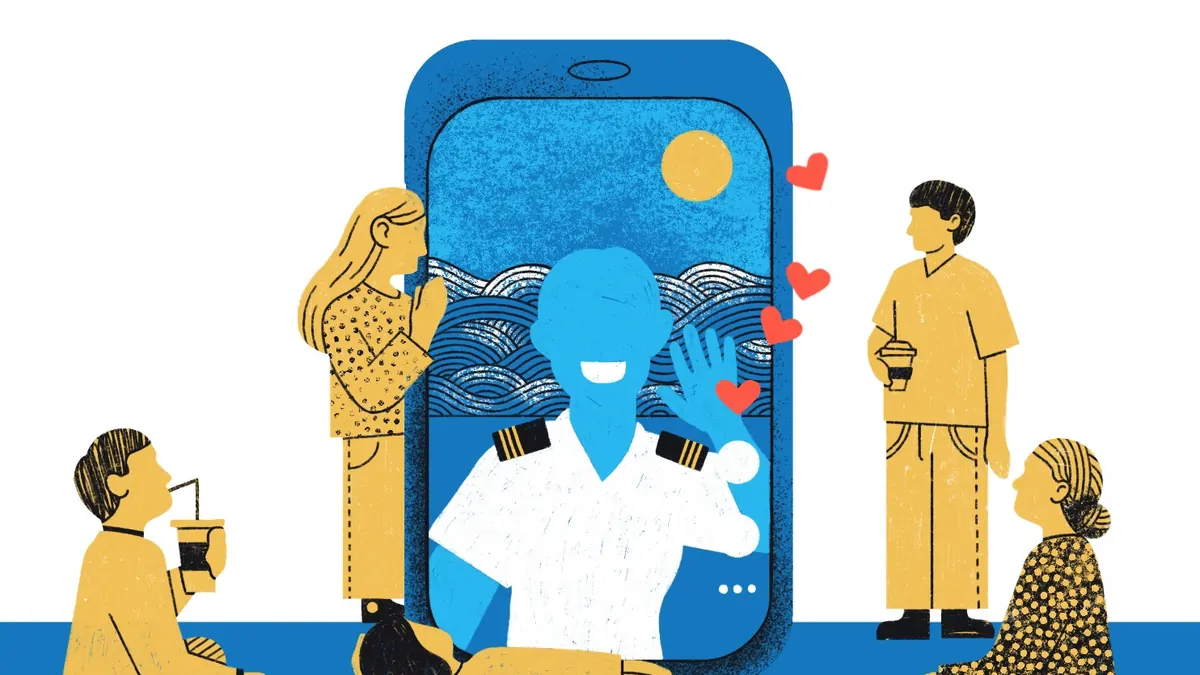
But in the world of cruise social media, those mundane details have millions of followers flocking to crew members’ accounts as they document their lives on board.
Bryan Henderson, a singer and guitar player who lived and performed on Royal Caribbean ships for the better part of seven years, captured many of these crew rituals on video and shared them with his roughly 1.5 million followers across YouTube, TikTok and Instagram.
ROAM. Landing in your inbox weekly.
A digital-first travel magazine. Premium itineraries and adventures, practical information and exclusive offers for the discerning traveller.
By continuing you agree to our Terms and Privacy Policy.
“I think the content writes itself,” offers Henderson. “I will wake up and look at something that will make me go, ‘I could make a video about this’.”
That mindset led Henderson to create videos about secret crew passageways, quiet corners of the ship and quirky practices, like the fact that ships pipe bird noises through loudspeakers to keep seagulls at bay.
Henderson is part of an emerging group of content creators whose primary jobs are aboard cruise ships, but who have developed a secondary career by sharing their working lives online.
The genre fits into a larger trend of “employee influencers”, says Jenna Jacobson, an assistant professor at Toronto Metropolitan University who specialises in social media.
“They’re simply just posting what they know best. With cruise ships, so much of the guest experience is curated and staged. So these videos provide these behind-the-scenes glimpses into crew life, which is a more refreshing or authentic point of view.”
For Brianna Delmaestro, 29, who performs in onboard ice-skating shows on Royal Caribbean ships, that authentic point of view includes things like exploring the water slides on the cruise line’s “CocoCay” island and snorkelling off Grand Cayman, but also looks at the harsher realities of life on a ship, such as the downtime periods she calls “slumps at sea”, and the injuries she has sustained during shows. Her videos document the process of concussion protocols, undergoing medical scans while docked in the Bahamas and travelling home to Canada to recover from injuries before eventually returning to performing on ships.
The Nightly Credit: The Nightly/The Nightly
“Last year, sometime after I had gone through some injuries, I realised that I really want to document this time of my life,” says Delmaestro, who is from Vancouver, British Columbia, and has 10,000 YouTube subscribers. “Also, it’s a way for me to share with my grandparents what it actually looks like, what I’m doing on the day to day.”
Delmaestro says she’s never expressly requested permission from Royal Caribbean to post social media content, but has not received any negative feedback from her employer. Royal Caribbean did not respond to a request for comment.
Amy Martin Ziegenfuss, the chief marketing officer for Carnival Cruise Line, says social media allows guests to stay connected with the ship — and its crew members — long after they disembark. Since guests often become close with crew members as they live alongside them during their stays, “social media allows for that bond to continue from land to sea”.
It’s also proved to be a recruiting tool.
Koketso Holly Phetla, 26, who publishes daily ship programs for MSC Cruises, and also posts videos about her experience on YouTube and Instagram, says she receives feedback from viewers who say her videos have helped prepare them for interviews and given them tips on applying for cruise jobs. Phetla was a marketing intern in Johannesburg when she applied for her job.
She says that when she first began posting videos, they simply showed her onboard life. But the comments section was soon filled with questions about how to work at sea, so she began making videos in which she specifically answered those questions.
According to Colleen McDaniel, the editor-in-chief of Cruise Critic, the largest cruise review website, the crew-member-turned-content-creator phenomenon began during the pandemic, when workers started to document the process of returning to life at sea, including days-long quarantines and other new processes.
That was the case for Henderson, who had moved home to San Carlos, California, when the pandemic shut down cruising and worked in a church, making their services available online. When his agent called almost two years later about an opportunity on a ship, he hesitated. But as he looked for information online about life on cruise ships following the COVID-19 lockdowns, he found none. That void, coupled with his own love of watching “day in the life” videos of flight attendants and others with interesting jobs, created an epiphany.
“I kind of went at it, like, if I’m going to go back on a cruise ship, I’m going to do it this way,” Henderson says. “And I was just blown away that it happened so quick. It was truly overnight, it was the very first video, and then it just got bigger from there.”
The question is whether audiences will follow popular influencers like Henderson when they resume “normal” life on land.
After working six cruise-ship contracts since 2017, Krista Jocelyn, 30, a singer and dancer from Denver who began creating YouTube cruise videos three years ago and has almost 50,000 subscribers, is now between gigs and trying to figure out what comes next.
“Life as a performer is inconsistent, whether it’s on a cruise ship or not,” she says, adding that she’s “hoping that my YouTube channel can shift from ship life to land life.”