

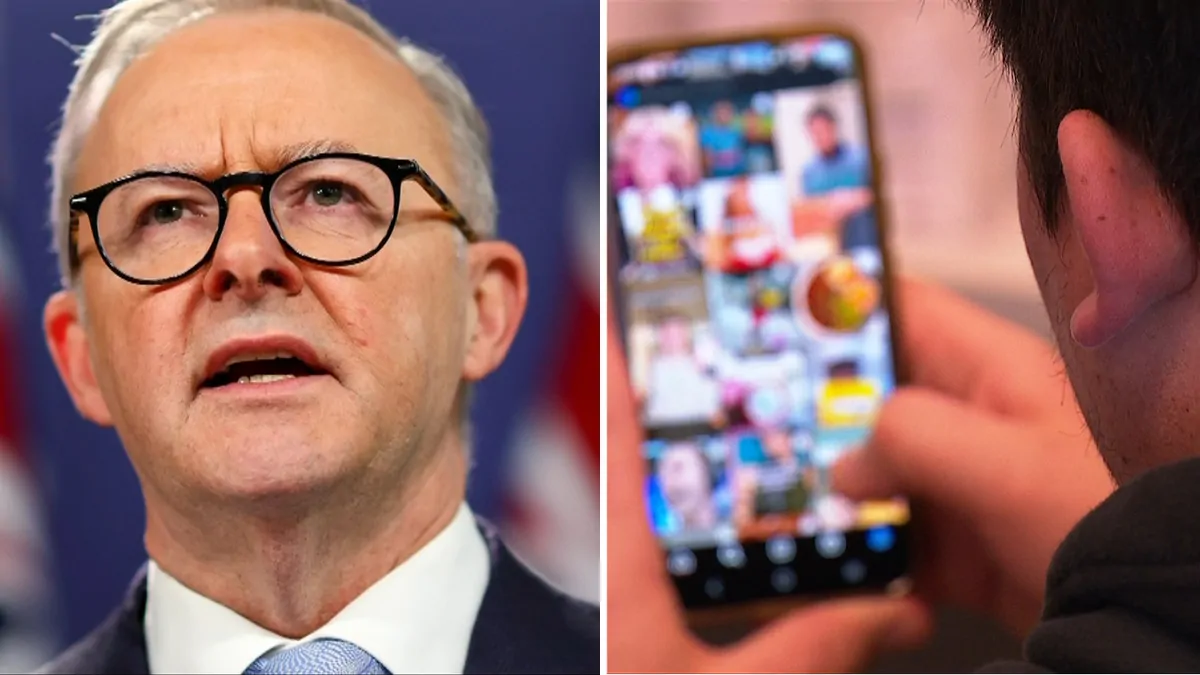
Prime Minister Anthony Albanese is ditching his speeches for jokes in his latest move to connect with young Australian voters.
He recently starred in a comedy video for local internet duo Swag On The Beat, playing an overprotective father meeting his daughter’s new boyfriend for the first time.
During the hilarious conversation, he joked that if the boyfriend broke his daughter’s heart, he would reinstate his HECS debt.
Sign up to The Nightly’s newsletters.
Get the first look at the digital newspaper, curated daily stories and breaking headlines delivered to your inbox.
By continuing you agree to our Terms and Privacy Policy.
Griffith University communication expert Dr Susan Grantham says engaging in these projects helps politicians establish their credibility and reach demographics they wouldn’t normally engage with.
“It enables politicians to create an image of authenticity to the audience they are trying to reach,” Grantham said.
“He’s engaging in these to be the ordinary dad, the ordinary bloke.
“This engagement with influencers is bringing it to the people he’s otherwise not reaching.”
Using creators to reach people is becoming harder to overlook as a strategy.
A University of Canberra report found 48 per cent of Australians aged 18 to 24 consume news on TikTok, while 43 per cent of Australian news consumers overall get their news from creators and influencers.
The Australian Government’s 2025 National Youth Survey also showed 73 per cent of respondents would like to hear about government activities on social media, and only 35 per cent of them selected traditional news sources as the preferred channel.
But how useful is such collaboration in terms of votes?
Grantham led Democracy In Our Feeds, a study which examined 564 political creator posts in the lead-up to the 2025 federal election.
Creators shared four times more election and leadership content than regular media sources.
“Not a single person in those focus groups was willing to actually say that any of this impacted the way they voted,” Grantham told 7NEWS.
“Instead, what it did was encourage them to engage in some of these topics.”
While political content may encourage young Australians to engage with important issues, its impact at the ballot box remains unclear.
“I’m sure it does impact voting but, at this moment in time, we don’t have anyone who has done a study that actually proves that,” Grantham told 7NEWS.
Another issue with online influence is the way politicians show up online.
Political authenticity is becoming increasingly important as politicians use mundane things, humour, and personal events to appear relatable.
Queensland Opposition Leader Steven Miles, for example, shares gym-related content, while Queensland Premier David Crisafulli has adopted a different approach, showcasing food, drinks and everyday experiences.
While politicians using entertainment to get closer to the audience is controversial, Grantham believes it makes politics more accessible.
“I think politics is more accessible because of this shift in the way politicians and politics is discussed online,” Grantham said.
“We have a much more engaged young audience.”
But the growing influence of political creators also raises concerns about misinformation, oversimplified messaging and the increasing overlap between entertainment and political communication.
Griffith University’s research warned the same emotional connection and algorithmic reach that make creators influential can also amplify misleading or partisan content.
For Grantham, the shift is unlikely to slow.
As more Australians turn to social media for information, politicians are adapting the way they communicate.
But while a viral comedy sketch might help a politician reach a new audience, whether it can actually change a vote remains unclear.
