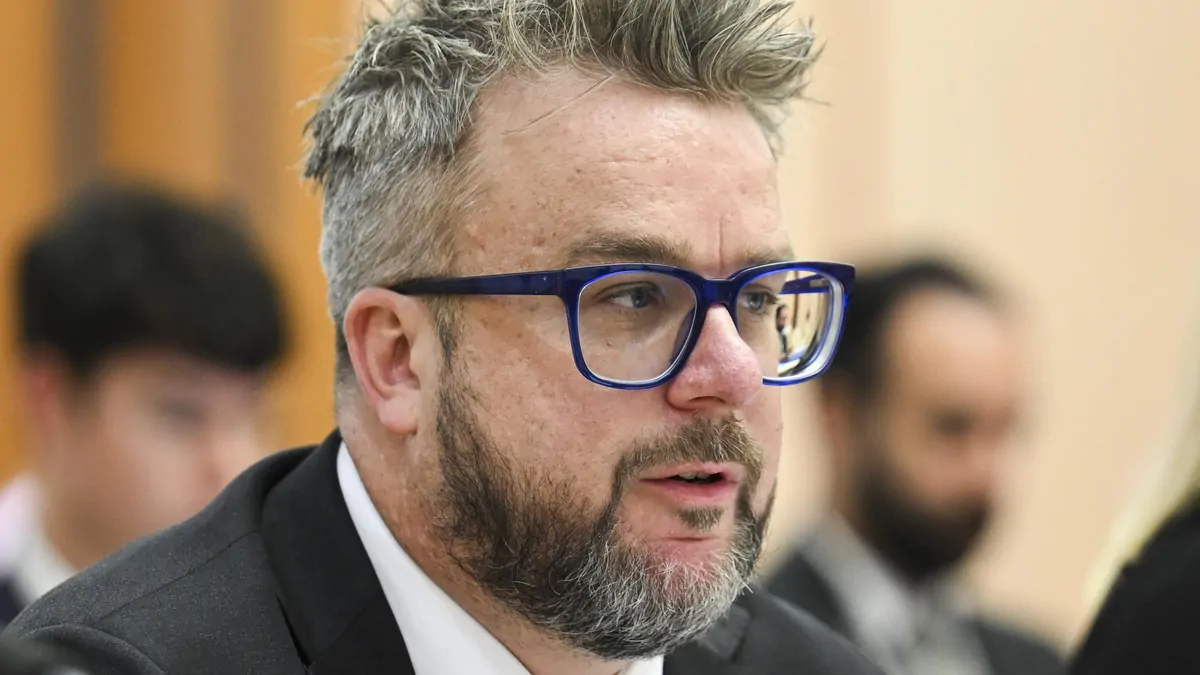
The ABC was right to sack Mahmood Fazal — but it was also right to hire him
Mahmood Fazal deserved to lose his job at the ABC.
If the broadcaster’s investigation found he breached editorial policies through his involvement in an unauthorised podcast linked to gambling sponsorship, then the national broadcaster had little choice but to act. Rules around external work exist for a reason, particularly at an organisation constantly under scrutiny from politicians, commercial rivals and critics eager to accuse it of bias or ethical double standards.
– Advertisement –
The ABC could not afford to ignore it.
But there’s another uncomfortable truth sitting beneath the political theatre surrounding Fazal’s dismissal — and it says far more about modern Australia, and the media industry itself, than many of his loudest critics would probably like to admit.
People like Mahmood Fazal are exactly the sort of journalists the ABC should be recruiting.
For years, conservative critics have mocked the broadcaster as a haven for inner-city progressives, accusing it of being disconnected from “real Australia”. The sneering clichés are familiar: “latte sippers”, “elite journalists”, university graduates from privileged backgrounds talking only to people who think exactly like them.
But when the ABC actually hires someone from a completely different world — someone with lived experience inside Australia’s criminal underworld, someone who grew up around violence, gangs and prison culture, someone who could access stories ordinary reporters simply couldn’t — many of those same voices suddenly declared him unacceptable.
The contradiction could not be more obvious.
– Advertisement –
Fazal was not some manufactured media personality invented in a newsroom meeting. His background was real, messy and complicated. Before journalism, he had been involved with outlaw motorcycle gangs. He openly discussed that history. He went to university, reinvented himself and built a respected media career writing about organised crime, extremism and violence.
That experience gave him something increasingly rare in modern journalism: genuine access.
While many crime reporters spend their careers speaking to police media units and court registries, Fazal could sit across from hardened gang figures, drug traffickers and organised crime players because they trusted him enough to talk. That matters. It produced journalism other reporters could not easily replicate.
And for a time, the ABC clearly recognised the value in that.
His reporting on Four Corners brought a rawness and authenticity that cut through in ways polished studio journalism often does not. The stories were uncomfortable, confronting and undeniably compelling.
That does not excuse misconduct.
If Fazal breached the broadcaster’s editorial rules through his involvement in the Word on the Street podcast, then disciplinary action was inevitable. Journalists — particularly at the ABC — are held to high standards precisely because public trust matters.
– Advertisement –
But there is a dangerous temptation now for institutions to retreat back toward “safe” hires: polished resumes, predictable backgrounds and candidates who pose minimal reputational risk.
That would be a mistake.
The media already suffers from a serious representation problem. Australian journalism is heavily dominated by people from similar educational, social and economic backgrounds. Newsrooms talk endlessly about diversity, but too often reduce the concept to surface-level identity politics while ignoring class, geography and lived experience.
A person who grew up around bikie gangs and criminal networks brings a form of diversity most corporate organisations rarely know how to handle.
And yet those perspectives are vital if journalism is supposed to genuinely reflect Australian society.
The irony is impossible to ignore. The same commentators who attack the ABC for supposedly being disconnected from ordinary Australians are often the first to recoil when the broadcaster hires someone who didn’t come through elite schools, traditional media pathways or socially acceptable networks.
Apparently diversity is welcome — but only the comfortable kind.
Even during the Senate estimates hearing where Fazal’s dismissal was confirmed, there were hints of this contradiction. Some politicians seemed less interested in the specifics of the podcast investigation and more disturbed by the very idea that someone with Fazal’s past had ever been allowed inside Four Corners at all.
That says a lot.
Australia loves redemption stories in theory. In practice, institutions often struggle with people whose lives contain genuine complexity.
The ABC was right to investigate Fazal. If the findings justified termination, then it was right to sack him.
But the broadcaster was also right to hire him in the first place.
Because journalism is stronger when newsrooms include people who understand parts of society others only observe from a distance. And if the ABC truly wants to represent modern Australia — all of it, not just the comfortable parts — then it needs more journalists with unconventional backgrounds, not fewer.
– Advertisement –