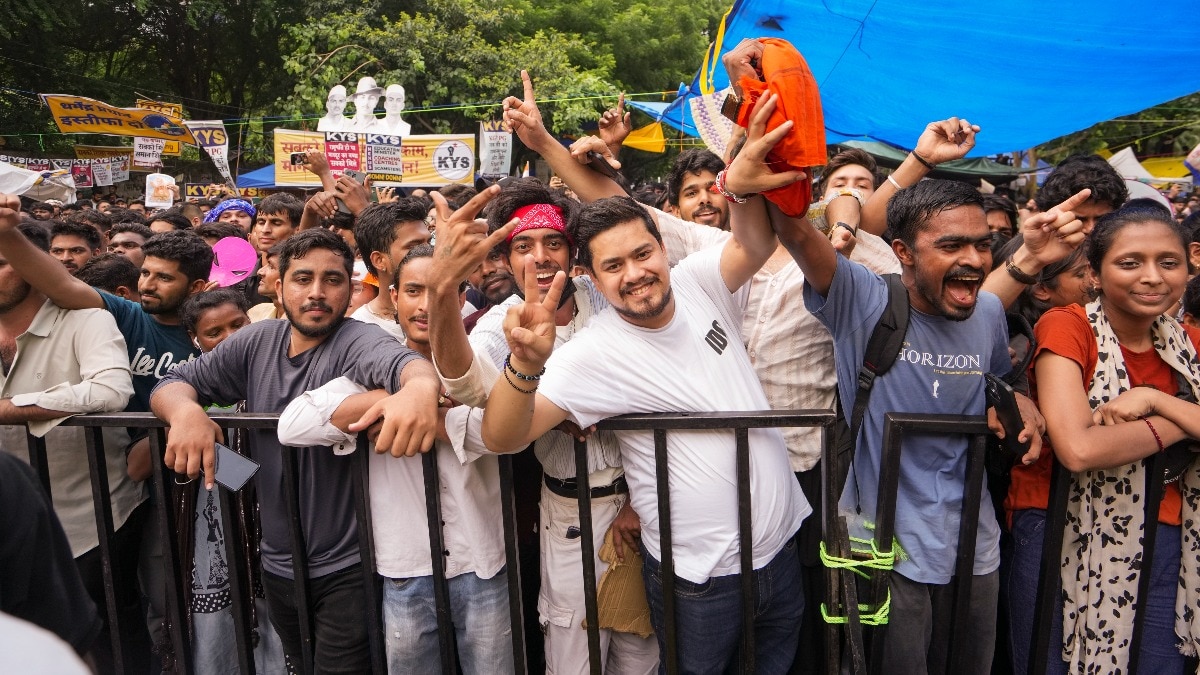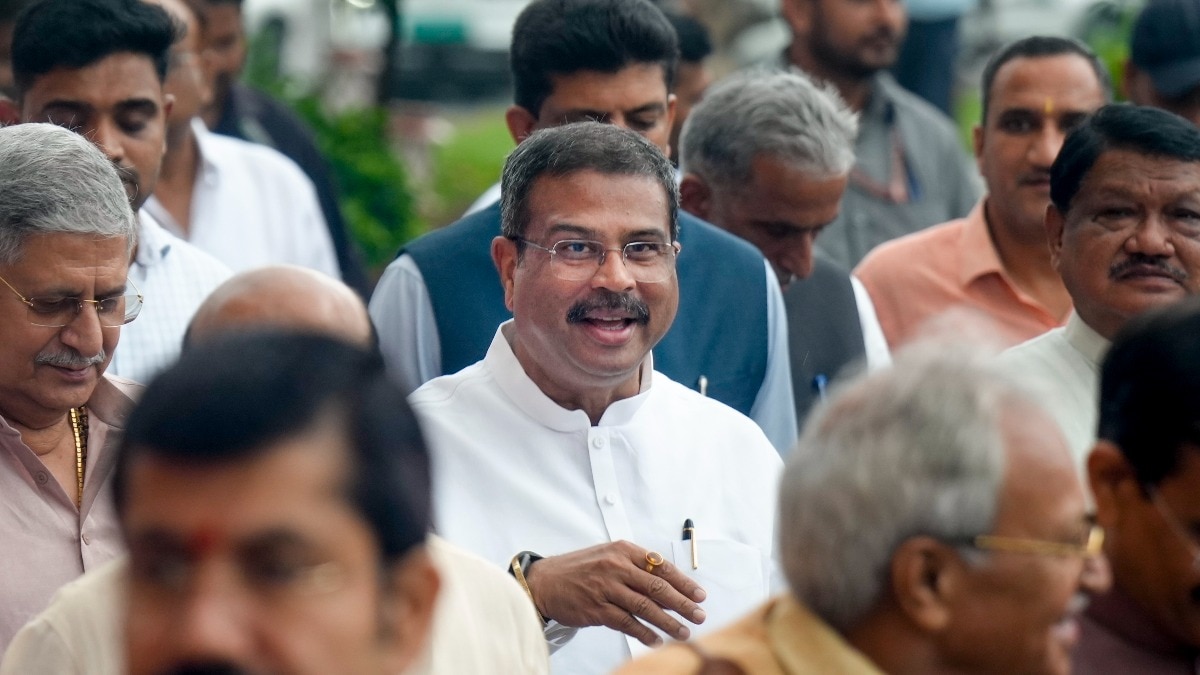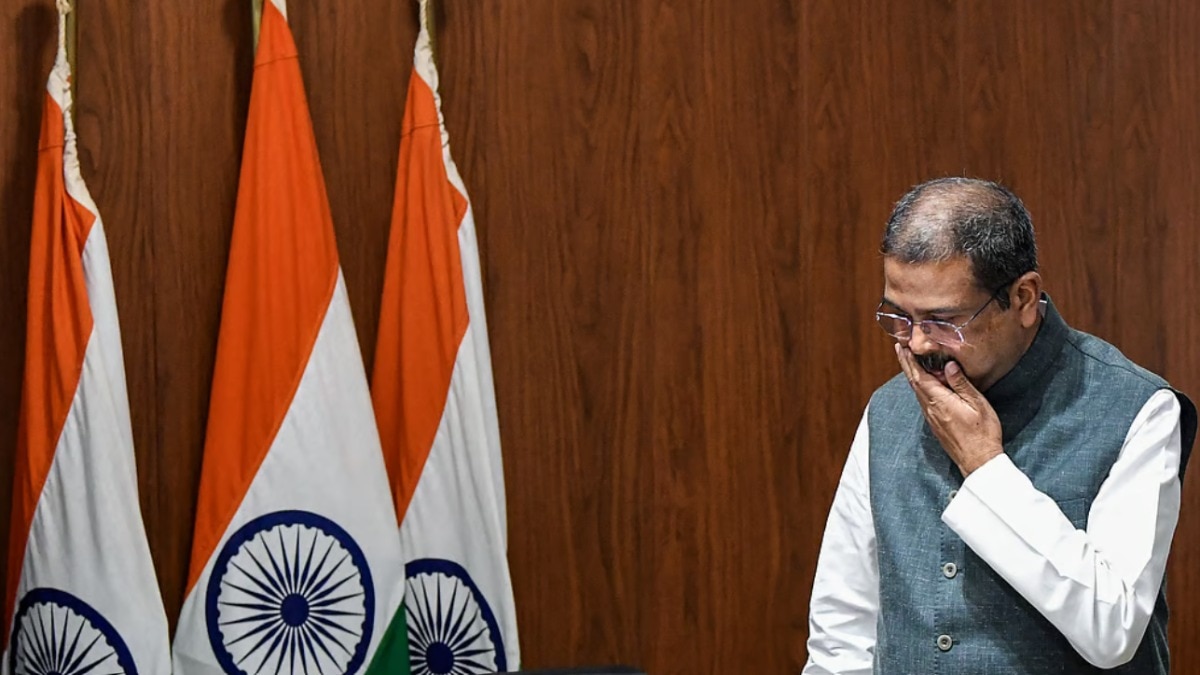
The resignation of Education Minister Dharmendra Pradhan may have brought a political breakthrough for the student agitation at Jantar Mantar, but for the families who lost their children amid the NEET controversy, the question remains painfully unchanged: what does a minister’s resignation do for a child who is no longer alive?
“Dharmendra Pradhan has resigned, but that will not bring our daughter back,” said Neelam Chaturvedi, whose 18-year-old daughter Akanksha, also known as Sneha, died by suicide after the NEET-UG paper leak controversy.
Across Madhya Pradesh and Uttar Pradesh, families of students who had dreamed of becoming doctors are still dealing with a grief that has not eased with the end of the agitation or the resignation of the minister.
For them, the political developments have brought no closure.
‘WHAT WILL HAPPEN WITH THE RESIGNATION?’
Akanksha Chaturvedi, from Mauganj district in Madhya Pradesh, was preparing for NEET-UG in Nagpur. Her family expected her to score around 650 marks, but the controversy surrounding the examination and the uncertainty that followed left her under deep mental stress.
Her family says she left behind a note expressing that she did not have the courage to appear for the examination again.
Akanksha’s father, Krishna Kumar Chaturvedi, is a small farmer. To help his daughter pursue her dream of becoming a doctor, the family borrowed money, sold land and jewellery and even took up catering work to manage expenses in Nagpur.
After Akanksha’s death, her father suffered a brain haemorrhage and became paralysed. He has been undergoing treatment for a long time.
Her mother Neelam told ANI that the family was not satisfied with Pradhan’s resignation.
“My daughter won’t come back. We are not satisfied with anything. The government did not come to meet us. What will happen with the resignation? Our daughter should get compensation; we are not satisfied with the resignation. Our demand is that our daughter should get justice and compensation, and the perpetrators should be hanged,” she said.
She also questioned the loss suffered by the family after it had sold land to support Akanksha’s dream.
“We had to sell our land; will it come back?” she asked.
Her demand went beyond the resignation of one minister.
“Dharmendra Pradhan stepped down; Prime Minister Narendra Modi and Amit Shah should also step down,” she said.
Her husband said he could see nothing beyond the loss of his daughter.
“I don’t see anything beyond my daughter. Our daughter wanted to be a doctor and serve the country,” Krishna Kumar Chaturvedi said.
‘SHE STOPPED TALKING AND EATING’
In Khargone, Madhya Pradesh, the family of 23-year-old Avantika Maurya is still struggling to come to terms with her death.
Avantika was living with her elder sister in Indore and had been preparing for NEET for around three years. She wanted to become a doctor like her father, Dr Banshi Maurya.
Her family says that after news of the paper leak emerged, she began to withdraw.
She spoke less. She stopped eating properly. The laughter and conversations at home faded.
Her father said Avantika had appeared for the examination and was waiting for the result when the paper leak controversy left her under severe stress.
The family tried to encourage her.
But Avantika eventually died by suicide after jumping from the third floor of the building where she was staying in Indore.
Her father said the government’s decisions in the interest of students and the country were welcome, but his daughter could not return.
“What the government has done is right for the youth and in the interest of the country,” he said.
But his appeal to students was personal.
He urged those preparing for examinations not to lose hope, to continue working hard and to move forward with positivity.
“Children should not be made to suffer like this,” he said.
HER MOTHER CANNOT LOOK AT HER PHOTOGRAPHS
At the family home in Khargone, even memories have become difficult to face.
Avantika’s mother, Bondri Bai, is still overwhelmed by grief. Her family says she often breaks down when she sees her daughter’s photographs.
The family has hidden photographs and albums because seeing them causes her to cry uncontrollably and affects her health.
The photographs remain, but the person in them is gone.
And for the family, the absence has become impossible to escape.
‘IF HE HAD RESIGNED EARLIER, CHILDREN COULD HAVE LIVED’
In Uttar Pradesh’s Lakhimpur Kheri, the father of a 21-year-old NEET aspirant who died by suicide said he wished his son had lived to see the resignation of the Education Minister.
Speaking from a hospital in Lucknow, where he was caring for his ailing wife, the 46-year-old said he believed Pradhan’s resignation should have come sooner.
“If he had tendered his resignation earlier, such brutality upon our young generation could have been averted,” he said, referring to the police action against protesting students at Jantar Mantar on July 20.
He credited the students who continued their weeks-long agitation with keeping the issue alive.
“The young generation, with their firm determination and unwavering will, forced the government to restructure the educational system for future generations,” he said.
He also spoke about the police action against students.
“Seeing the police brutality upon students who were protesting peacefully at Jantar Mantar was heartbreaking. These young people were fighting for nothing but a transparent system,” he said.
But his relief over the political development was inseparable from his grief.
“It is rather painful to see that my son is no longer with us to witness these developments; however, this agitation would benefit other youths across the country,” he said.
For him, the movement would only have real meaning if it prevents other families from suffering the same loss.
“If this movement brings positive improvements in the examination system and prevents students from depression and families from such tragedy as we have experienced, we would feel somewhat consoled,” he said.
On the government’s assurance of maximum monetary compensation for families of the 21 NEET aspirants who died by suicide, he said no amount of money could replace his son.
“Any compensation cannot fill the gap created by my son’s death. The pain, the stress and the grief that my family — my wife, my elder daughter and I — have experienced cannot be compensated by any amount of money,” he said.
‘WE CAN EARN MONEY, BUT CAN WE BRING BACK A LIFE?’
The same sentiment has been echoed by the family of Roshini Ramakrishnan, who died by suicide on June 20, a day before the NEET re-examination was scheduled.
Her father said the family had tried to convince her to sit for the examination again and that she had agreed, even though she was afraid inside.
The examination was scheduled for June 21.
She did not live to take it.
Ramakrishnan’s father has called for NEET to be abolished and urged state governments across the country to come together and press the Centre to take action.
He said the leak had caused an agony that many students could not express to their parents.
“Minister Dharmendra Pradhan, who has resigned now, perhaps if he had resigned when the paper was leaked, several children would still be alive today,” he said.
His appeal was not limited to Tamil Nadu.
“Not just the Tamil Nadu government, but all Chief Ministers should come together,” he said.
He urged state governments to speak to the Centre and called for the examination to be abolished completely.
“He resigned and left, but we don’t know what the next person will do,” he said.
The fear, he said, was that the same failures could be repeated.
“So all measures should be taken. Several poor families are suffering,” he said.
And then came the question that has been at the heart of the grief of so many NEET families:
“We can earn money, but can we bring back a life?”
“I am suffering so much and I wholeheartedly want NEET to be abolished,” he said.
‘TODAY, THE CHILDREN ARE FREE’
While the families who lost their children continue to seek justice, the parents of CJP activist Abhijit Dipke saw the Education Minister’s resignation as a moment of relief after weeks of fear.
His mother, Anita Dipke, said she was happy that the government had listened to the students.
“Today, the children are free. I am very happy. Abhijit has done a good job. At one point, I was very scared that he might be killed. I was very worried about what would happen to him. He was slapped, and that made me feel terrible. We could not sleep until 3 or 4 am, and we could not eat either. Since June 7, there had been no peace in our home,” she said.
She added that she was proud of her son for taking up the cause at such a young age.
“He has done a very big thing. He is so young, yet he has done something so big. The government listened to the students, and that is very good. My son has done something very big today,” she said.
Abhijit’s father, Bhagwan Rao Dipke, said the resignation was a victory for students and thanked Pradhan for stepping down.
He said the family had followed the agitation closely and remained worried about their son’s safety throughout the protest.
He said Abhijit had faced abuse, had been slapped and had ink thrown at him during the agitation. He also spoke about allegations made against his son, including claims that he was a terrorist and had received foreign funding.
“Hearing all this was very painful, but we could not do anything,” he said.
Abhijit had returned to India from the United States to lead the movement after seeing the problems faced by students, his father said.
The family now feels some relief after the resignation.
But even as the CJP agitation ends after talks with the government, the questions raised by the families who lost their children remain.
THE PROTEST HAS ENDED. THE QUESTIONS HAVE NOT.
At Jantar Mantar, students demanded accountability, transparency and action over the examination system.
The government has now announced compensation for families of NEET aspirants who died by suicide. Dharmendra Pradhan has resigned. The CJP has withdrawn its agitation after talks with Union ministers Jitendra Singh and J P Nadda.
But in the homes of Akanksha, Avantika, Shivani, Roshini and other students who are no longer there, the political developments have met a reality that cannot be changed.
A resignation cannot bring back a daughter.
Compensation cannot fill the space left by a son.
And a promise of reform cannot return the years a family had imagined for a child who wanted to become a doctor.
For these families, the protest may have ended.
Their demand for justice has not.
– Ends
With inputs from Umesh Rewaliya and Ankit Mishra.
Published By:
Sonali Verma
Published On:
Jul 26, 2026 18:37 IST