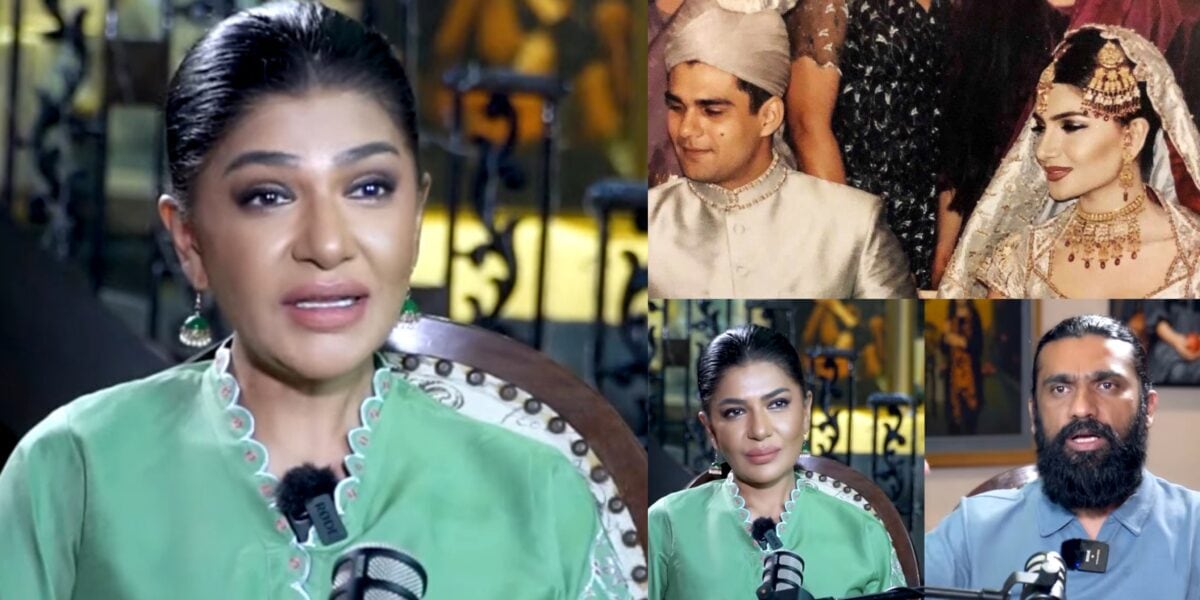
Design curator and media professional Kamna Malik talks about escaping an abusive marriage and parents who always had her back.
[Trigger warning: Mentions of abuse]
When the news broke about Twisha Sharma, I couldn’t stop reading and thinking: that could have been me.
I was 21 when I ran away from my marital home less than 48 hours after my wedding. The only reason I’m here today is because my mother picked up her phone.
The proposal
I was finishing law school in Pune when I met my mother-in-law through a common family friend, and she proposed I marry her elder son. This was around 2007, when Orkut was social media, and society and Bollywood films at large were still insisting that marriage was the only happy ending for women.
Of course, you could have a career you were told, but everywhere I looked, I mostly saw women giving it up and making sacrifices for the family. My own mother, who comes from a family of lawyers and judges and had studied to be a lawyer, never ended up practising because she got married. Subconsciously, you accept that marriage must be an inevitable and indispensable part of your identity.
My parents never wanted me to get married so early, but this seemed like a good proposal. I was very clear that I wanted to marry into a smaller family and pursue my double master’s. My then-husband was a merchant navy officer who was planning to move to the UK for his captain’s license. His goals kind of aligned with my vision for my life and career, and I agreed.
Our courtship was very short, and during which time, he was mostly away on the ship. So most of my interactions were with my to-be mother-in-law, who lived close to our house.
The missed red flags
When I look back, there were a lot of red flags in her mannerisms, but I didn’t pick up on them at the time. She was a divorced woman who was emotionally married to her sons. Whenever I spoke to my to-be husband, I would have to inform her about what we had discussed. She had opinions about what I wore and ate and force-fed me certain foods. I had been a vegetarian my whole life but she talked me into eating non-vegetarian food. I was never a chai person, but I started drinking tea because that’s what they did in their household. I’m asked why my parents didn’t intervene during this time, but you’d be surprised how much gets obscured in the name of culture.
As a 21-year-old, I thought this was all part of the adjustment process. My to-be mother-in-law would comment on my hair and weight (even though I was quite thin back then). There were also indirect demands for dowry. They lived in a two-storey house and my parents were told to furnish the upper floor so I could live there with my to-be husband. I’m my parents’ only daughter and they wanted to do whatever was needed so they agreed to everything.
There was one episode I’ll never forget. Before the wedding, I had fractured my foot and was bedridden. When my mother-in-law came to visit me, my cousin, who was living with us at the time, accidentally dropped tea on her kurta. My mother-in-law didn’t say much then, but later told her son that my cousin had deliberately tried to burn her.
The wedding night
Her true self was revealed the day I got married and went to their house. She took me straight to her room, made me sit on a chair and for the next 10 hours, she emotionally, verbally and physically abused me while my husband just sat there and did nothing. She hurled abuses, hit me. She insulted my body and warned that if I ever gained weight, her son could cheat on me and I wouldn’t have any right to fight it. She told me to be prepared to make babies and forget about further education. I was told that I was nothing more than a trophy wife, as good as furniture in the house. Afterwards, they took away my phone, locked me in a room and gave me stale, thanda khaana.
On the second day, when my husband had gone downstairs for breakfast, I managed to sneak out of the room to look for a way out of the house. I found a landline. The only number I knew by heart was my mother’s, so when no one was looking, I called her and asked if I could come home. She was with guests, so she didn’t ask any questions and told me to come the next day.
The next morning, my husband had left the door open by mistake, so I snuck out and ran like hell. I was in tatters and injured, but I kept running until I reached home.
My mind kind of went blank during the days that followed, but for a long time after, I tried to make sense of why this had happened to me. It was only after years of therapy I understood that it was probably my mother-in-law’s way of trying to condition me to fear her.
The aftermath
When I came home I wasn’t even sure of what I wanted. Somewhere I think I was still hoping my parents would intervene and fix things but they immediately sought legal advice.
My husband ran away from Pune on the next flight because he knew that the cops could come after him. A part of me still wanted to save my marriage because I believed that marriages were meant to last forever, but it dawned on me then that this man didn’t care about me at all. When he found out I was gone, he didn’t even bother to find me or call my parents to check if I was okay.
I was very lucky that my parents never pressured me to go back and make it work. They were very clear that they wanted me to start afresh. Eventually, they suggested I get a divorce. My father said, “You have a whole life ahead of you. A marriage without a conclusion can become a hindrance in many ways. This is the best way to put a full stop to it.”
Even though I had the privilege of legal support from my mother’s family, it still took two years before all the formalities were finalised.
Rebuilding my independence
After this phase, I immediately started working and found an internship at The Financial Express in Pune. Media had always been my second choice after law, so this seemed like the perfect job.
I was still quite broken mentally and my therapist at the time advised my parents to send me away for a change. Mumbai was the closest, so I moved there and found a job. It has been over 18 years since and I have built myself step-by-step, never taking a penny from my parents.
If I have to look for a silver lining in this experience, I would say that it taught me the importance of financial independence. Until then I wasn’t ambitious and didn’t really understand why women need to have their own money. The divorce changed my mind. Nothing in the world can empower you like making your own money. Most of the time, women stay in bad relationships because they don’t have the financial support. Financial independence gave me a spine; it gave me the will to have my own identity.
It still took me a very long time to accept what had happened. I would not tell people I was divorced for years because I was worried about what they would think of me. There is stigma attached to being divorced, even if you were married for just 48 hours. Even today, it has taken me a lot of courage to speak about this openly because people always blame the woman in situations like these.
I realised I too was carrying the baggage of feeling that I had not been good enough, that somehow what happened was my fault. It’s only now that I am learning to shed that baggage, own my reality and be proud of what I made of a terrible situation.
I have so much gratitude for my life today. There are so many amazing things that have happened in the last two decades that wouldn’t have happened if I was still married. The journey has not been easy, but I am thankful to have parents who have supported me and given me the freedom to be myself.
For everyone reading this
I’m telling this story because of Twisha Sharma. If somebody had heard that girl and helped her, things would be so different. I often think: what would have happened if my mother hadn’t picked up her phone that day? I’m certain I wouldn’t be here today. I would most likely have been dead.
Just because a family appears ideal on paper—well-educated, well-travelled, and financially secure—does not necessarily make them a good family. Ultimately, what matters are their values and how they treat others.
I hope my story helps someone find the will to leave a bad marriage. For parents and relatives reading this, stop telling your child she can’t come home. A woman is not disposable. She deserves a safe space she can go to, because without it, so many women never find their voice.