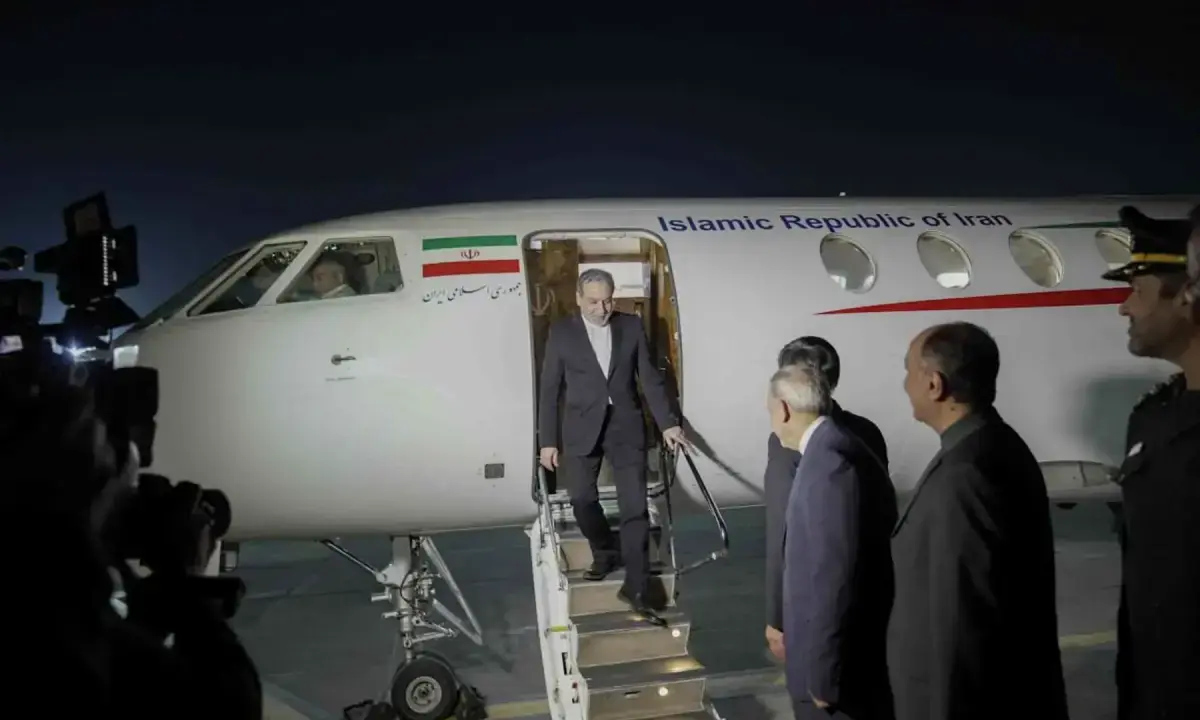
Iranian Foreign Minister Abbas Araghchi was back in Pakistan on Sunday, a diplomatic source told Dawn, a day after he left Islamabad for a visit to Oman as part of a tri-nation tour.
He is undertaking the trip against the backdrop of ongoing diplomatic efforts, notably by Pakistan, to bring Tehran and Washington to the table to talks aimed at ending the conflict that began with US-Israeli strikes on Iran on February 28.
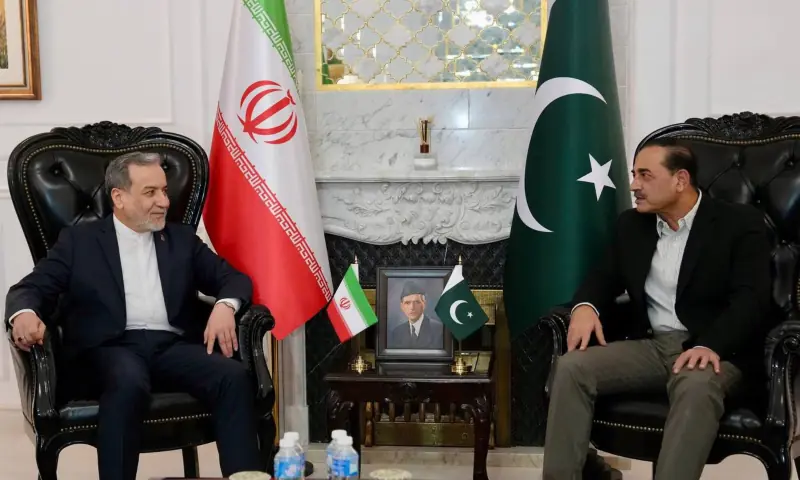
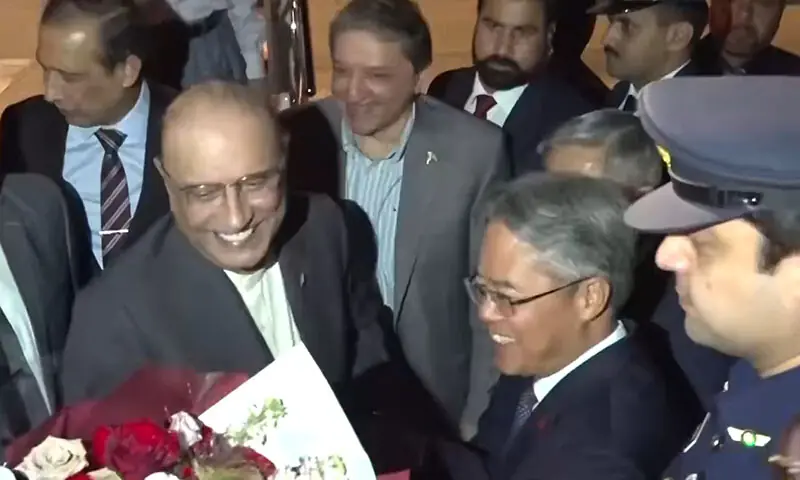
Araghchi arrived at the Nur Khan air base in Rawalpindi after completing a day-long visit to Oman, the diplomatic source said, adding that he would meet with senior Pakistani officials during his short stay in Islamabad.
The Iranian foreign minister will then depart for Moscow, he added.
Meeting with Oman’s sultan
Earlier in Oman, Araghchi met with Sultan Haitham bin Tariq and briefed him “on the Iranian side’s perspectives” regarding the regional developments and the peace efforts, Oman’s foreign ministry said in a statement on X.
Araghchi “listened to His Majesty’s views on ways to advance these efforts in a manner that enhances opportunities for reaching sustainable political solutions and limits the repercussions of crises on the peoples of the region”, the statement said.
It added that the sultan affirmed the importance of prioritising the language of dialogue and diplomacy in addressing issues, in a way that contributed to consolidating the foundations of peace.
Araghchi expressed Iran’s appreciation for Oman’s positions in “supporting dialogue efforts and enhancing endeavours for security and stability in the region, especially amid the current regional challenges”, the statement said.
Separately, Iran’s foreign ministry said in a statement that the security in the Strait of Hormuz and broader Gulf waters and diplomatic efforts to end the US-Israeli war on Iran were discussed during the meeting.
It quoted Araghchi as saying the US military presence in the Middle East was fuelling insecurity and division. It said he called for a regional security framework free of outside interference during the meeting.
Separately, Iranian state broadcaster IRIB reported that he also held a phone call with his Saudi counterpart, Faisal bin Farhan, and discussed regional developments and ongoing diplomatic processes.
Later, state-run news agency IRNA reported that he also held a phone call with Qatari Prime Minister Sheikh Mohammed bin Abdulrahman Al Thani and exchanged views on the “latest regional developments and ongoing diplomatic efforts”.
Araghchi hands over Iran’s proposals
Araghchi earlier arrived in Islamabad on Friday night and handed over Tehran’s response to US proposals for ending the war during meetings with Pakistan’s civil and military leadership before leaving for Oman on Saturday.
He departed for Muscat after a day of intensive consultations, reportedly aboard a Gulfstream G600 owned by the Pakistan military. Neither the Pakistani military nor the Iranian officials confirmed or denied this. This suggested Pakistani facilitation of his regional tour to find a diplomatic solution to the conflict.
A Pakistani source involved in the process said the Iranian side had delivered both its proposals and its perspective on the American proposals. Sources said Iran emphasised its terms while indicating readiness to remain engaged in shaping a future diplomatic course.
Officials familiar with the discussions said Tehran stressed that any framework must be “rational and fair” and maintained that negotiations cannot proceed under pressure, particularly in the presence of the naval blockade of Iranian ports by the US. At the same time, the Iranian side signalled willingness to stay engaged through Pakistan’s mediation but insisted that it would not accept terms seen as undermining its sovereignty or security interests.
No details of the proposals were made public.
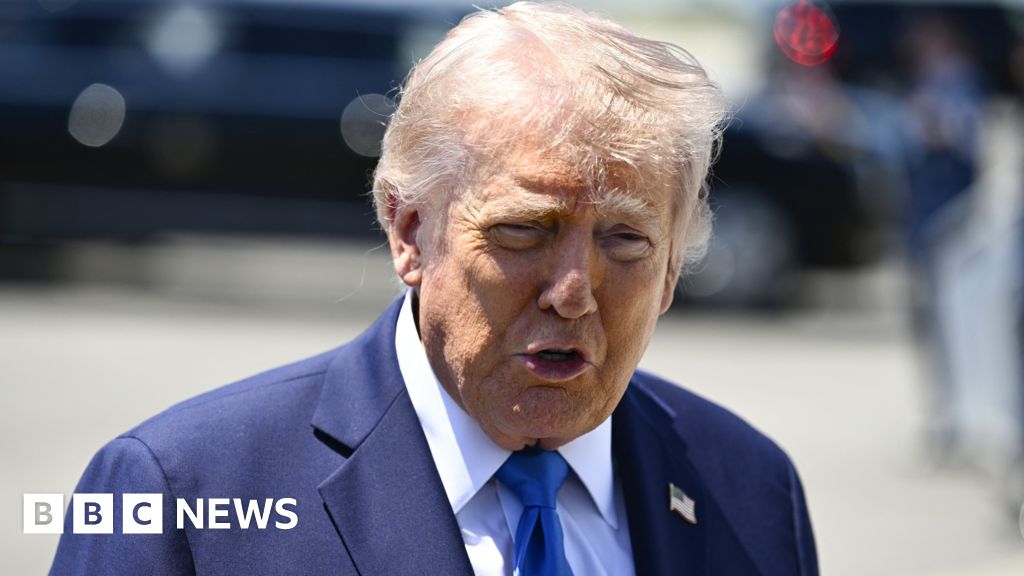
The visit unfolded amid indications earlier from Washington that Special Envoy Steve Witkoff and adviser Jared Kushner would travel to Islamabad to engage with the Iranian delegation. However, as Araghchi departed for Moscow, US President Donald Trump called off the trip.
Impasse in talks
Pakistan’s civil and military leadership has been engaged in feverish diplomacy, seeking to bring the US and Iran back to the negotiating table after the first round of talks in Islamabad yielded no result.
The first round of historic direct US-Iran talks was held in Islamabad on April 11 and 12, following a Pakistan-brokered ceasefire on April 8. It had ended without an agreement, but also without a breakdown.
However, the expected second round of negotiations witnessed a delay due to continued friction between the US and Iran, particularly regarding Iran’s closure of the Strait of Hormuz and the US blockade of Iran’s ports.
Meanwhile, Trump has announced an extension in the ceasefire until Tehran submits a “unified proposal” and “discussions are concluded, one way or the other”.
The US has, however, maintained its blockade of Iranian ports.
On the other hand, the Strait of Hormuz — through which one-fifth of the world’s oil and gas supply used to pass during peacetime — also remains blocked.
After the US and Israel attacked Iran on Feb 28, Tehran responded by shutting down the strait and later announced it would charge vessels using the maritime route. The US earlier this month blockaded Iranian ports to stop its oil exports and returned over 30 ships leaving Iranian ports.
Unrestricted navigation through the Strait of Hormuz has emerged as one of the issues at the core of the impasse between the US and Iran. Another point of contention is Washington’s demand for long-term commitments on Iran’s nuclear programme, including constraints on enrichment and safeguards against weaponisation.
Additional input from Reuters