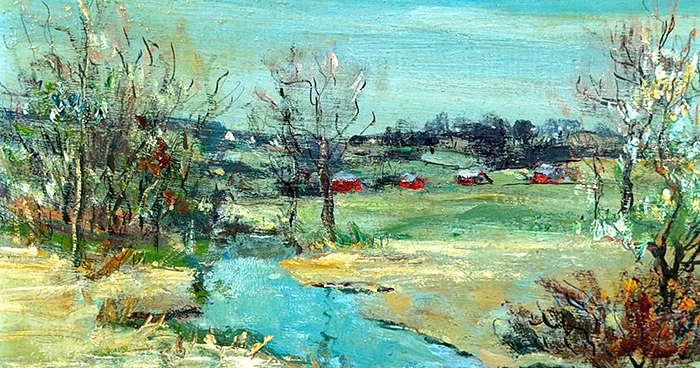
Some childhood memories never leave us. For Lina Malki, one of those memories is tied to the scent of turpentine drifting through her family home in Damascus. Long before she understood what painting meant, she understood that art carried emotion, mystery, and presence. Her father, an architect and visual artist, often painted at home while she watched with quiet fascination. She remembers the colors, the atmosphere, and above all, the smell that filled the room whenever he worked.
Even today, that scent takes her back to being five years old, standing in a house where creativity was not treated as something distant or unreachable. Art was part of daily life. It surrounded her naturally, without explanation. That environment gave her more than inspiration. It gave her a visual language that would continue developing throughout her life.
Growing up in Damascus shaped Lina’s relationship with beauty and expression. The city itself carries layers of history, texture, and emotional depth. For a sensitive child already drawn to observing details, the world around her became a constant source of reflection. Painting slowly transformed into something personal and necessary. It was not simply a hobby or a talent. It became the way she processed emotions and understood herself.
Painting Became a Form of Survival
Lina describes herself as deeply sensitive, and for her, painting became the only true way to express what could not be spoken. Over time, her work turned into a mirror through which she could examine her own inner life. Looking back at old paintings often revealed emotions and thoughts she had not fully understood while creating them.
That connection between art and self discovery naturally led her toward studying fine arts. Choosing that path did not feel dramatic or uncertain. It felt inevitable. Art had already become the language through which she moved through life.
She graduated from the Faculty of Fine Arts in Damascus in 2014, entering professional life during one of the most painful periods in Syria’s modern history. While many young artists dream of beginning their careers in stable conditions, Lina’s early years as an artist unfolded during wartime.
She began teaching at Syrian universities while continuing to build her own artistic practice. But balancing creativity with survival during conflict brought enormous emotional weight. Instability became part of everyday life. Loss became unavoidable. Continuing to teach and paint under those circumstances required a level of emotional endurance that few people outside such experiences can fully understand.
Yet art remained constant. It became the thing that allowed her to keep moving forward. While the world around her changed violently and unpredictably, painting gave her a space where meaning could still exist.
Creating Art During Wartime
For many artists, the studio is a place of peace and focus. During wartime, however, even the act of entering a studio can carry emotional tension. Lina continued painting while living through uncertainty, fear, and grief. Instead of turning away from those realities, she allowed them to become part of her artistic journey.
What makes her story especially powerful is that she does not speak about art as escape. She speaks about it as confrontation and reflection. Her paintings are not decorative objects designed only for beauty. For her, each artwork carries the emotional and intellectual reality of a specific moment in life.
She sees art as an ongoing search rather than a finished answer. Every painting becomes connected to a certain time, place, and emotional condition. Through the process of creating, she works through doubt, struggle, memory, and change. That honesty gives her work emotional depth that audiences can feel immediately.
Many artists speak about growth in technical terms, but Lina’s growth has been deeply tied to experience itself. Every hardship, including failure, redirected her toward something more truthful in her work. She learned not to reject painful experiences but to recognize their role in shaping artistic clarity.
That lesson changed the way she approached both life and creativity. Appreciating every stage of the journey allowed her to better understand not only what she wanted to create, but also what she no longer wanted to pursue.
Leaving Syria and Finding Distance in Cairo
One of the most important turning points in Lina’s life came when she moved from Syria to Egypt. Leaving one’s country is never a simple physical relocation. It changes perspective, memory, and identity in ways that often take years to fully understand.
For Lina, Cairo became a space of isolation, reflection, and transformation. She spent two years living mostly inside her studio, experiencing life outside Syria for the first time. That distance from home created a new emotional lens through which she began seeing her past and herself differently.
Isolation can often sharpen perception. Away from familiar surroundings, memories become clearer and emotions take new shapes. During those years in Cairo, Lina’s artistic language deepened. She began examining the relationship between memory, absence, and identity in more layered ways.
The experience ultimately led to one of her most meaningful exhibitions.
The Deep Emotional Weight of “Shadow”
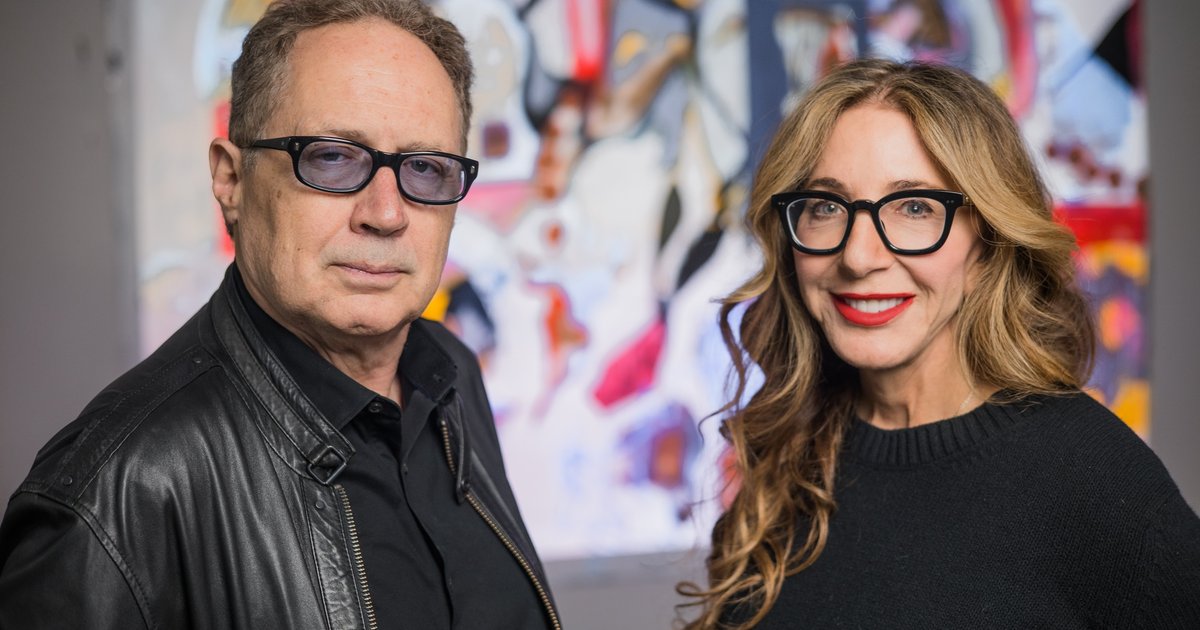
Lina’s recent exhibition, “Shadow,” presented at Dai Art Gallery in Zamalek, Cairo, marked a major moment in her artistic journey. More than just a collection of paintings, the exhibition reflected a period of intense personal transformation.
The title itself suggests presence and absence existing together. Shadows are shaped by light, yet they remain tied to darkness. That duality closely mirrors the emotional complexity of exile, memory, and self reflection that influenced the exhibition.
The works created during this period carried the emotional impact of distance from Syria while also exploring the psychological changes that come with displacement. Living outside her homeland forced Lina to look back at her life from a new angle. Familiar experiences gained different meanings once viewed from afar.
This perspective shaped every part of “Shadow.” The exhibition became not only about external events, but about internal transformation. It reflected loneliness, contemplation, memory, and the emotional negotiations involved in rebuilding oneself in a different country.
For audiences in Cairo, the exhibition offered more than visual experience. It invited viewers into a deeply personal emotional landscape shaped by migration, memory, and artistic honesty.
Art as a Living Process
One of the most striking aspects of Lina’s philosophy is the way she refuses to separate art from life itself. For her, painting is not a finished product designed only for display. It is part of an evolving process of understanding.
She speaks about nurturing herself through art and working through doubts by means of painting. This relationship between artist and artwork feels intimate and continuous. Each piece becomes evidence of an emotional state, a question, or a period of searching.
That perspective stands in contrast to modern expectations that often demand instant clarity or fixed identity from artists. Lina embraces uncertainty instead. She allows herself to evolve without forcing immediate answers.
This openness gives her work authenticity. Audiences connect with art most deeply when they sense emotional truth behind it. Lina’s paintings carry that truth because they emerge from lived experience rather than performance.
Even her reflections on failure reveal this mindset. Instead of viewing mistakes as interruptions, she sees them as quiet redirections toward something more honest. In a creative world often obsessed with success and recognition, that perspective feels rare and grounded.
The Relationship Between Memory and Creativity
Memory plays a powerful role throughout Lina’s journey. From the smell of turpentine in childhood to the emotional distance of exile in Cairo, her life has been shaped by moments that continue echoing through her work.
Artists often return to memory not because they are trapped in the past, but because memory contains emotional truths that continue evolving over time. Lina understands this deeply. Looking back at older paintings allows her to recognize emotions she could not fully articulate earlier.
In this sense, art becomes a conversation across time. The artist who created the work and the artist reflecting on it later are not exactly the same person. That tension creates emotional richness.
Her story also highlights how migration changes memory itself. Distance from Syria did not erase her connection to home. Instead, it intensified reflection. The space between countries allowed certain emotions and observations to become clearer.
This emotional layering gives her work complexity that resonates beyond geography. While her experiences are deeply personal, the themes of identity, displacement, searching, and self understanding are universal.
What Lina Malki Would Tell Her Younger Self
When asked what advice she would give her younger self, Lina responds with remarkable gentleness. She says she would tell herself not to pressure herself into understanding everything immediately.
Some experiences, she believes, only reveal their meaning with time. Art itself can sometimes understand us before we understand ourselves.
That reflection captures the essence of her journey. Her career has not been built on certainty or easy answers. It has been shaped by patience, emotional honesty, and the willingness to continue searching even during periods of confusion and pain.
In many ways, this is what makes Lina Malki’s story so compelling. Her work is not driven by the desire to impress or decorate. It emerges from a genuine attempt to understand life, memory, and the self through painting.
From childhood memories in Damascus to isolated years in Cairo, from teaching during wartime to presenting deeply personal exhibitions, her artistic path reflects resilience without losing vulnerability.
And perhaps that is what truly defines her work. It is not simply about surviving difficult experiences. It is about transforming those experiences into something meaningful, reflective, and deeply human.
Do follow her on Instagram.
Read More- Dubai’s Smart Waterway Mapping Unlocks Next-Level Urban Growth
Sneha Singhaniya is a dedicated Relationship Manager at UAE Stories based in Dubai. With over a year of experience, she specializes in business, real estate, and lifestyle storytelling. Sneha is known for building strong connections and bringing real, inspiring stories to life through meaningful collaborations. Her approach combines professionalism with a human touch, helping individuals share their journeys in a way that connects with a wider audience. Through her work, she continues to contribute to impactful storytelling that informs, inspires, and empowers readers.