Every year, thousands of Indian women are affected by a largely preventable disease. Cervical cancer continues to be one of the biggest health threats facing women in the country — but a nationwide vaccination drive may soon change that reality.
Did you know that cervical cancer is the second most common cancer in India? According to official data, every year India reports around 80,000 cervical cancer cases and 40,000 deaths.
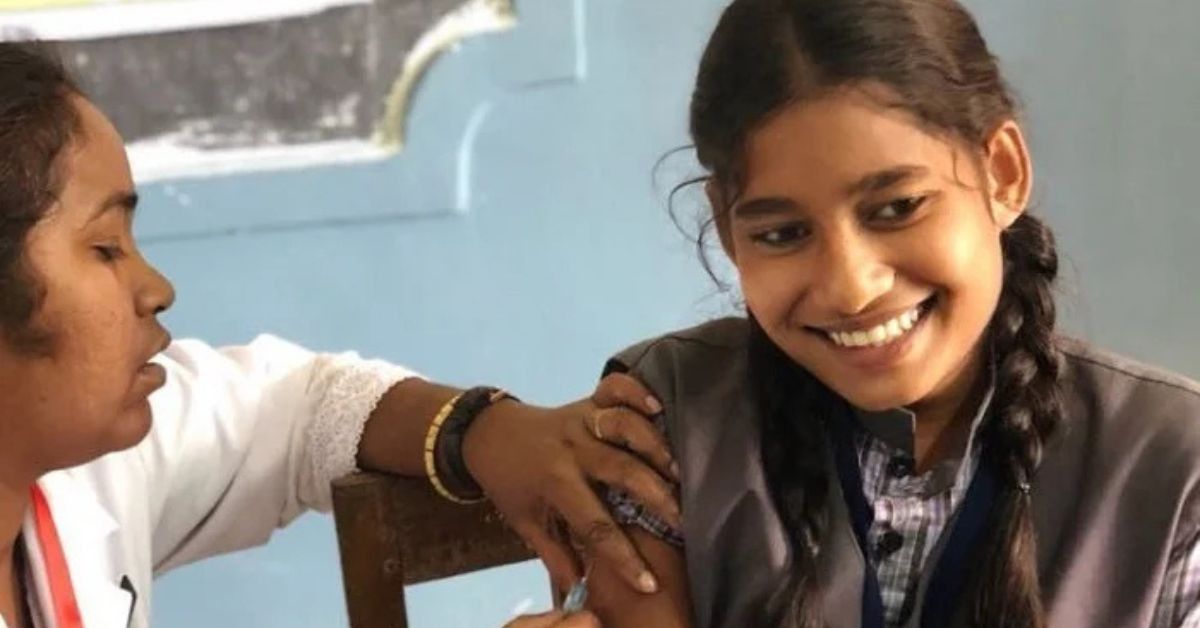
The good news now is that this cancer has a vaccine! The Human Papillomavirus (HPV) Vaccine: recently, the Union Health Ministry announced that this vaccine will be administered free of cost to all girls aged 14 across the country.
When is it likely to start?
Although the government is yet to give an exact date for the drive, they have mentioned that it will begin soon – By February end and the vaccine campaign will be held for 90 days across the nation.
The vaccination drive will be voluntary and provided free of cost at designated government health centres, including:
According to Health Ministry sources, who was quoted by NDTV: All vaccination sessions will take place under the supervision of trained medical officers, with proper systems in place to monitor recipients after the shot and manage any rare adverse reactions.
With this rollout, India will join over 160 countries worldwide that have already incorporated the HPV vaccine into their public health programmes.
What is the HPV Vaccine?
HPV (Human Papillomavirus) vaccine is a preventive drug that protects against infection by certain strains of the human papillomavirus. Some high-risk HPV types (especially types 16 and 18) can cause cervical cancer, while others (like 6 and 11) can cause genital warts.
The government has set up the vaccine drive for girls who are 14-years-old. Approximately 1.1–1.2 crore girls become eligible each year under this initiative. Photograph: (istock)
The vaccine given under the programme is Gardasil, a quadrivalent HPV vaccine that protects against the four strains of the virus.
Who are the targeted groups of this campaign?
The government has set up the vaccine drive for girls who are 14-years-old. Approximately 1.1–1.2 crore girls become eligible each year under this initiative.
Why only 14-year-olds?
The government has fixed the target age at 14 years because evidence shows that vaccinating girls before exposure to HPV (typically through skin-to-skin or sexual contact) offers the strongest and longest-lasting protection against high-risk HPV infection that can lead to cervical cancer later in life.
Vaccinating at this age also aligns with global scientific recommendations and helps create immunity well before the age when the risk of infection increases.
What should parents do now?
-
No registration required initially: During the campaign phase, eligible girls can walk into designated government facilities for the vaccine.
-
Consent is needed: Parents or guardians will be required to provide consent before vaccination. In some states, this may be obtained in writing or digitally (for example, via an OTP-based system).
-
Documentation: Basic identity documentation showing the child’s age (like a birth certificate or school ID) may be asked for verification at the centre. (Policy details vary by state, but age verification ensures eligibility.)
How many doses?
India’s campaign is using a single dose of the Gardasil HPV vaccine for this special drive, following recommendations that one dose offers durable protection and improves coverage. Internationally, some programmes use two or three doses depending on age and vaccine type, but the government is focusing on a one-dose strategy for this phase.
Is it available in private hospitals too?
Yes — HPV vaccines already exist in the private sector and can be administered by private doctors or clinics, though at cost (often several thousand rupees per dose). But the free government programme is only at public health facilities during the campaign phase.
India’s campaign is using a single dose of the Gardasil HPV vaccine for this special drive, following recommendations that one dose offers durable protection and improves coverage. Photograph: (cancerworld.net)
Is the vaccine safe?
Yes. HPV vaccines like Gardasil (and Gardasil-9 used in many countries) have a long-established safety record from global use since the mid-2000s. Surveillance by health bodies such as the US Centers for Disease Control and Prevention (CDC) and World Health Organization (WHO) shows a reassuring safety profile with no evidence that the vaccine causes HPV infection.
If implemented effectively, this nationwide rollout could mark a turning point in India’s fight against cervical cancer. By protecting girls early, the country is investing in a future where thousands of preventable deaths can be avoided each year.
With awareness, accessibility, and timely vaccination, cervical cancer could gradually shift from being one of India’s most common cancers to one that is largely prevented before it even begins.