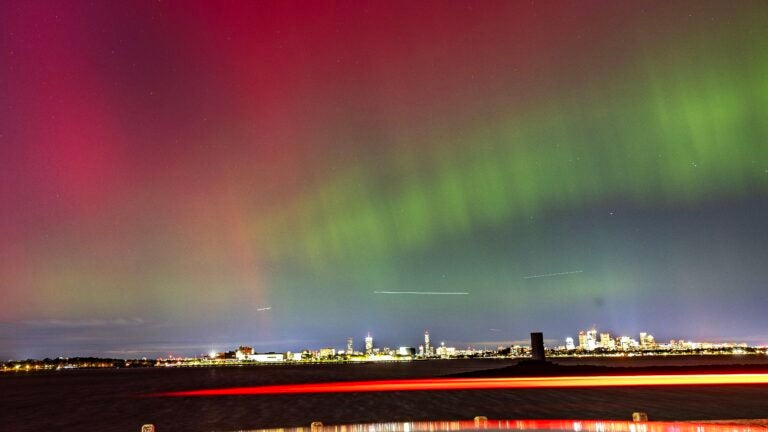
It looks like the long weekend could be starting early for parts of Australia. A powerful solar storm forecast towards Earth could put on a rare celestial show across Australia and New Zealand this Friday, June 5, with a potential Aurora Australis visible across New South Wales, the ACT, South Australia and Western Australia. Here’s what you need to know.
When is the next Aurora Australis forecast?
Current estimates place the arrival of the CME at approximately 4am on June 5, although forecasts can vary by as much as 12 hours either side of the predicted impact time. As with all aurora forecasts, visibility will ultimately depend on the strength of the geomagnetic storm once it reaches Earth.
If conditions align, the best opportunity to view the aurora is expected to be around 65 to 70 minutes after sunset on June 5, assuming the CME has already arrived and geomagnetic activity remains elevated.
Estimated local viewing times are as follows:
- Tasmania: approximately 6:05pm–6:10pm
- Victoria: approximately 6:05pm–6:10pm
- New South Wales: approximately 6:00pm–6:05pm
- ACT: approximately 6:00pm–6:05pm
- South Australia: approximately 6:00pm–6:05pm
- Western Australia: approximately 6:10pm–6:15pm
- New Zealand (Auckland): approximately 6:15pm–6:20pm
- New Zealand (Christchurch): approximately 5:50pm–5:55pm
These times are approximate and based on sunset in each capital city. Visibility can vary depending on local weather conditions, cloud cover and the strength of the geomagnetic storm at the time of arrival.
Where could the aurora be visible?
The strongest displays are expected across New Zealand, Tasmania and southern Victoria, where the Aurora Australis is most commonly observed.
However, if geomagnetic activity reaches forecast levels, there is also potential for sightings from southern parts of New South Wales, the ACT, South Australia and Western Australia.
What is causing this aurora australis?
According to forecasts, solar region AR4455 has produced three significant solar flares in recent days, with at least two triggering coronal mass ejections (CMEs) that are travelling towards Earth. When these collide with Earth’s magnetic field, they can generate geomagnetic storms strong enough to produce the Southern Lights.
How to improve your chances of seeing it
For the best viewing conditions, head to a dark location away from city lights with an unobstructed view of the southern horizon.
Even if the aurora isn’t immediately visible to the naked eye, smartphone cameras can often capture colours and details that are difficult to see in person. Using night mode or a long-exposure setting can significantly improve your chances of photographing the display.
As always, aurora viewing is highly dependent on weather conditions, cloud cover and the eventual strength of the geomagnetic storm.
Stay inspired, follow us.
Feature image by Richard Lin via Unsplash.