

Local News
The excavation uncovered part of a 1775 defensive ditch, musket balls, gunflints, and artifacts left by British soldiers.
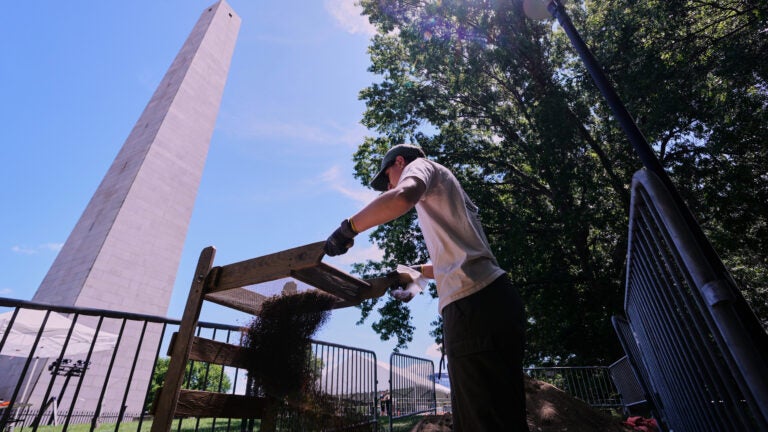
Two months after archaeologists unearthed musket balls and remnants of a Revolutionary War fortification under the Bunker Hill Monument grounds in Charlestown, researchers say the completed excavation has revealed new details about the battlefield and the soldiers who occupied it.
The City of Boston Archaeology Program announced the findings this week following excavations on the southwest and northwest portions of the monument grounds, project archaeologist Lauryn Sharp wrote in the Charlestown Patriot-Bridge.
Using ground-penetrating radar to guide the excavation, archaeologists identified part of the defensive ditch dug by Provincial troops on the eve of the Battle of Bunker Hill. The ditch measured about 3 feet deep and 6 feet wide.
“This excavation is part of a larger initiative to bring new information about both the battle and Charlestown’s residents to the public,” Sharp wrote. “Better quality ground-penetrating radar results, paired with the larger 250th anniversary of the nation, have presented an opportunity to reexamine this historical landscape and test lore and theories about the battlefield.”
In June, archeologists found evidence of the ditch shortly after opening the first of two trenches at the site. Previous digs in the 1990s had uncovered artifacts from the battle and some signs of ditches, but the recent excavation provided physical evidence that supported the shape depicted on the map by the artist and Loyalist Henry Pelham.
The excavation recovered seven musket balls and three gunflints, with analysis showing ammunition resembling that of both Provincial and British forces. One British-caliber musket ball bears a mark from the ramrod used to load it and compression banding caused when it scraped against the barrel as it was fired, Sharp wrote.
Archaeologists also found tea wares, tobacco pipes, wig curlers, sleeve buttons, and other personal items believed to have been left by British troops, who remained there for nine months after the battle. No human remains were discovered.
The artifacts will be washed, cataloged, and analyzed at the City Archaeology Laboratory in West Roxbury and will help guide future archaeological investigations at the site, Sharp said.

Sign up for the Today newsletter
Get everything you need to know to start your day, delivered right to your inbox every morning.
