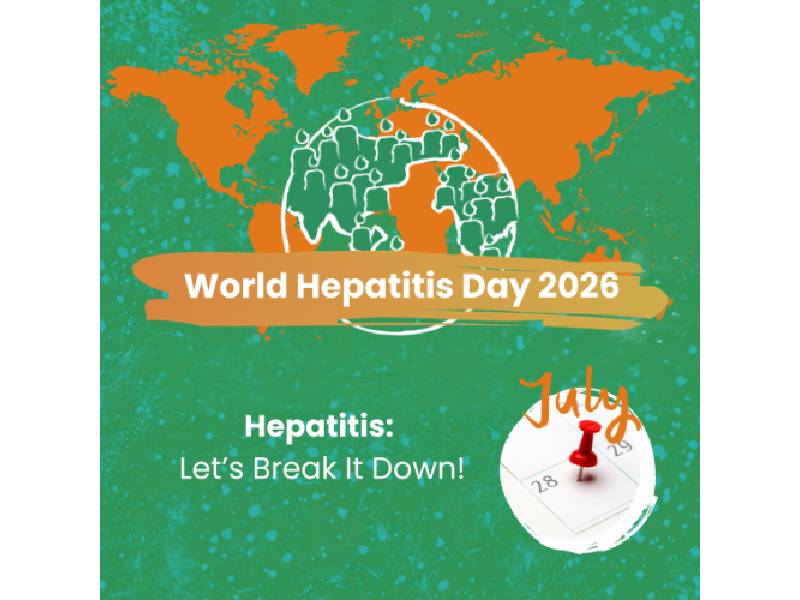
Source: WHO
Turn on the television, listen to the radio, or flip through the pages of a newspaper, and you are likely to come across reports of disease outbreaks and emerging viruses, many with life-threatening consequences. However, rarely do you encounter headlines about hepatitis, except perhaps during medical conferences or public health campaigns.
Yet hepatitis remains one of the world’s most persistent public health threats, silently affecting hundreds of millions of people and claiming more than one million lives each year. Often described as the “silent epidemic,” the disease can remain undetected for years while steadily causing irreversible damage to the liver.
Indiscriminate in its spread, viral hepatitis affects people regardless of geography, race, age, or social status. According to the World Health Organization (WHO) Regional Office for Africa, “Viral hepatitis has become a public health challenge of global proportions.” Although there are five types of viral hepatitis, A, B, C, D, and E, chronic hepatitis B and C account for about 95% of hepatitis-related illness and premature deaths.
Hepatitis D is less common and occurs only in people already infected with hepatitis B. Hepatitis A and E, on the other hand, are primarily transmitted through contaminated food and water, causing acute infections and outbreaks in areas with poor sanitation and inadequate waste disposal. These infections are usually short-lived and resolved within a few weeks. However, hepatitis E poses a much greater risk to pregnant women, with significantly higher fatality rates.
Despite the devastating impact of the disease, medical advances have made hepatitis one of the world’s most preventable and, in some forms, curable infectious diseases. The greatest challenge today is not scientific innovation, but ensuring that lifesaving vaccines, knowledge, testing, and treatment reaches everyone who needs them.
The liver, which is the body’s largest internal organ, bears the brunt of hepatitis infection. It performs numerous essential functions, including processing nutrients, filtering toxins and medications, producing bile and vital proteins, storing energy and iron, supporting the immune system, regulating blood clotting, and removing bilirubin, the substance responsible for the yellowing of the skin and eyes when it accumulates. Sadly, unlike many illnesses that produce early warning signs, hepatitis often progresses silently. An infected person may feel perfectly healthy for years while the virus gradually damages the liver.
Source: Peoples Gazette Nigeria
Many people discover they have hepatitis only after developing persistent fatigue, abdominal swelling, jaundice, or other symptoms of advanced liver disease. By then, treatment is often more complex, more expensive, and less effective than if the infection had been detected earlier.
This explains why, in his message marking World Hepatitis Day 2026, WHO Regional Director for Africa, Dr. Mohammed Janabi, stressed the need for governments to place hepatitis elimination at the center of national health priorities. He also called on international partners to support countries with the tools, technologies, and medicines needed to eliminate the disease.
More importantly, he emphasized that “effectively combating hepatitis, particularly in Africa, requires ensuring that every child receives the hepatitis B birth-dose vaccine within 24 hours of birth, integrating hepatitis testing and treatment into routine primary healthcare, securing sustainable domestic financing for national hepatitis programs, combating stigma and misinformation through public education and community engagement, and protecting people living with hepatitis from discrimination in healthcare, employment, and society.”
Routine screening is equally important, especially for pregnant women, healthcare workers, people living with HIV, and anyone who may have been exposed to contaminated blood or unsafe medical procedures.
Recognizing the urgency of the challenge, the World Health Organization has set an ambitious target of eliminating viral hepatitis as a public health threat by 2030. Through its Global Health Sector Strategy on HIV, Viral Hepatitis and Sexually Transmitted Infections (2022–2030), the organization aims to reduce new hepatitis infections to 520,000 cases annually and hepatitis-related deaths to 450,000 by 2030. This represents a 90% reduction in new infections and a 65% reduction in mortality compared with 2015.
Achieving these goals will require stronger political commitment, increased healthcare investment, expanded vaccination coverage, affordable medicines, and universal access to testing and treatment. This year’s official World Hepatitis Day theme is “Hepatitis: Let’s Break it Down” and it calls for urgent action to dismantle the financial, social and systemic barriers standing between the people and the services that can save their lives.
Countries such as Namibia, Egypt, and Rwanda have already made encouraging progress by integrating hepatitis screening into primary healthcare and maternal health services, expanding immunization programs, conducting mass screening campaigns, and improving access to affordable treatment.
Source: WHO/Regional Office For Africa
However, the fight against hepatitis cannot be won by governments and healthcare institutions alone. International organizations, healthcare professionals, civil society groups, local communities, and individuals also have a vital role to play. Getting vaccinated where recommended, practicing good personal hygiene, ensuring medical procedures are performed with sterile equipment, avoiding the sharing of needles and other sharp objects, practicing safe sex, and seeking prompt medical testing after possible exposure will significantly reduce the risk of infection.
Regular medical checkups are particularly important for individuals with a family history of hepatitis or those belonging to higher-risk groups.
Knowledge remains one of the most powerful tools in preventing the disease. Many infections continue to occur simply because people do not fully understand how hepatitis spreads or how easily it can be prevented. This is where health education becomes indispensable. Public awareness campaigns can promote good hygiene, encourage vaccination, discourage unsafe injection practices, and reduce the spread of hepatitis. Community leaders, schools, religious institutions, healthcare workers, and the media all have important roles to play in changing attitudes and encouraging healthier behaviors.
Hepatitis continues to affect millions of people worldwide, but unlike many global health challenges, humanity already possesses most of the tools needed to defeat it. Effective vaccines, highly successful treatments, improved diagnostic technologies, and growing public awareness have transformed what was once considered an unavoidable public health burden into a disease that is largely preventable and manageable.
The remaining challenge is ensuring that these advances reach every community, regardless of geography or income. Across Africa and other developing regions, expanding access to healthcare, improving sanitation, increasing vaccination coverage, promoting routine screening, and strengthening public health education could save millions of lives and move the world significantly closer to eliminating hepatitis as a global health threat.
Okechukwu Nzeribe works with the Onitsha Chamber of Commerce, in Anambra State, Nigeria, and loves unveiling the richness of African cultures. okechukwu.onicima@gmail.com