Overview:
Haiti’s Court of Appeal has ordered clergy from the Episcopal Church and former officials to stand trial in a 2022 arms trafficking case, reversing an earlier ruling that found insufficient evidence. On July 14, 2022, police found weapons, ammunition and fake cash in containers belonging to the Episcopal Church of Haiti at Port-au-Prince customs. An initial 2023 ruling found insufficient evidence against the Church. The case, however, was reopened in 2025, leading to a reversal despite the institution’s continued denials—claiming it’s the victim of a criminal network exploiting its name.
PORT-AU-PRINCE — Haiti’s Court of Appeal has ordered several clergy members of the Episcopal Church of Haiti, along with former senior government officials, to stand trial in a high-profile arms and ammunition trafficking case dating back to 2022.
The decision, issued April 28, reopens one of the country’s most closely watched cases, nearly four years after police seized a cache of weapons from a shipment linked to the Church.
Among those referred to criminal court are priests Frantz Cole, Jean Madoché Vil and Fritz Désiré, as well as Jean Marie Gilles, Mamion Saint-Germain and pastor Dieuné Day. Former public officials, including ex-Minister of Economy Michel Patrick Boisvert and former religious affairs official Evens Souffrant, are also named in the proceedings.
Prosecutors accuse the defendants of complicity in the illegal importation and trafficking of firearms and ammunition, as well as related charges including smuggling and counterfeiting.
After unloading the containers, their illegal contents were hidden in schools around Port-au-Prince during the day.
window.getAdSnippetCallback = function ()…
Case rooted in a major weapons seizure, legal reversals and renewed investigation
The case began in July 2022, when Haitian police intercepted a shipping container at the Caribbean Port Services (CPS) terminal in La Saline, Port-au-Prince.
Inside, authorities found 18 assault rifles — including AK-47, Galil and M4 models — along with a shotgun, four pistols, nearly 20,000 rounds of ammunition, dozens of magazines, a rifle sight and about $50,000 in counterfeit currency.
The discovery shocked the public and raised concerns about how weapons continue to enter Haiti, where armed groups have expanded their control in recent years.
In September 2023, investigating judge Marthel Jean Claude dismissed charges against Church members, citing a lack of evidence linking them directly to the shipment. He suggested the possibility that a criminal network had exploited the Church’s import privileges without its knowledge.
“Thus, it is made known to all that the Episcopal Church of Haiti, its priests, and its lay members are the main victims of this mafia network.”
Episcopal Church of Haiti
However, the Court of Appeal reopened the case in June 2025 after it was re-assigned to investigating judge Noé Masillon Pierre, citing gaps in the investigation and the need for further examination. The latest ruling reverses the earlier dismissal and sends the case to trial.
Several other individuals, including business and logistics actors, were also implicated in earlier stages of the investigation.
Church maintains innocence amid broader security implications
The Episcopal Church of Haiti has consistently denied involvement, arguing that it never ordered or cleared the shipment.
“The Episcopal Church of Haiti has not placed any container orders and has undertaken no customs clearance procedures,” the institution said in a July 2022 statement.
Earlier this month, Church leaders renewed calls for the release of detained clergy and lay members, describing them as victims of a broader criminal scheme.
“Thus, it is made known to all that the Episcopal Church of Haiti, its priests, and its lay members are the main victims of this mafia network,” the Church clergy said, breaking their silence for the first time since the July 2022 statement.
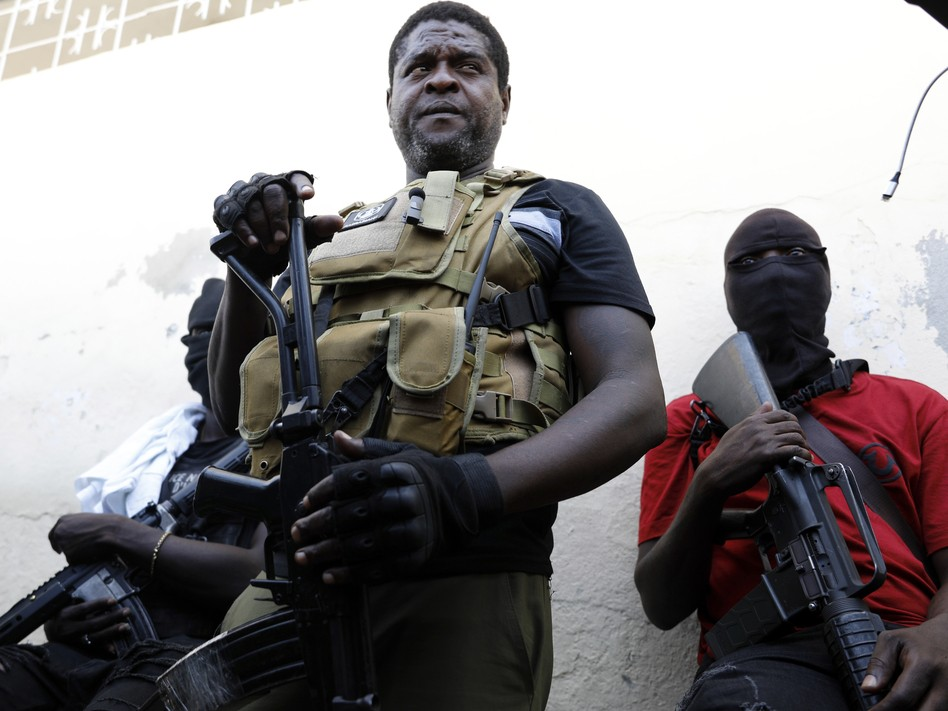
The case unfolds against the backdrop of Haiti’s deepening security crisis, where the proliferation of illegal weapons has fueled gang violence and weakened state authority.
Observers say the trial could shed light on trafficking networks that supply arms to criminal groups, a key factor in the country’s instability.
The court’s decision marks a new phase in one of Haiti’s most closely watched criminal cases, with potential implications for both accountability and public trust in institutions.
Like this:
Loading…