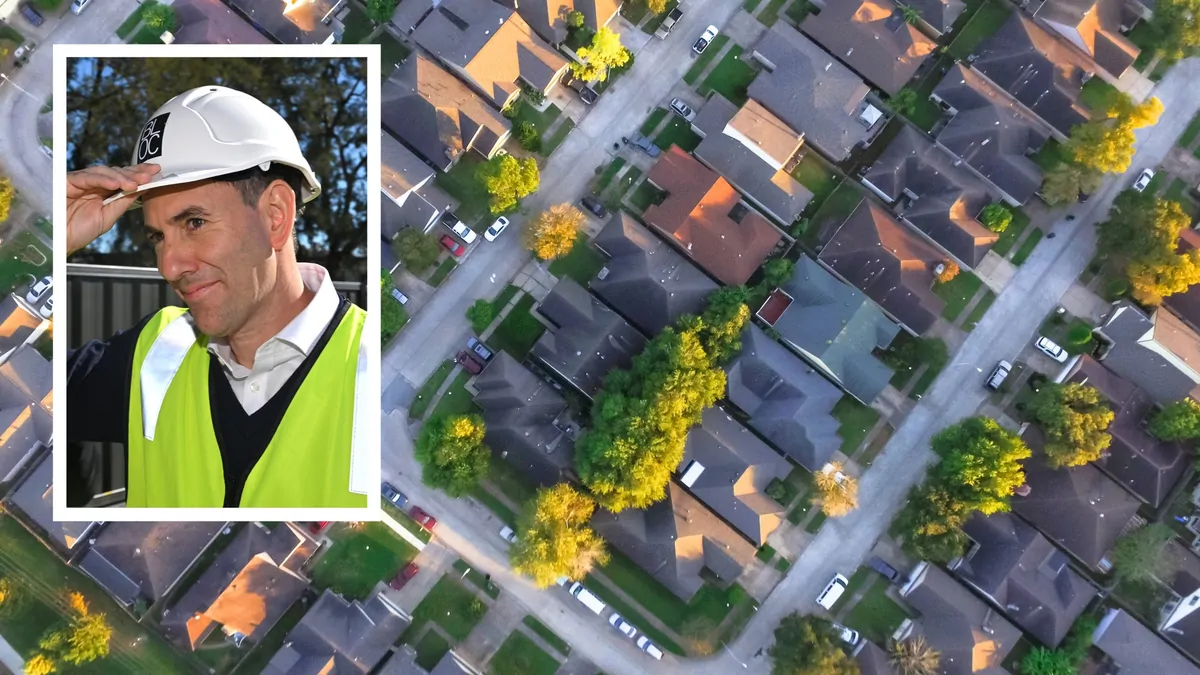
Jim Chalmers is putting housing at the heart of his fifth budget as he declares that the status quo is broken, while starting to mount his argument about why the government needs to break promises not to change property investor tax breaks.
But the Treasurer says there won’t be big cash splashes or even a surprise surplus when he unveils Tuesday’s Budget, and it will take more than four years to get out of deficit.
He’s previously labelled this his most ambitious but also most responsible set of books.
Sign up to The Nightly’s newsletters.
Get the first look at the digital newspaper, curated daily stories and breaking headlines delivered to your inbox.
By continuing you agree to our Terms and Privacy Policy.
It is widely expected to include changes to capital gains tax discounts and negative gearing.
The two tax breaks used by property investors have been blamed in part for the slide into unaffordability that has led to many younger Australians fearing they will never be able to buy a home.
Prime Minister Anthony Albanese repeatedly ruled out touching them during last year’s election campaign.
“Yes. How hard is it? For the 50th time,” he told a reporter in Cairns mid-campaign who asked if he ruled out any changes to the capital gains and negative gearing tax settings if re-elected.
Dr Chalmers said Labor had had a “singular focus” on housing supply with its election policies.
“I think the onus is on governments, if they come to a different view on major policies like those which are now being speculated about ahead of Tuesday night’s budget. . . to explain why,” he said on Sunday.
“Housing supply is overwhelmingly the primary challenge and the primary focus of this government.
“We also recognise that even though the housing challenge begins with this priority to build more homes, it begins with supply — it doesn’t end there.”
Shadow treasurer Tim Wilson warned that moves to grandfather arrangements for people already using the tax breaks would only serve to make it even harder for young people to buy property.
“The question then is, will these rules and changing these rules lead to more houses being built? People are arguing very clearly, no,” he said.
“Labor’s plan is to feed resentment and redistribution. We have wildly different views about how to build the future of the country.”
The larger challenge with tackling the housing crisis, Housing Minister Clare O’Neil said, was that “it’s not just one problem, it’s about 40 big public policy problems that are all intertwined”.
Shadow treasurer Tim Wilson warned that moves to grandfather arrangements for people already using the tax breaks would only serve to make it even harder for young people to buy property. Credit: Andrew Hensha/NCA NewsWire
Dr Chalmers used television interviews and a press conference on Sunday to argue that the government “recognises that the status quo in housing and tax is broken, it is unfair, it is unacceptable”, and something had to change.
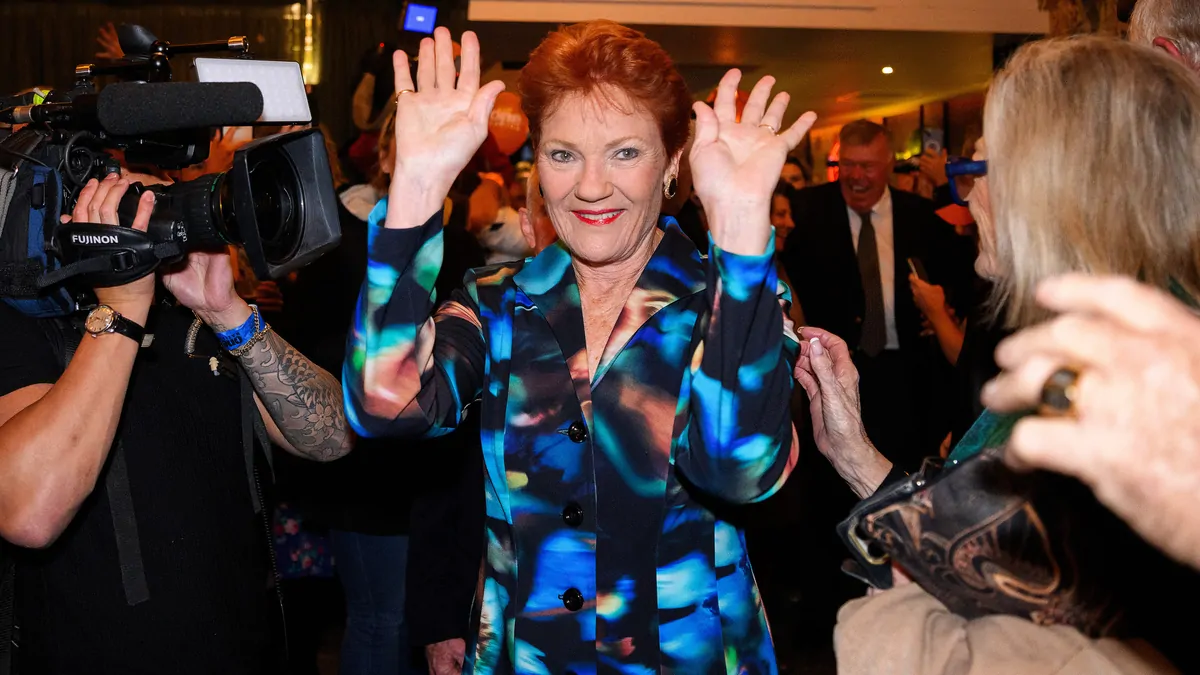
People’s dissatisfaction with what they viewed as a broken system and an economy not working for them was the undercurrent for One Nation’s massive victory in the Farrer by-election on Saturday night.
“The budget was obviously written before the outcome in Farrer, but it responds to, I think, a lot of concerns that people have,” Dr Chalmers said, while also highlighting that it contained “an element of political risk”.
With all of the focus on housing, Dr Chalmers said he was confident that the “ambitious target” to build 1.2 million homes in the five years to mid-2029 could be met “if everyone does their bit”.
Industry groups have warned over the past 18 months that Australia will fall short of that target unless the pace of construction significantly speeds up.
“$47 billion in total investment in the context of budgets which have been very tight and very responsible, including this one on Tuesday night, I think it reflects the seriousness with which we are approaching this really important area of government,” Dr Chalmers said.
This spending will include $500 million to speed up approvals for housing, energy and critical minerals projects, the Treasurer will announce on Monday.
Already, a blitz on housing projects has led to the government’s EPBC strike force approving 20,000 homes. They’re on track to meet the target of 26,000 by July.
Environment Minister Murray Watt said the EPBC laws passed last year had fixed the situation where they were neither working for business nor protecting the environment.
“Now, this new funding will put those laws to work, unlocking major projects and helping proponents get a faster yes or a faster no,” he said.
“That’s a win-win for our economy and our precious natural environment.”
About half the money, $250 million, is set aside for establishing the new national environmental watchdog that starts its work on July 1. The government is still searching for the Environmental Protection Agency’s inaugural head.
Another $105.9 million will give project proponents better access to information and environmental data, and make it easier for them to lodge applications.
More than $70 million will back the bilateral agreements that will allow State bureaucracies to assess, and eventually approve, projects under Federal laws, and to create regional plans with the intention of making it easier to balance development and environmental protection at larger scales rather than a project-by-project basis.
This funding includes the $45 million commitment that Mr Albanese unveiled when he visited Perth last month.
Dr Chalmers said people should “be careful” with assumptions about further tax cuts in the Budget.
No one should expect “big near-term cash splashes” given the belt-tightening and the need to avoid exacerbating inflation.
Nor will there be a surprise surplus.
“It won’t be in the next four years, but we will get the budget deficits down,” Dr Chalmers said.
He’s already unveiled plans for $64 billion in savings and money being redirected, although the net savings figure is promised but not yet detailed.