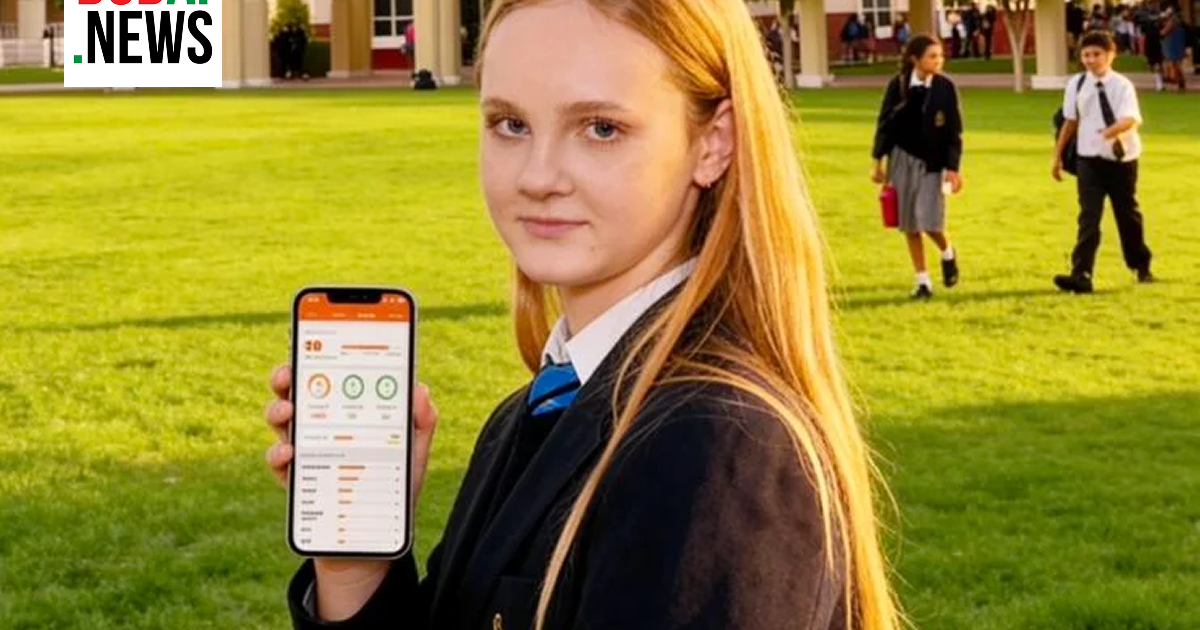
While many teenagers are balancing homework and extracurricular activities, one Dubai student has already built an artificial intelligence platform that is changing how rhythmic gymnasts receive professional feedback around the world.
Fifteen-year-old Viktoria Leusheva, a Year 11 student at Repton Dubai, is the founder of Vika, an AI-assisted rhythmic gymnastics judging platform that has grown into a global sports technology startup with more than 3,000 active users across the United States, Brazil, China, Japan, the Middle East, and several other markets.
What began as a personal frustration with the subjective nature of gymnastics judging has evolved into a platform connecting athletes with internationally certified judges while using artificial intelligence to make performance analysis easier to understand and track over time.
Her story highlights how young innovators in Dubai are increasingly combining technology with personal experience to solve real-world challenges.
A Personal Problem Became a Global Solution
Viktoria has spent nearly a decade training as a competitive rhythmic gymnast. Throughout her career, she experienced one challenge that many athletes know well: judging can sometimes feel subjective.
Instead of simply accepting the system, she decided to build something that could improve it.
At just 13 years old, Viktoria began developing what would eventually become Vika, a platform designed to give gymnasts more consistent, transparent, and data-driven performance analysis.
Rather than replacing judges, the platform works alongside experienced professionals to help athletes better understand where they excel and where they need improvement.
Today, the app serves thousands of users around the world and continues expanding its international reach.
How the Vika Platform Works
The Vika platform combines certified human expertise with artificial intelligence to create detailed performance reports for rhythmic gymnasts.
The process is designed to be accessible from anywhere in the world.
Athletes Upload Their Performances
Gymnasts begin by uploading high-quality videos of their routines through the app.
Because submissions are fully digital, athletes do not need to travel internationally to receive professional evaluations.
Certified Judges Review Every Routine
Each routine is evaluated by judges who hold official Fédération Internationale de Gymnastique (FIG) brevets, ensuring assessments come from qualified professionals familiar with international competition standards.
AI Transforms the Feedback
Once judging is complete, Vika’s AI processes the scoring information and converts technical evaluations into easy-to-read visual reports.
Instead of receiving only numerical scores, athletes can monitor:
- Technical strengths
- Areas requiring improvement
- Performance trends over time
- Progress through visual charts
- Comparisons against previous performances
The combination of expert judging and AI-powered visualization helps athletes and coaches make more informed training decisions.
More Than 3,000 Athletes Already Use the Platform
Although the platform was developed by a Dubai teenager, its audience quickly became international.
According to publicly released figures, Vika now serves more than 3,000 active users across multiple countries, including:
- United States
- Brazil
- China
- Japan
- Middle East
The platform demonstrates how niche sports technology products can scale globally when they solve a genuine problem shared by athletes regardless of location.
Vika DubAI Open 2026 Brings Competition Online
Alongside continued platform development, Viktoria has also launched the Vika DubAI Open 2026, a fully virtual international rhythmic gymnastics competition.
Unlike traditional tournaments that require international travel, the competition allows athletes to participate entirely online by submitting recorded performances.
Tournament Details
Organizers expect nearly 1,000 athletes to participate.
Participants receive more than a competition ranking. They also receive detailed technical evaluations and performance data that can support future training and development.
Repton Dubai Supported the Project From the Beginning
Viktoria credits much of her journey to the encouragement she received from Repton Dubai, where teachers supported the project throughout its development.
The school’s Head of Computer Science, Saiqah Amin, praised Viktoria’s achievement, describing it as an example of innovation, determination, and entrepreneurship among students.
The project reflects the growing emphasis placed on artificial intelligence, coding, and entrepreneurship within UAE schools, where students are increasingly encouraged to solve real-world problems using technology.
Future Plans Include Advanced AI Features
Despite already serving thousands of athletes, Viktoria says the platform is still evolving.
She has entered preliminary discussions with the Mohamed bin Zayed University of Artificial Intelligence (MBZUAI) about future development opportunities.
Among the planned enhancements are:
- Automated real-time video analysis
- Faster AI-assisted scoring workflows
- Predictive injury prevention tools
- Expanded performance analytics
- More advanced athlete development insights
These upgrades aim to make the platform even more useful for coaches, athletes, and national gymnastics programs.
Speaking about the project’s mission, Viktoria said she hopes the application will help athletes reach their full potential while making it easier for national team coaches to identify emerging talent from around the world.
Built by Someone Who Understands the Sport
One of the platform’s biggest advantages is that it was designed by someone with firsthand competitive experience.
Viktoria has trained in rhythmic gymnastics for approximately nine years and has earned titles including:
- Gold medal at the UAE International Gymnastika Cup 2023
- Gold medal at the GCC Grand Series Championship in Rhythmic Gymnastics 2022
Because she understands the technical demands of the sport from an athlete’s perspective, the platform focuses on delivering feedback that is practical, measurable, and useful during training.
That athlete-first approach has helped distinguish Vika from traditional scoring systems that often leave competitors with limited insight beyond their final score.
Why This Matters
Dubai has spent years positioning itself as a global hub for artificial intelligence and innovation. Viktoria Leusheva’s journey reflects how that ecosystem is beginning to influence the next generation of entrepreneurs.
Instead of waiting until university or entering the workforce, students are increasingly launching technology ventures while still in school, supported by educational institutions and the UAE’s growing AI ecosystem.
For rhythmic gymnastics, platforms like Vika could also help expand access to elite-level coaching and judging, particularly for athletes living in countries where international competitions and certified judges are less accessible.
Whether Vika becomes a permanent fixture in competitive gymnastics remains to be seen, but its rapid international adoption demonstrates that meaningful innovation can come from unexpected places—even from a Year 11 classroom in Dubai.