Local News
The World Cup, Sail Boston, 250th celebrations, and social districts helped bring more visitors and economic activity downtown.
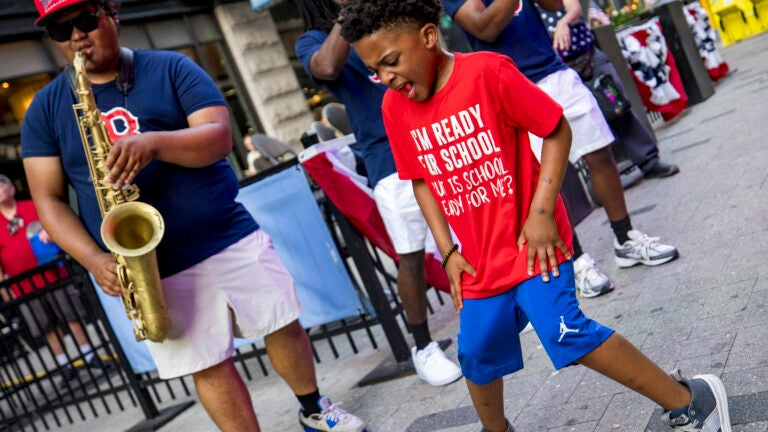
Nikyle Burney Jr. dances while the band Soul of Boston performs at Downtown Crossing in Boston, MA on Thursday, July 2, 2026. Christian Kantosky for The Boston Globe
Downtown Boston was buzzing in July, and the numbers back it up.
Following a month packed with the World Cup, Sail Boston, 250th anniversary celebrations, and the introduction of social districts, domestic foot traffic downtown jumped 10.5% compared with July 2025, according to data from Placer.ai provided by the Downtown Boston Alliance, a nonprofit business improvement district.
The data only captures domestic visitors because Placer.ai does not track cell phones using international plans, meaning the actual increase in foot traffic could be higher, particularly given the influx of international visitors.
In addition, downtown’s overall foot traffic on weekends also rebounded to 104% of 2019 numbers, and daytime foot traffic, Monday through Friday, is now 75% of where it was in 2019, and still growing gradually.
The numbers showcase the growth saw in the month prior too — when the World Cup was in full swing and the Tartan Army swarmed downtown — the district saw a 12.2% growth in pedestrians from the year prior.
On June 19, Temple Place saw 12,900 visitors during the World Cup watch party, the streets highest daily total in seven years, the Downtown Alliance reported.
The data tracked foot traffic within the Downtown Crossing area, between Essex and Court streets, from the Boston Common to Congress Street.
Michael Nichols, president of the Downtown Boston Alliance, said the numbers represent a “huge marker of success.”
“Downtown Boston has had an outstanding summer of visitation,” Nichols said in a statement to Boston.com. “Starting with the rediscovery of the area by locals and expanding to domestic and international tourists.”
He attributes the growth directly to large-scale international events and the State Legislature temporarily giving some bars and restaurants permission to extend their hours and allowing the city to establish social districts, where people could drink outdoors. The pilot ran from June 8 through July 31.
One of Boston’s social districts was at Temple Place in Downtown Crossing.
Nichols said the 11 businesses on Temple Place saw a roughly 40% increase in sales compared to the same period before the World Cup.
“Small businesses thrived while so many people got to experience the very best of our neighborhood and our city,” Nichols said. “We experienced economic success and a marketing and cultural jolt that will certainly last with us for some time to come.”
Already, Boston City Council has filed a measure in late June seeking to permanently allow bars and restaurants in Boston to sell alcohol until 3 a.m.
And, the city’s director of nightlife has vowed to keep the momentum going, hoping to get approval for more social districts in the future.
“I hope we do everything we can to keep this formula going,” Nichols said.
Beth Treffeisen is a general assignment reporter for Boston.com, focusing on local news, crime, and business in the New England region.
Sign up for the Today newsletter
Get everything you need to know to start your day, delivered right to your inbox every morning.