Delhi has a new electric vehicle (EV) policy, and this time it comes with a hard deadline for phasing out petrol and diesel vehicles.
The new EV policy was notified on July 1, 2026. From April 1, 2028, Delhi residents will no longer be able to register new petrol-powered two-wheelers. Only electric autorickshaws and N1 category goods carriers will be eligible for registration from January 1, 2027.
According to the Delhi government, the main objective of the policy is to achieve a minimum 30% electrification of Delhi’s vehicle fleet by March 31, 2030, when the policy rolls out.
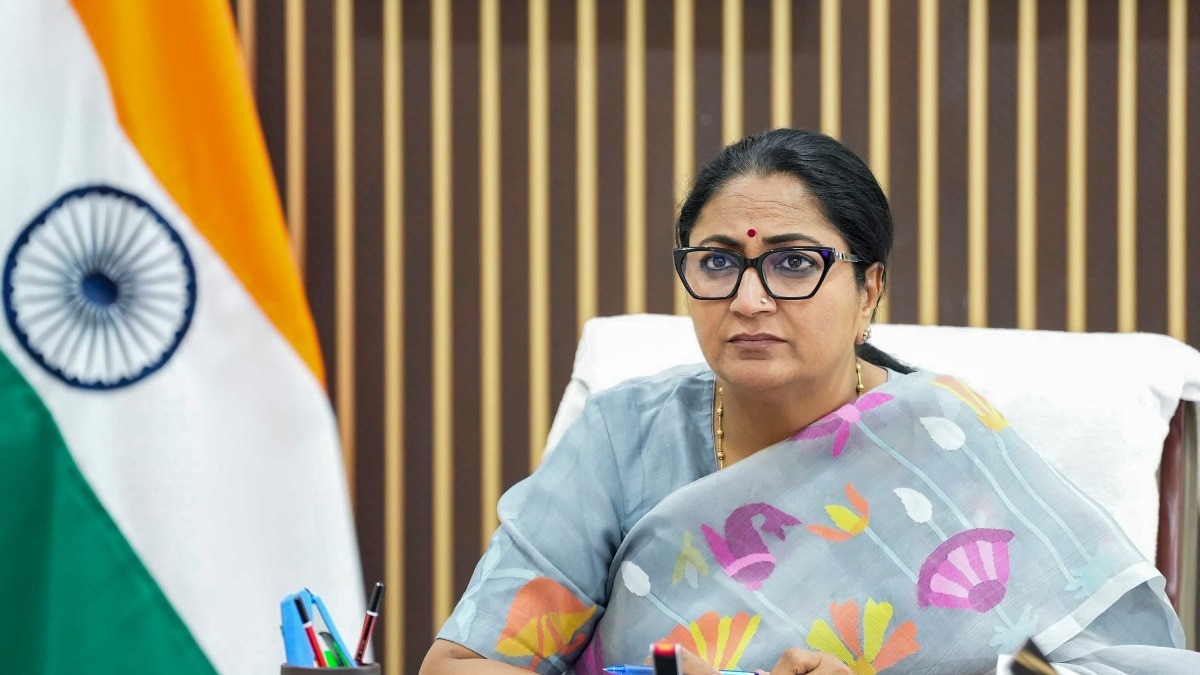
Chief Minister Rekha Gupta sat down for a wide-ranging conversation on implementation, funding, enforcement and what she wants her legacy to be. Excerpts from the interview:
Q: The EV policy has been well received by environmentalists and experts. The real question now is implementation. That depends on three things, charging infrastructure, availability of EVs, and pricing. Starting with infrastructure, what is your execution plan?
A: The success of this policy depends largely on charging infrastructure, and we have planned for it completely. All stakeholders are involved. People mostly charge private vehicles at home, but we still need infrastructure in public places. We have brought in OEMs, DTL, and other government agencies to build infrastructure for societies. We have created a single-window system so people setting up their own EV infrastructure do not face hurdles. Right now, we have 9,000 charging points. Our target is 32,000, and DTL has been made the nodal agency for this. We are also involving OEMs so they build charging infrastructure for their own customers. I want to assure the people of Delhi they will not face problems with charging.
Q: The policy says 32,000 charging points will be built by March. But in Delhi, land ownership is complicated; sometimes it is with MCD, sometimes DDA, sometimes another authority. Are you confident that the number will be reached?
A: Today we have a double engine government, the central government, the state government, and MCD are all working on a common platform. When we set up Arogya Mandir, we used land from other agencies too, including DDA and MCD. We have already identified land for charging infrastructure at the lowest possible cost. This policy has been a year in the making, with discussions across every stakeholder from start to finish. We are also planning for battery disposal and e-waste infrastructure, and that work has already begun.
Q: The policy waives close to seven thousand crore rupees, and with long-term costs, it adds up to about Rs 15,000 crore. How will you make EVs affordable enough that people actually switch, since petrol and diesel vehicles are still cheaper upfront?
A: Adoption depends on how easily the subsidy reaches the customer. We have built in both a subsidy and a scrapping incentive. The amount will reach people through DBT in a time-bound manner; they need to apply within 30 to 60 days of getting their RC. For a two-wheeler, the subsidy is Rs 30,000, which does not exist anywhere else in the country. On top of that, we are giving Rs 10,000 for scrapping the old vehicle. Add the waived road tax and registration fee, and I believe this makes the case for adoption very strong. This policy has both mandate and motivation built into it.
Q: According to TERI’s last pollution report, about 46 percent of Delhi’s pollution comes from two-wheelers and three-wheelers, which this policy targets aggressively with a January 2027 registration cutoff. But 33 percent comes from commercial trucks, and the policy is less aggressive there. Why?
A: Our policy is common man oriented, and the largest segment, as TERI’s study shows, is two- and three-wheelers. On trucks, from July 1 to September 30, we are giving them an opportunity to convert to EVs, and the first 1,000 that convert get 24-hour access to Delhi’s no-entry zones. This was well received by stakeholders. Separately, the central government is giving a 100 percent discount on these trucks through OEMs and a 5 percent interest waiver for people converting. So every segment has been accounted for, two-wheelers, three-wheelers, private cars and trucks.
Q: What about older municipal vehicles, garbage trucks, water sprinklers, police vehicles, that also contribute heavily to pollution?
A: This policy is not just for the public; the government has adopted it fully too. Our tender for mechanical sweeping machines was only for electric vehicles. Any new vehicle the government buys or leases from here on will be an EV, whether it is water sprinklers, MRS machines or anything else. We are moving our own fleet to EVs as well.
Q: With this scale of EV adoption, can Delhi’s power grid actually handle the additional charging demand?
A: This is another dimension we have worked on: our grids and substations are being strengthened. We have a long-term plan for how much we will invest periodically in power infrastructure. We are at 9,000 megawatts today; we anticipate the rising demand and are building capacity for it. People will not face difficulties.
Q: Delhi’s government departments seem well coordinated on this. But pollution is a regional problem, it depends on neighbouring states too. How will you get that coordination?
A: Delhi’s pollution is not just Delhi’s problem, it needs attention from the border and NCR areas as well. The Northern Zonal Council, the Environment Ministry, and every state associated with the NCR have supported us in getting on one platform. The central government has extended its scheme for converting old buses and trucks to EVs to every district in the NCR, along with the subsidy and interest rebate I mentioned earlier. Other states are now moving toward adopting similar EV policies. We have discussed this directly with other chief ministers too, including during the Northern Zone Council meeting with Haryana’s leadership and Rajasthan’s representatives.
Q: You have introduced a Winter Action Plan with mandated restrictions from November 1 to February 28. Does this replace GRAP?
A: Last year we realised GRAP sometimes took two days to kick in, sometimes it was missed altogether, which left people confused. This time, we have announced the Winter Action Plan early, in July itself, laying out exactly what people can and cannot do. If construction runs from December 10 to January 28, that period is treated as GRAP-notified, and no separate notification will be issued. Outside that window, regular GRAP activities continue as before.
Q: GRAP has historically been hard to enforce, Delhi Police does not report to you, construction bans are difficult to police. How will enforcement actually work this time?
A: We have brought in DPCC volunteers under a programme called Vayudata to oversee this. Every agency, PWD, the Environment Department, police, and traffic police have been brought onto one common platform, and everyone has to follow it. Delhi’s pollution is not just the government’s problem, it belongs to the public too.
Q: Delhi residents are resourceful. During odd-even, many households simply kept two cars. Won’t people find similar workarounds with EVs?
A: The EV policy is largely built for the middle class, people who ride two-wheelers or own a car under Rs 30 lakh, often their single biggest investment. For some households with multiple cars, EVs might be a secondary option, and that is fine too. People across every class live in Delhi, and our job is to motivate them in the right direction, which is why we built in both mandate and effort on our part.
Q: Pollution is not just Delhi’s problem, it is a national one, and Delhi’s geography puts it at a disadvantage. Is this being discussed at the national level?
A: Yes, and that is why so many states are now on one platform. Delhi has progressed step by step this year. 4,500 of our buses now run on EVs, more than any other state. We have the country’s most extensive metro network and the strongest EV policy. We have full support from the central government and neighbouring states in bringing the NCR together under one approach.
Q: Give me a number. After this policy is implemented, how much will pollution actually come down, and by when?
A: Pollution is not something you can put a fixed percentage or date on. Alongside this EV policy, we are planting 70 lakh trees this year, moving public transport to EVs, and working on dust mitigation. As more people adopt EVs and these other efforts continue, pollution will gradually come down. I cannot tell you an exact day or an exact number, but the direction is clear, it will start decreasing.
Q: Many measures have been announced by governments before. Real credit will only come when pollution numbers actually fall. Do you agree?
A: I am completely on the same page. We will track whether it comes down, understand where we are falling short, and adjust. No previous government did what we are doing now. They introduced the EV policy but never paid out the subsidy. We cleared Rs 45 crore of the previous government’s pending liabilities on this. We have also built new automated testing stations, moved public transport to EVs, and are working toward emission-free commercial vehicles.
Q: You have a rare political alignment right now, BJP in Delhi, in neighbouring states and at the centre. What are the top three priorities you want as your legacy?
A: First, proper waste management. Delhi generates about 14,000 metric tonnes of garbage daily, and we can only dispose of 6,000 metric tonnes. Fixing that is my top priority. Second, our sewage system: half of Delhi still does not have sewer lines, which is a major reason for pollution in the Yamuna, and that needs to be properly channelised. Third, overall infrastructure, schools, hospitals, roads and drainage. If we fix these, I believe the people of Delhi will genuinely feel the difference.
Q: You have become very active on social media lately, reels, direct interaction, a candid style. What is driving that?
A: I am a daughter of Delhi, I know its problems, and I want to stay close to its people. Direct interaction lets me listen to them and understand their views. No chief minister before this has stood at a drain being cleaned or a road being built. From the Yamuna cleanup to garbage collection, I want to be personally involved in every issue that affects the public, because that is how Delhi actually gets better.
– Ends
Published By:
Aprameya Rao
Published On:
Jul 5, 2026 08:00 IST