

Local News
The tree was estimated to be 68 years old.
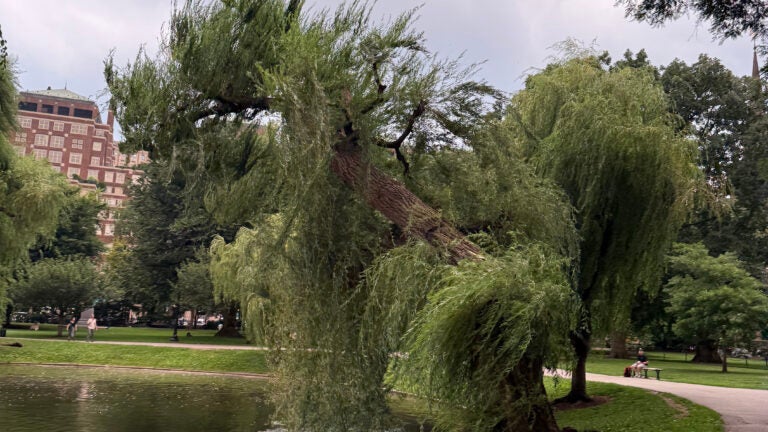
A photo taken by a bystander capturing the moment a large willow tree fell in the Public Garden.
A giant willow tree that had overlooked the lagoon in the Boston Public Garden for more than 60 years collapsed Wednesday.
The tree, estimated to be 68 years old, fell after far exceeding the typical 30-to-50-year lifespan of a white willow. As they age, these fast-growing, “weak-wooded” trees become increasingly prone to structural failure, Friends of the Public Garden President Liza Meyer said in a statement.
“We love these trees too,” Meyer said. “Willows are an iconic and beloved part of the Public Garden landscape and we are always saddened when one is lost.”
No injuries were reported, she added.
Routine inspections and upkeep by the Friends of the Public Garden had previously determined the tree “to be structurally sound throughout that process,” Meyer said.
According to the Friends of the Public Garden website, willow trees were first planted in the Garden in the early 1900s.
Although many of the garden’s willows were planted in the same era and are aging on a similar timeline, Meyers stressed that this does not mean all of the remaining trees are in decline or will need to be removed.
The recent collapse follows the January removal of another weeping willow that was suffering from rot and disease, posing a public safety hazard due to internal decay. According to the Friends of the Public Garden, tree removals are conducted every winter, with replanting efforts typically occurring in the spring.
The Friends of the Public Garden has not clarified whether the willow that fell on Wednesday had been tested for diseases.
“Wednesday’s fallen willow is a reminder of why proactive tree care is so important,” Meyer said.
Friends of the Public Garden maintains the trees with regular pruning, disease management, and specialized care.
“Trees are living organisms, and while no one can eliminate every risk, we can provide them with the care and monitoring they need to live as long and safely as possible,” Meyer said. “Tree care is about managing risk, not eliminating it.”
Sign up for the Today newsletter
Get everything you need to know to start your day, delivered right to your inbox every morning.


