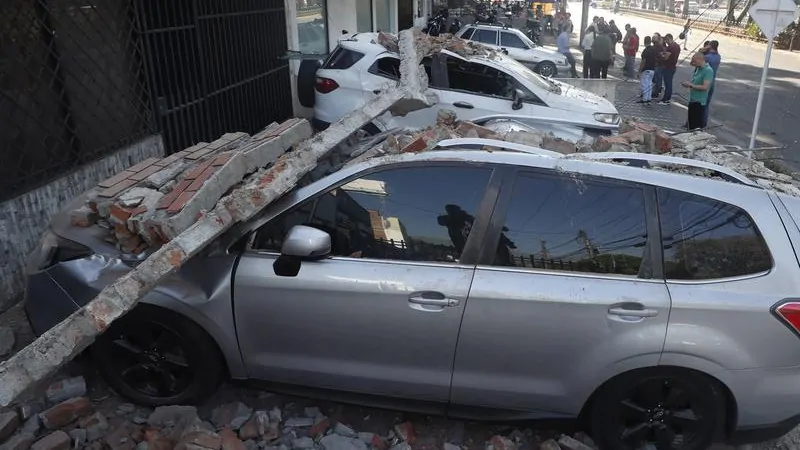
At least 111 people have been killed after a powerful earthquake struck western Colombia, knocking down buildings across several cities and leaving others trapped in the rubble.
The epicentre was in San Jose Del Palmar, a community of about 4800 people in the Choco region about 400 km west of Bogota, the US Geological Survey and Colombia’s counterpart reported.
It struck at a depth of 107 km. The quake also was felt in neighbouring Ecuador and Panama, though minimal damage was reported there.
Sign up to The Nightly’s newsletters.
Get the first look at the digital newspaper, curated daily stories and breaking headlines delivered to your inbox.
By continuing you agree to our Terms and Privacy Policy.
The death toll from the earthquake has risen to at least 111, the newly sworn-in president Abelardo de la Espriella said in a national address.
“The national government has all of its capabilities deployed to protect lives, assist affected communities and deliver aid wherever it is needed,” he said.
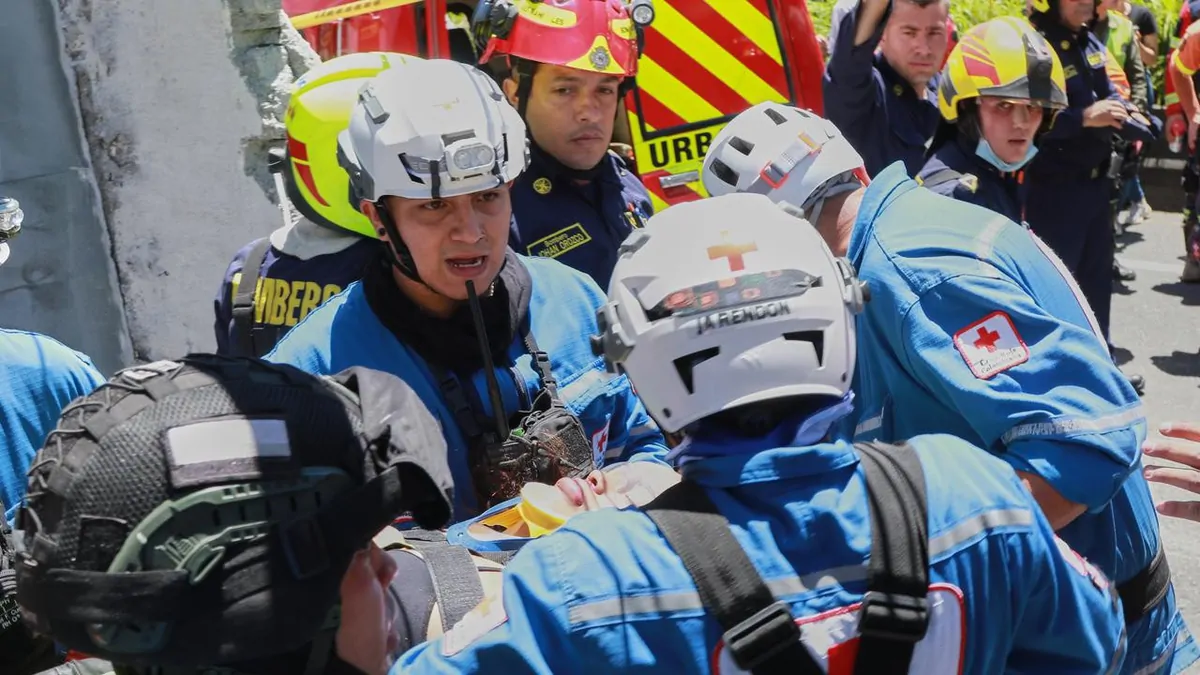
“The first priority is rescuing the people trapped under the rubble.”
The leader added that 87 people had been injured, with dozens of buildings downed.
The president declared an emergency, which will expedite funding for the quake recovery, and said he would visit the disaster zone, centred around the rural region of Choco.
The quake left cities across the west of the country Pereira, Quibdo, Cali and Manizales ravaged.
A mix of residents and search teams picked through the rubble of collapsed buildings amid concerns by authorities of aftershocks.
Colombia’s interior minister said more than 20 municipalities across the country had been hit.
Jorge Moncayo, a 64-year-old taxi driver in Cali, said he saw plumes of dust shoot up across the city from his home in hills of the city as buildings collapsed.
Residents in the city and rescue workers were searching the rubble for survivors.
“My entire house shook. I’ve never lived through such a powerful earthquake,” he said.
“We’re thanking god we’re alive.”
Colombia’s Geological Service said Monday that it had been “the highest magnitude earthquake registered in Colombia in the last decade” and that it had been followed by two 2.8 and 4.8 magnitude aftershocks.
Authorities also reported that flights were suspended at multiple airports.
The earthquakes left many in the Andean nation unnerved after two back-to-back quakes devastated neighbouring Venezuela in late June, destroyed hundreds of buildings and killed more than 5000 people.
At the same time the quake brought down buildings in Colombia, desperate families in Venezuela continued to search the ruins for the bodies of their loved ones.
In Pereira, photos and videos published by local media showed pieces of the airport ceiling falling down on travellers taking shelter and screaming and people running through rubble in a panic.
Pereira’s mayor, Mauricio Salazar, told a local radio station that at least 18 people had died and that many more were trapped under “a massive quantity of collapsed buildings”.
In nearby Manizales, a city nestled in the coffee-producing mountains of Colombia, one of the towers of the neo-Gothic cathedral collapsed and fell on the nave.
Jorge Eduardo Rojas, the mayor of Manizales said two people had died in the city “because of the quake” and asked residents to stay outside in case of aftershocks.
Authorities in the rural state of Choco, the epicentre of the quake, reported injured people and damaged buildings in the capital, but provided few details.
In Cali, a city of two million people, Mayor Alejandro Eder said that residents were trapped in at least 19 buildings that had collapsed.
Small earthquakes, known as “temblores,” are common in central and western Colombia, but those above 6.0 magnitude are rare.
In 1999, a 6.2 magnitude quake near the city of Armenia killed more than 1100 people.