

How To
John Paul, AAA Northeast’s Car Doctor, answers a question from a reader who is considering purchasing a used Mazda Miata.
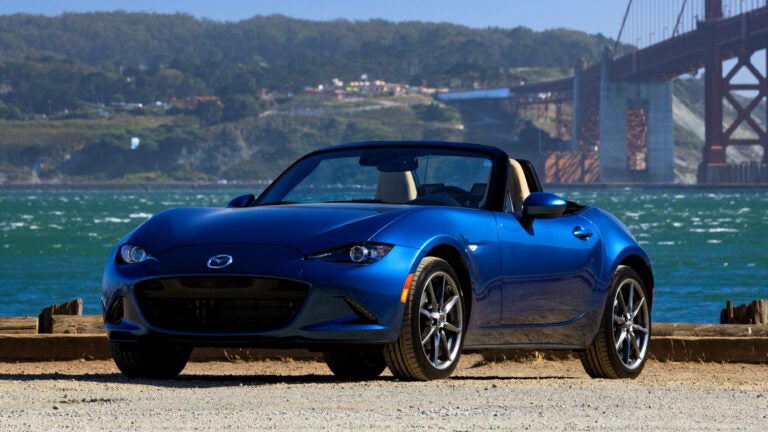
Q. Over the winter I am thinking of buying a used Mazda Miata. My thought is perhaps someone does not want to store it over the winter and the price could be less. Is the Miata a good investment and something I won’t spend a lot of money on?
A. A Mazda Miata is a fun, simple, and dependable sports car. Buying during the winter can sometimes save you money since some owners do not want to store or drive a convertible in cold weather. I would not think of any car as an investment, however. While some Miatas hold their value well, they still cost money to own and maintain. If you find one with a good maintenance history and little or no rust, it can be an affordable and enjoyable car to own. Just remember the old saying: if it flies, floats, or you can drive it, it is going to cost you money.
Q. I spend several months in Florida over the winter, and I noticed many of my neighbors will move their cars out of the garage when there is a chance of rain. When I asked, they called it a Florida car wash. I was always told it is a good idea to wash a car after the rain. Thoughts?
A. Whether rain helps or hurts depends on where you live. In the Northeast, acid rain and airborne pollutants can leave water spots and, over time, damage a vehicle’s finish if left on the paint. In Florida, rain is typically much closer to neutral, so a “Florida car wash” can actually rinse away dust and pollen. If it were my car, though, I would still dry it afterward and use a quick-detail spray such as Mother’s Quick Detailer or Bling Speed Sauce to help prevent water spots and keep the paint looking its best.
Q. Hi Doc, you had a question about a noise, and the answer was found in the owner’s manual. I had something similar and the answer was in my new Kia owner’s manual. What percentage of people do you think really read or look at it? I’m guessing it’s in the single digits.
A. You may be right. I have always said a vehicle owner’s manual is both the least-read book ever published and the best-looking part in a junkyard. These days, many manuals are available online, making them even easier to ignore. Yet when I have a question about an unusual new feature or warranty coverage, the owner’s manual is often the first place I look.
Q. I own a 2008 Smart car. It has approximately 25,000 miles and is in excellent condition. However, it is 18 years old and problems are beginning. My battery does not hold a charge, and the AAA technician suspects it’s something electrical. What is the average cost of electrical repairs? How should I proceed? Do you have any recommendation, other than the Mercedes dealership, that may be able to do the required electrical work?
A. The first step is to have the battery, charging system, and alternator tested. If those check out, the next test should be for a parasitic draw to determine whether something is staying on and draining the battery after the car is shut off. On Smart cars, one common culprit can be the SAM module, which acts as a smart fuse box and communication center for many electrical systems. Until the problem is diagnosed, it is impossible to estimate repair costs, which can range from a simple wiring repair to replacement of a module. I would start with an independent European repair shop that has experience with Mercedes-Benz vehicles and Smart cars. That may be a better choice than the dealer, especially since some dealerships are less interested in working on older Smart models.
Q. This week I brought my 2021 Acura RDX in for a Massachusetts state inspection and had the shop look for a slow leak in the left rear tire. The shop said that the tire couldn’t be repaired and suggested I replace all the tires as the vehicle has 41,000 miles, however the car would still pass inspection. I told them to complete the inspection, but I got to thinking the shop never took the wheels off the car because they never asked for the key to the wheel locks. I decided to check the brakes myself and what I found was that the left rotor was not only heavily pitted, but also corroded. Have you ever seen this before and should the car have passed inspection?
A. What you found is not uncommon, especially here in the Northeast where road salt and moisture can cause brake rotors to rust and corrode. Massachusetts inspection stations do not remove wheels during a routine safety inspection, so there would be no reason for the inspector to ask for the wheel lock key, although perhaps they should have for the tire repair. If the brakes operated properly, the vehicle stopped straight, and there were no obvious safety concerns, the vehicle could still pass inspection even with a rusty or pitted rotor. That said, a heavily corroded rotor should be inspected more closely. Surface rust is not a problem, but severe corrosion could affect braking performance and should be addressed.
Q. My 2002 Honda Accord is going to the shop for a timing belt and water pump replacement. The car has 91,000 miles and runs very well. What else should I be doing? Tires, battery, and brakes were replaced in the last two years, spark plugs were replaced, and we change the oil every 3,000 to 4,000 miles.
A. You are doing an excellent job keeping up with maintenance. While the timing belt and water pump are being replaced, I would consider replacing the drive belts, inspecting the radiator hoses, and possibly replacing the crankshaft and camshaft seals if there is any sign of leakage. Other than that, with a 24-year-old car that has only 91,000 miles, I would focus on regular maintenance and keeping an eye out for age-related issues such as fluid leaks, worn rubber components, or corrosion. Honda Accords of that era are known for their longevity, and with the care you are giving it, there is no reason it should not continue to provide many more years of reliable service.
John Paul is AAA Northeast’s Car Doctor. He has over 40 years of experience in the automotive business and is an ASE-certified master technician. E-mail your Car Doctor question to [email protected]. Listen to the Car Doctor Podcast on Apple Podcasts or other popular podcast sites.
Sign up for the Today newsletter
Get everything you need to know to start your day, delivered right to your inbox every morning.
