Local News
Corean Reynolds spoke with Boston.com about the city’s nightlife coming off a blockbuster summer of FIFA, the Tall Ships, and Boston 250.
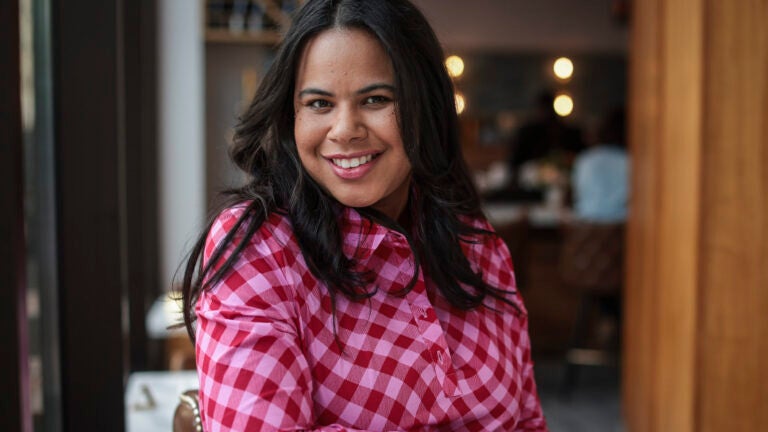
Corean Reynolds, director of nightlife economy for the City of Boston. Erin Clark/Globe Staff
Boston’s nightlife is having a moment.
With the World Cup, Sail Boston, 250th anniversary celebrations, and thousands of visitors filling downtown, the city’s nightlife got a major test run, and Corean Reynolds was helping make sure the party didn’t end when the sun went down.
Reynolds, Boston’s director of nightlife economy, was appointed by Mayor Michelle Wu in 2023 to support late-night businesses, expand the city’s social scene, and help build a more lively, inclusive 24-hour economy.
This summer, Beacon Hill temporarily gave some bars and restaurants permission to extend their hours and allowed the city to establish social districts, where people could drink outdoors. The pilot ran from June 8 through July 31.
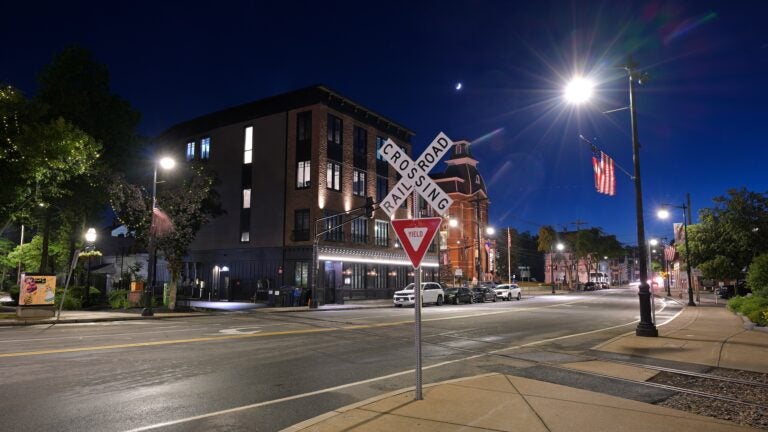
Boston hosted social districts at Union and Marshall streets between Faneuil Hall and the Boston Public Market, and at Temple Place in Downtown Crossing.
It built on earlier social district pilots organized by Reynolds’ office on Temple Place in 2023 and 2024. The city said businesses reported increased revenue during those pilots, with no complaints filed.
Now, Reynolds is looking at what worked, what didn’t, and how Boston can keep the party going.
In an interview with Boston.com, Reynolds talked about the lessons from this summer and what’s next for Boston’s increasingly vibrant nightlife scene.
The following interview has been condensed and edited for clarity.
Boston.com: Let’s start with the social districts. Where did the idea come from?
Corean Reynolds: So we had two pilots, one in 2023 and one in 2024. So we already tested that idea. Based on the success of those two pilots, we were able to inform the state legislation of our social districts.
When summer came, we wanted to extend entertainment, especially if there’s a late game, but are businesses going to make money if they’re staying open and not selling beer? That also informed the state legislation.
Making it live and regulating it the way that it was set in the legislation took some time. Because what works on one street might not work on the other, or work differently on another street. So we wanted to galvanize on the excitement, so we located them in downtown.
Union Street naturally lent itself to be a social district with the proximity to Fan Fest and then Temple Street because we had piloted it there and we knew it worked. And 100% of the businesses there participated.
What did you learn this time around? The good and the bad?
Boston is ready for less restrictive alcohol regulation. We are ready for businesses to have options to do business differently. We are ready for large groups from all over, whether they be from a different neighborhood coming into another neighborhood or people from different countries – that our city can support them and welcome them with open arms.
We also learned that when things happen past 2 a.m., bad things didn’t happen. There’s that old narrative that nothing good happens after 10 p.m., and I think this summer definitely proved that theory wrong.
We learned that maybe in the future we can extend these opportunities in different neighborhoods. Because it was such a quick turnaround, we weren’t able to have a full community process and ensure our residents were OK with plopping open containers in their neighborhoods.
If you’re able to use this to-go cocktail idea to create these designated outdoor refreshment areas, I can go into one restaurant, grab a drink, stroll, check out some places, and then go to another place. So the whole lot benefits from something like that.
Did you attend any of the social districts? Can you describe what the scene was like and what it felt like to be at one of these?
I sat in Temple Records during one of the watch parties on Temple Street, and it was buzzing. I also went into J.M. Curley’s and Estella, which is great. That’s not something you would normally do, and so you got to travel the energy and move around in a different way.
And people working there said, “This is incredible. I’ve never seen this excitement. We’ve never been doing better. We want more of this.” The days were long, and they acknowledged that, but what I heard from business owners was, “Hey, I got more hours for my staff, and they can make a little bit extra money on top of the extra tips that they were receiving from service.”
With the 3 a.m. extension, you saw people lingering longer. There was an article once saying people were having dinner early; well, people were having dinner later because they knew they still had time to get to the next place, the next club, the next bar, the next entertainment. They were leisurely taking their time, and it allowed for people to have a full night.
Have you been tracking this data?
Yes. In June, we sent a survey to our businesses and asked how it went post-World Cup. And a majority saw a positive impact on their bottom line. A majority also saw a positive impact in bringing new customers through the door.
There were some learned lessons as well. Proximity to the downtown area and to the Red Line and Commuter Rail definitely helped businesses that were there.
Last week we decided to survey our residents and say, “Hey, what was your experience?” Because again, they’re a part of this too.
What are the next big challenges? Is one getting legislation through the State House?
I think Boston showcased that you can have less restrictive alcohol service regulations, and it can be not only a benefit to keep the fun alive, but also a benefit to our nighttime economy. And in times when our hospitality industry has very thin margins, I think that legislation like this, on a more permanent basis, could help expand options and strengthen businesses.
What are some challenges to making a stronger ecosystem for the nightlife economy? Is it getting more liquor licenses, extending transportation?
In the three years (since) I’ve started, we’ve seen more traction than we’ve seen in the 10 years prior. But there are still things that need to be focused on, like transportation. Yes, I do think there should be low-cost public transportation for our 40,000 nighttime workers. Have we seen progress in that? Yes, we had a 49-minute extension with the MBTA in the fall (on Friday and Saturday nights), and we were part of conversations in advancing that. Could there be more? Of course, and that’s going to be key. Having folks work later, they need a reliable thing. Legislation has to happen.
We have 225 licenses that were awarded a few years back, and we recently announced some of the new awardees of those licenses. Those have been utilized in some great ways, like Abuela’s Table in Jamaica Plain. They’re a small mom and pop restaurant, and a $600,000 liquor license is not in the cards for them. But having those licenses available for them to utilize so you can have a Corona with your arroz con gandules is great. So we’re seeing a lot of success stories like that, and we plan on continuing to… work with what we got.
How has the nightlife changed since you first started in 2023 or even following the pandemic?
I think we have definitely seen a shift from a narrative of being a sleepy city to being a more vibrant nighttime. We are seeing nightlife not just in our typical neighborhoods like the Seaport, downtown, and Allston. Still, we’re seeing it in its own unique way in Roslindale at the Substation or in Jamaica Plain at Costello’s (Tavern) or Midway Cafe. I also see a lot of DJ collectives and people seeking to create spaces they didn’t see in Boston, and seeing their visions realized.
This past summer I worked with a group called Mojo, and they did a music festival on City Hall Plaza, mixing DJs and live music, despite the rainy weather, and it was incredibly successful.
Where do you see nightlife going, five, 10 years from now?
I see it being just as lively as it was this summer, regardless of a large-scale international event. I see it being less restrictive, allowing businesses to do business the way they want to. I see it serving and acknowledging and supporting our late-night workforce, whether it’s someone who works in the hospitality industry or a police officer or a doctor or nurse, and I see legislation that reflects and invests in cultural nighttime spaces. And it’s very safe.
Is there anything that I missed?
Food trucks! That was a pilot that we did last year. It was so successful that it became part of the city’s full food truck program.
Beth Treffeisen is a general assignment reporter for Boston.com, focusing on local news, crime, and business in the New England region.
Need weekend plans?
The best things to do around the city, delivered to your inbox.