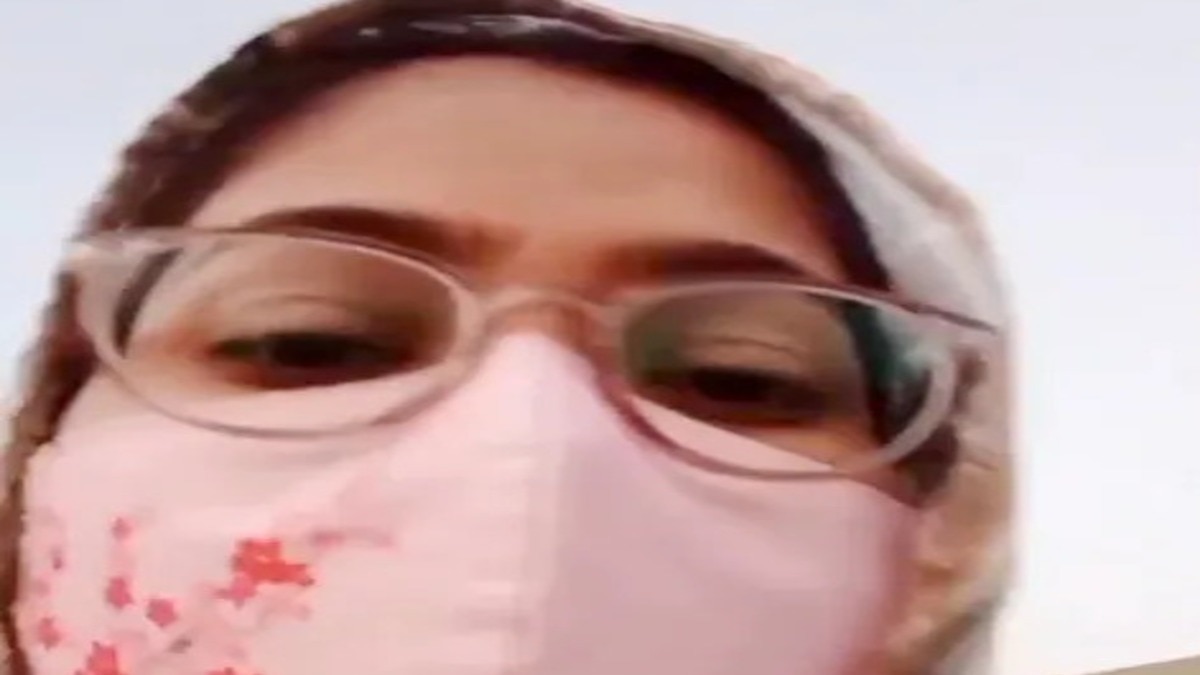
There are mornings in the Hussain Ganj neighbourhood of Lucknow when 19-year-old Sarah Moin wakes up to a world without sound, without sight, and without the luxury of asking someone a simple question.
And yet, when the ISC Class 12 results came out this May, her name sat at the top of her school’s list — 98.75%, with perfect hundreds in Geography and Mass Media & Communication, and scores of 98, 97, and 96 in English, History, and Psychology, respectively.
For a young woman who has lived with both visual and hearing impairment since childhood — and who also battles sarcoidosis, a rare inflammatory condition that can affect multiple organs — this is not merely an exam result. It is a declaration.
Why do her teachers call her Helen Keller?
Teachers and peers at her institution have long drawn parallels between Sarah’s tenacity and the life of Helen Keller, the American author and disability rights advocate who overcame blindness and deafness to become a global icon.
The nickname has stuck, not as a label, but as a tribute.
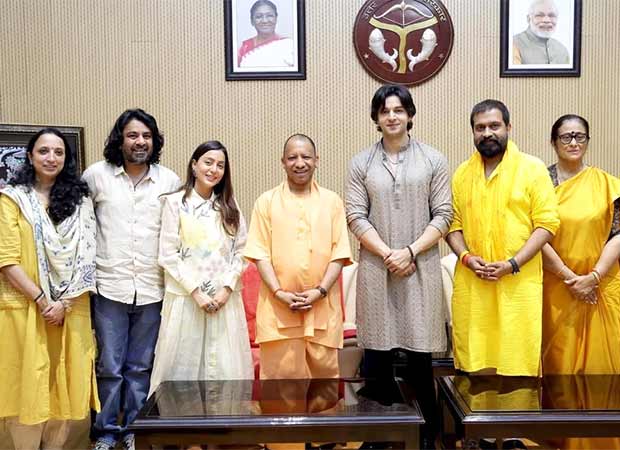
Her school, Christ Church College in Lucknow, has been central to her journey. Under the guidance of Principal Rakesh Chattree and special educator Salman Ali Qazi, Sarah’s education was built not around what she could not do, but around finding every possible way to help her do what she wanted.
She uses assistive technologies such as a braille display and Orbit Reader, which convert digital content into a readable tactile format. At home too, she continues her studies using similar devices that allow her to read, write, and interact with a computer independently.
This is what a classroom looks like when it is genuinely inclusive: not just ramps and reservations, but a reimagining of how knowledge travels from teacher to student.
In Sarah’s case, that journey is longer, more intricate, and more rewarding than most.
A pattern of excellence
Sarah previously achieved 94% in her Class 10 examinations, so this is not a one-time miracle. It is a pattern that speaks to years of sustained effort, quiet discipline, and an unshakeable sense of purpose. And now, her purpose has a name: the Indian Administrative Service.
“She wants to become an IAS officer and work for people, especially disabled children,” her father, Moin Ahmad Idrisi, said. It is a dream that says something profound about who Sarah is. She is not simply seeking personal success.
Sarah’s father, Moin Ahmad Idrisi, has appealed to examination bodies to allow deaf-blind candidates to use assistive devices instead of relying solely on scribes. Photograph: (The News Indian Express)
She is already thinking about the world she wants to build for others who navigate life the way she does, without the senses most people take entirely for granted.
The system needs to catch up
But the story does not end with celebration. Sarah’s father has also raised a harder, more urgent question — one that her achievement makes impossible to ignore.
“In her case, a scribe cannot fully capture her answers. She needs accessible tools to express herself,” Idrisi said.
He has appealed to examination bodies to allow deaf-blind candidates to use assistive devices such as laptops and braille displays, rather than depending solely on a scribe — a system designed for a different kind of disability entirely.
It is a systemic gap that Sarah’s story throws into sharp relief. If a young woman with this level of intelligence, preparation, and determination still finds competitive examinations inaccessible, what does that say about the thousands of others — less visible, less celebrated — who may have quietly given up?
India’s examination system has made meaningful progress in accommodating students with disabilities, but Sarah’s case is a reminder that deaf-blindness remains an underserved category — one that requires specific, thoughtful solutions rather than generic accommodations.
Not waiting to be included
For now, though, the nation would do well to simply sit with the fact of what she has achieved.
Sarah’s results have come alongside her management of sarcoidosis and profound sensory impairment, making her one of the top performers in her school.
She did this not in spite of her circumstances, but in full knowledge of them — navigating each day through touch, technology, and the kind of inner resolve that cannot be taught in any classroom.
There is something quietly radical about a young woman who cannot see or hear the world around her, and who has decided, nonetheless, to change it.
And Sarah Moin is not waiting to be included. She is already leading.
If Sarah’s story moved you, share it. And if you work in education policy or disability advocacy, perhaps her father’s appeal deserves your attention too.