Ishan Pathak still remembers the moments before vultures arrived at a carcass.
First, there was a brief pause over the remains.
Then came the movement: wings cutting through dry air, hooked beaks pulling at flesh, birds gathering around the carcass with startling precision.
Standing in the countryside of Jaisalmer, surrounded by dust and decay, Ishan watched what he describes as the largest congregation of vultures he had ever seen.
“It’s probably something many people may never witness again,” he reflects, recalling the sight of over 100 vultures from four different species gathered around a carcass.
For the wildlife photographer, vultures carry no sense of omen or horror.
They are among the most important workers in the natural world: cleaners of landscapes, preventers of disease, and indicators of ecological health.
This belief has taken him across India’s forests, deserts, grasslands, and mountains, where he documents species that continue to vanish from the skies.
States like Madhya Pradesh and Rajasthan host significant portions of the remaining active nests and populations, with Madhya Pradesh recording close to 13,000 individual birds in recent state counts.
Out of the 23 vulture species found globally, nine species reside in or migrate to India, making India home to the highest diversity of vulture species in the world. Ishan managed to photograph all the nine species spread across India.
Before the camera, there was a life in medicine
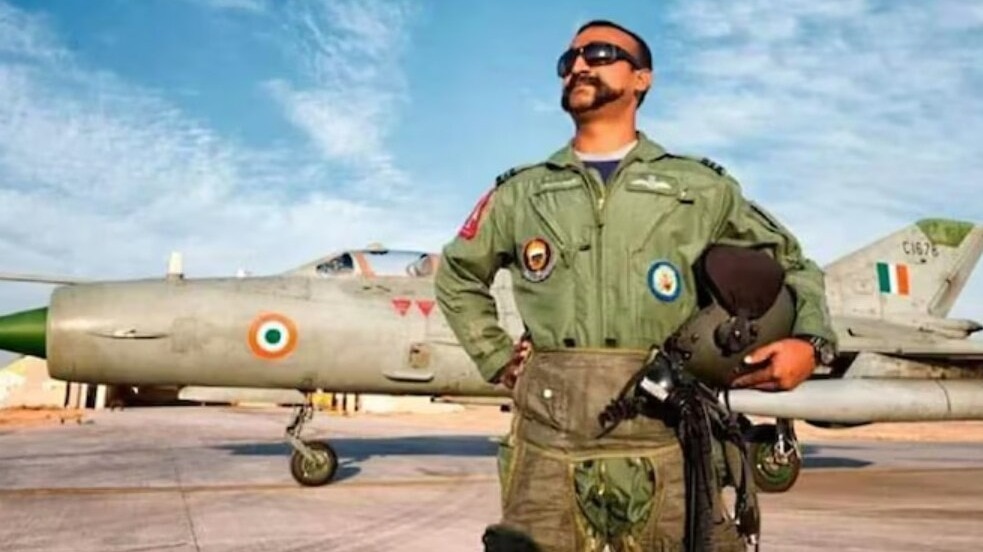
Long before he began photographing wildlife full-time, Ishan’s life was shaped by medicine and military service.
He earned his medical degree in China, later completed an MD in public health in Karnataka, and worked as an assistant professor in Kerala before joining the Indian Air Force as a specialist medical officer. In 2024, he retired as a squadron leader after five years of service and chose to pursue wildlife photography full-time.
For more than a decade and a half, his professional life revolved around hospitals, classrooms, and military discipline.
But forests had always been close to Ishan.
As a child, he loved visiting national parks. They gave him a break from routine, and over time, those visits became something he kept returning to.
The more he travelled, the more he began to notice the small details of the wild: how animals moved, how birds behaved, and how every species had a role to play.
Those journeys slowly changed the way he looked at wildlife, and eventually, the direction of his life.
Today, Ishan, now 37, works as a full-time wildlife photographer, documenting species and ecosystems under pressure.
And among all the birds and animals he has photographed, vultures have stayed with him the most.
His images are not designed to romanticise wildlife. Instead, they force viewers to confront the role death plays in sustaining ecosystems.
Looking at carcasses through the lens of a doctor as much as a photographer, Ishan began to see what most people overlooked.
“If these birds hadn’t been here, that carcass would have remained for days, attracting feral dogs and increasing the risk of disease,” he says. “People see something ugly, but I see one of nature’s most efficient public health workers.” That shift in perspective stayed with him.
Ever since, he has sought out vultures across India, determined to document the birds beyond the fear, myths, and stigma that have long defined their image.
Of the 23 vulture species found globally, nine reside in or migrate to India, giving the country a rich diversity of vulture species.
Ishan has managed to photograph all nine species found in India.
Seeing vultures beyond fear and folklore
Among the images Ishan has captured over the years, one frame continues to define his work: a cinereous vulture feeding on the exposed heart of a mongoose in Rajasthan’s desert landscape.
His images are not designed to romanticise wildlife. Instead, they force viewers to confront the role death plays in sustaining ecosystems.
For Ishan, photographing vultures is about documenting the raw mechanics of survival, like feeding behaviour and carcass ecology.
“There’s so much involved when vultures are feeding,” he explains, describing how intensely focused the birds become around carcasses. That concentration has often allowed him to photograph them from unusually close distances, especially in open countryside settings.
His images also challenge a common misunderstanding surrounding vultures.
These birds are among the most efficient protectors of ecosystems.
When a carcass is left out in the open, vultures are often the first to do the difficult work. They clean it up before it can rot for days, attract more scavengers, or become a source of disease for nearby forests, villages, and animals.
For Ishan, photographing vultures is about documenting the raw mechanics of survival, like feeding behaviour and carcass ecology.
Yet despite their importance, India’s vultures have suffered one of the sharpest wildlife declines recorded anywhere in the world. A Wildlife Institute of India assessment found nesting in only 120 of 425 historical vulture sites, showing how sharply their old nesting range has shrunk.
A major reason behind this decline was diclofenac, a painkiller once widely used on cattle. For the animals, it treated pain. But when vultures fed on the carcasses of treated animals, even a small trace could kill them. That one drug went on to wipe out huge numbers of vultures across several species.
For Ishan, the vulture crisis became real through the places he travelled to.
He saw it in mountain villages, where carcasses once drew birds from the sky. He saw it in desert fields, where a feeding site could still reveal what India was losing. He saw it again in forests, where spotting a vulture had become far rarer than it should be.
One of those journeys took him to Kibber in Himachal Pradesh.
Kibber, Himachal Pradesh: The bearded vulture of the cold desert
In the high-altitude landscape of Kibber, Ishan photographed the bearded vulture, also known as the lammergeier, soaring across the cold desert skies.
The bearded vulture is the only known vertebrate whose diet consists mainly of bone and bone marrow, which makes up 70 to 90 percent of what it eats.
It is the only living bird species that specialises in feeding on bones.
When a bone is too large to swallow, the bearded vulture carries it in flight to a height of 50 to 150 m above the ground and drops it onto rocks below. This breaks the bone into smaller pieces and exposes the nutritious marrow. It can fly with bones up to 10 cm in diameter and weighing over 4 kg, nearly equal to its own weight.
After dropping large bones, the bearded vulture spirals or glides down to inspect them and may repeat the act if the bone has not cracked enough. This learned skill requires extensive practice by immature birds and can take up to seven years to master. Its old name, ossifrage, meaning “bone breaker”, comes from this habit.
The bearded vulture is the only known vertebrate whose diet consists mainly of bone and bone marrow, which makes up 70 to 90 percent of what it eats.
Unlike most vultures, the bearded vulture does not have a bald head. Its creamy-coloured forehead contrasts with a black band across the eyes and lores, while bristles under the chin form the black beard that gives the species its English name.
Though still relatively widespread in the northern Himalayas, threats from poisoned carcasses, shrinking food availability, and habitat disturbance continue to grow across fragile mountain ecosystems.
Jaisalmer, Rajasthan: Desert landscapes and migratory giants
Every winter, the deserts of Jaisalmer become a refuge for migratory vultures arriving from Central Asia and Europe.
Here, Ishan documented the cinereous vulture, one of the world’s heaviest flying birds. Large, dark, and often seen alone, the cinereous vulture faces danger across its long journeys. Poisoned carcasses, power lines, and fewer safe feeding sites all make survival harder for this migratory bird.
Jaisalmer also became the setting for some of Ishan’s most haunting images.
Among them was the endangered Egyptian vulture, smaller than most of its relatives but highly intelligent and adaptable. Known for its white plumage and yellow facial skin, the bird scavenges around villages, scrublands, and carcass sites.
These large raptors have wingspans of up to 2.8 meters and play a key role in keeping the desert ecosystem clean.
For Ishan, the photograph of the cinereous vulture feeding on a mongoose carcass reflected both the brutality and necessity of scavenging in the wild.
Another migratory species Ishan photographed in Rajasthan was the Eurasian griffon vulture.
These social scavengers descend in groups around carcasses, using their broad wings to glide enormous distances across arid terrain. While globally more stable than some Indian vulture species, migratory populations still face threats from poisoned feeding grounds and collisions with power lines.
Kaziranga, Assam: Photographing a disappearing scavenger
In Assam’s Kaziranga landscape, Ishan photographed one of India’s most threatened scavengers, the critically endangered slender-billed vulture.
Once widespread across the Gangetic plains, the species suffered catastrophic declines following diclofenac contamination. Characterised by its narrow bill and elongated neck, the bird now survives in fragmented pockets near riverine forests and grasslands.
This makes landscapes like Kaziranga especially important. For conservationists, they are among the few places where the species still has a chance to survive.
The slender-billed vulture (Gyps tenuirostris) is an Old World vulture species native to sub-Himalayan regions and Southeast Asia.
For Ishan, photographing the bird here carried a deeper purpose. Each frame became a reminder of the role vultures still play in keeping forests clean, disease in check, and ecosystems balanced across northern India.
Nagarhole, Karnataka: A once-common bird now fighting to survive
At Nagarhole National Park, Ishan photographed the white-rumped vulture, once among the most common scavenging birds in the country.
Identified by the distinct white patch near its lower back, the species experienced a population collapse of more than 95 percent during the 1990s. According to the Vulture Conservation Foundation, this crash devastated a species once considered the world’s most abundant large bird of prey, altering local ecosystems in the process.
Conservation efforts have helped some populations recover, but the species is still at risk from harmful veterinary drugs, contaminated carcasses, and habitat loss.
The white-rumped vulture is the smallest of the Gyps vultures, but is still a very large bird. It weighs 3.5–7.5 kg.
For Ishan, the bird’s decline represents one of the starkest reminders of how quickly ecological collapse can unfold when a single toxic factor enters the food chain.
Dudhwa, Uttar Pradesh: Meet the red-headed king vulture
In Dudhwa National Park, Ishan photographed the red-headed vulture, also known as the Asian king vulture, a solitary scavenger marked by deep black plumage and a bare crimson head.
Once common across the Indian subcontinent, the species is now critically endangered.
Throughout its range, the Red-headed Vulture is known by many different names. To name just a couple of exampes, in Lepcha, it is called “Loong nong loong,” and in Hindi, it is is called “Bhaonra”, “Raj gidh”, or “Mulla gidh”.
With fewer safe places to feed, shrinking habitats, and the risk of poisoning, the red-headed vulture is finding it harder to survive. But in the forest, its role is still irreplaceable. It clears away the dead, keeps the landscape cleaner, and helps the wild stay in balance.
Capturing ecological moments before they vanish
Over the years, Ishan’s equipment evolved alongside his work.
He began photographing wildlife using a Nikon setup with a 200–500 mm lens before later upgrading to a 600 mm f/4 lens, allowing him to capture feeding behaviour and close interactions in greater detail.
But for him, the camera is only a tool.
What matters more are the moments it preserves.
“These are moments people may never see again,” he reflects.
In Ishan’s photographs, vultures are no longer shadows of death circling overhead. They are the birds doing the work no one else can: cleaning what we leave behind, stopping disease before it spreads, and reminding us that losing them would mean losing one of nature’s most important safeguards.