Imagine being a 24-year-old who’s leaving his hometown in Kerala and boarding a flight to Saudi Arabia with a suitcase packed with clothes and a mind packed with dreams. Like thousands of young Malayali men before you, you want to build a house, support your family, and carve out a decent future.
Now imagine that just a few weeks later, those dreams vanish in the split second of an accident. Instead of in a driver’s seat, you find yourself sitting in a bleak Saudi prison cell. And instead of planning your future, you are counting the days until your execution.
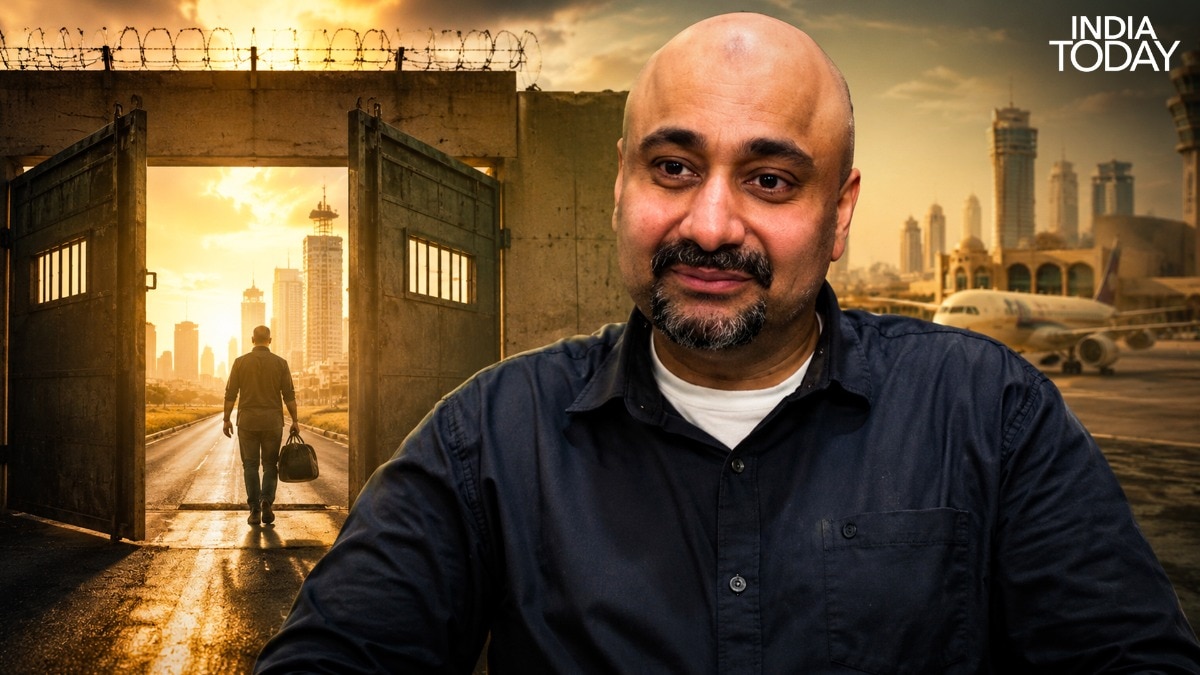
This is the reality Abdul Raheem lived in for nearly two decades, until he was released last week after an extraordinary public campaign raised Rs 34 crore in ‘blood money’ to save his life.
It was a world where every knock on the prison door could have been his last. Inside a Saudi Arabian jail, the Kozhikode native, imprisoned over a fatal altercation with his Saudi sponsor’s son, watched fellow inmates disappear one by one.
He dreadfully watched the grim final moments of the inmates getting their photographs taken and fingerprints recorded before being marched off for execution. When the same process began for him, Raheem believed the end had come.
“The photographs were taken, fingerprints were collected. Many people whose fingerprints were taken along with mine were later executed,” Raheem told India Today Digital, recounting the years he spent on death row.
Today, back in his hometown of Kozhikode after two decades behind bars, the 44-year-old speaks less like a man returned from prison and more like someone trying to understand a second chance he never expected to receive.
“It was a lease of life when I came to know about the efforts for collecting blood money. When it became sure that the amount had been secured, it was like a second birth to me,” Raheem told India Today Digital.
His release came after Malayalis across the world raised nearly Rs 34 crore as blood money, paving the way for his freedom under Saudi law.
THE DAY EVERYTHING SHATTERED
Raheem left Kerala in 2006 hoping to build a better future for his family. Before moving abroad, he worked as a school bus driver. Saudi Arabia was supposed to be the beginning of a new life.
He was working as a driver in Riyadh when the incident that dashed his dreams took place. On that day, he was driving his sponsor’s son, Anas, a young boy who had previously been severely injured in a car accident and required special care. While on the road, Anas threw a tantrum, angrily demanding that Raheem run a red light.
When Raheem refused, the boy spat on him.
Reacting purely on instinct, Raheem raised his hand to block it. Tragically, his hand struck the boy’s neck, the area where a delicate surgery had previously been performed. Anas died.
Suddenly, a young man who spoke no Arabic found himself trapped in a foreign legal system.
“After his death, he was taken to the hospital, and I was taken to jail. In court, everything happened through translators. I did not know the language,” Raheem said. “The victim’s family demanded equal justice for the death, and the law favoured them.”
He was convicted and sentenced to death in 2006. Then began the long wait.
Prison life slowly dissolved into repetition. Days merged into months, months into years. There was little to do except eat, sit, sleep and think.
Communication with the outside world was painfully limited. Prisoners were allowed occasional outgoing calls lasting around 15 minutes. There were no mobile phones, no internet, no sense of what was happening beyond the prison walls.
“I did not know how people were collecting such a huge amount outside,” he said about the campaign that would eventually save him.
Over time, as despair consumed him, he stopped calling home altogether. “I lost all hope. There was terrible despair. I had started teaching myself that this is the reality and everything is over now”.
The psychological trauma deepened each time he saw prison officials begin the final paperwork for another inmate.
“You could know when someone was being prepared for execution,” Raheem recalled. “Paperwork would be completed, photographs and fingerprints taken. After that, it could happen any day, any moment.”
Eventually, his turn came too.
“In my case also, everything was ready,” he said. “The photographs and fingerprints had all been taken. It was at the last moment that luck stood by me.”
By this time, efforts to save him had started bearing fruit, with embassy officials and other stakeholders already involved in the case.
One of the moments that still haunts him is meeting his mother in gain after years apart. Raheem initially did not want her to see him chained.
“Seeing my mother while my hands and legs were shackled was unbearable,” he said.
Following intervention by embassy officials, authorities relaxed some restrictions during the meeting.
“They removed the handcuffs, though the chains on my legs remained,” he recalled.
Raheem with his elderly mother, Fathima, after being freed from Saudi death row.
Meanwhile, outside prison walls, support for him slowly gathered momentum. Embassy officials, legal aid activists and members of the Malayali diaspora continued lobbying and fundraising for years. The intervention of a Kerala businessman, Bobby Chemmannur, was crucial.
Then came the breakthrough. The blood money was finally secured after a massive campaign. For a man who had already mentally prepared for execution, freedom felt unreal.
“It was a second birth for me,” Raheem said.
REBUILDING LIFE
Now back in Kerala, Raheem is confronting a life interrupted for nearly half his lifetime. Technology has changed, people have aged, children he once knew are adults. The young man who left for Saudi Arabia with dreams returned as someone trying to rebuild himself from ruins.
“All my dreams were shattered. Now I have to dream again,” he said.
Even his arrival home overwhelmed him. Thousands gathered to welcome him at the airport, a reception that left the once-forgotten prisoner stunned.
“I was frightened seeing such a huge crowd,” Raheem said. “This happened because of people’s unity. People forgot caste and religion to help one human being”.
Raheem now does not like to revisit the dark memories of those 20 years repeatedly.
“The jail life is over,” he said quietly. “Let it remain my personal sorrow”. “Now, I am rebuilding.”
Raheem walked into a Saudi prison as a boy with big dreams, and walked out two decades later as a symbol of collective human kindness. His youth is gone, but his life is his own again.
– Ends
Published On:
Jun 1, 2026 14:11 IST