


Long before Yassin Nassar began designing buildings professionally, he learned to question the assumptions behind them.
At the beginning of his architectural studies in Greece, exposure to philosophy challenged beliefs he had previously accepted without much resistance. Rather than simply adding new ideas to an existing worldview, he found himself rebuilding it through reasoning, logic and first principles.
That intellectual shift would eventually shape not only how he thinks, but how he approaches architecture.
“Philosophy taught me to question things from their foundations,” Nassar says. “Architecture became a way of translating that kind of thinking into something physical.”
Today, his work is moving beyond the design of individual buildings toward a larger ambition: creating settlements in which architecture, ecology, climate and natural systems are considered together from the beginning.
For Nassar, architecture is not simply about producing objects.
“Architecture is not decoration,” he says. “I am interested in architecture as a system, not simply as an object.”
The Early Roots of an Architect’s Mind
His relationship with design began long before university.
As a child, Nassar showed an unusual ability for drawing and received awards for his work. Architecture was also present within his family, particularly through his uncle, architect Hussein Nassar.
But what ultimately attracted him to the profession was not drawing alone.
Architecture offered an intersection between art, philosophy, science, nature, engineering and problem-solving.
As his education progressed, that intersection became increasingly important. Philosophy taught him to question assumptions. Architecture forced him to turn those questions into physical decisions.
The result was a way of thinking focused less on style and more on understanding the systems behind a project: structure, climate, human behaviour, construction, resources and the relationship between architecture and its environment.
That way of thinking would soon be tested much earlier than expected.
(Hussein Nassar x Yassin Nassar: Residential project in Katameya Dunes, Egypt)
At 24, Designing Without a Team
Only months into his professional career, Nassar was given the opportunity to design a multi-family residential building in Egypt.
He was 24 years old.
There was no architectural team behind him.
He designed, drew, developed and coordinated the project himself, working directly through the architectural, structural, MEP and construction requirements necessary to turn an idea into a buildable project.
It became an accelerated education.
Architecture school could teach design, theory and representation, but a real building introduced an entirely different level of responsibility.
A building was no longer an image or an academic exercise. It was a system of structural decisions, mechanical systems, budgets, materials, contractors, regulations and the everyday lives of the people who would eventually occupy it.
“I had to understand how everything connected,” Nassar says. “When you are responsible for the whole project, you cannot think about architecture as an isolated layer.”
The experience helped establish an approach that would continue to develop throughout his work.
Alongside his projects in Egypt, Nassar also completed architectural work in Greece, giving him professional experience across both countries early in his career.
But the most significant expansion of his thinking was still to come.
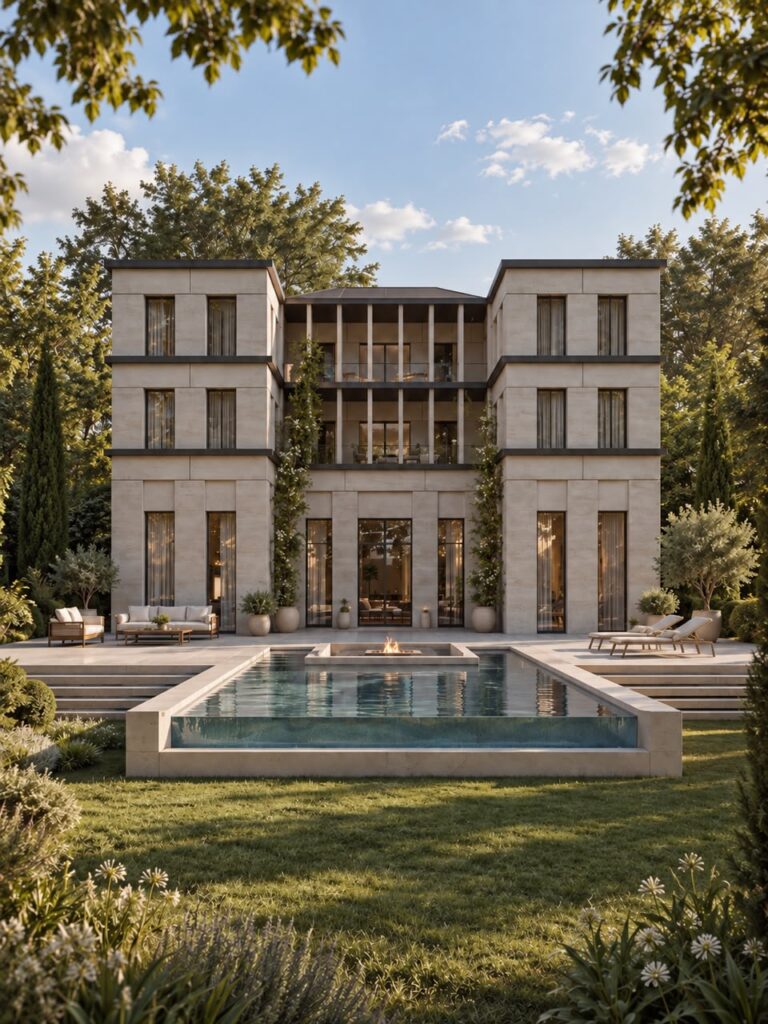
First Residential Building design at 24 in Orabi, Egypt
At 26, a 10-Acre Ecological Settlement in Siwa
At 26, Nassar began leading the design of a 10-acre ecological settlement in Siwa, Egypt.
The project brings together many of the subjects that had increasingly occupied his thinking: architecture, masterplanning, ecology, climate, natural materials, energy, water, agriculture and systems design.
The settlement is currently being developed across operational, hospitality and residential zones.
Rather than treating sustainability as an additional layer applied after the architecture has been designed, the project begins with the systems that allow a settlement to function.
“I want to design settlements where architecture, landscape, energy, water, food, waste and ecology are considered together from the beginning,” Nassar says.
The aim is not simply to place buildings within nature.
It is to understand how architecture can participate in the same environmental systems.
Passive climatic strategies, natural and locally appropriate materials, agriculture, water infrastructure, renewable energy and landscape therefore become part of the architectural problem itself.
For Nassar, this represents a much broader definition of the architect.
Instead of designing isolated buildings, the architect begins to think about relationships: between buildings and climate, between communities and resources, and between human settlement and the ecosystems supporting it.
That approach is particularly relevant in Egypt and the wider region, where climate, rapid urbanisation and resource management are becoming increasingly interconnected challenges.
Building a Practice Around Obsession
Nassar’s approach to his career is guided by a simple idea: build around the problems you genuinely cannot stop thinking about.
For him, this is not a rejection of commercial ambition. It is a belief that the strongest businesses and careers can emerge from deep expertise and intellectual commitment.
“When I genuinely care about something, I think about it more, I work on it more and I naturally go deeper,” he says. “If you build your career around something you are genuinely obsessed with, very few people will be willing to go as far as you will.”
That philosophy is shaping the direction of his practice.
Rather than attempting to compete purely through visual style, Nassar is developing an architectural approach centred on ecological settlements, climatic design, natural systems and the integration of disciplines normally treated separately.
The goal is to build a practice with a clear point of view.
A practice capable of moving between architecture, masterplanning, landscape and infrastructure while still treating them as parts of one larger system.
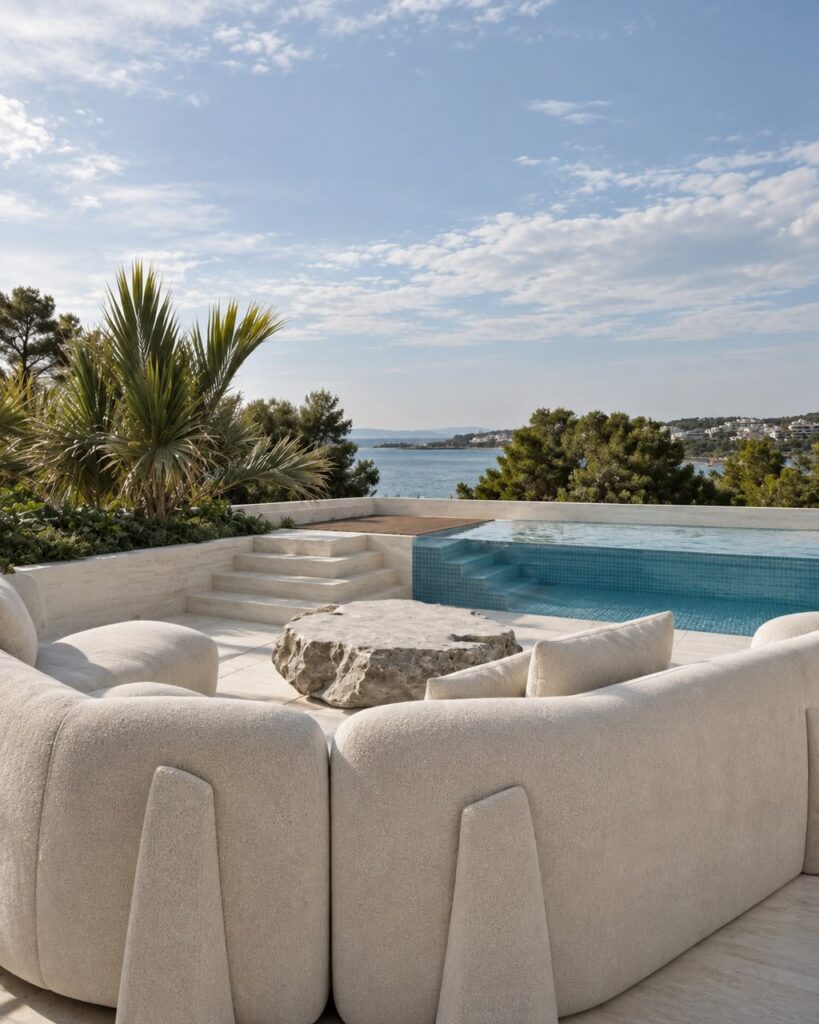
(Residential project in Vouliagmeni, Greece)
Building Through First Principles
Nassar’s long-term direction extends beyond individual buildings.
He is working toward an architectural model focused on ecological settlements and new approaches to urbanisation in Egypt and the wider region.
The ambition is to create environments that work with climate, ecology and local resources rather than attempting to overpower them.
This means questioning some of the assumptions behind conventional development.
Why should energy, water, agriculture, waste, landscape and architecture be designed independently?
Why should nature be treated as something outside the development rather than part of the system generating it?
And why should architects limit themselves to the building when the quality of human life depends on the wider environment surrounding it?
These questions return to the philosophical shift that began during Nassar’s studies in Greece.
Question what has been accepted.
Understand the underlying system.
Then rebuild from first principles.
For Nassar, the future of architecture will not simply be defined by increasingly impressive buildings.
It will depend on understanding how buildings, communities, resources and ecosystems can function together.
His advice to young architects follows the same logic.
“Build your career around the things you are genuinely obsessed with,” he says. “If you care about a problem more deeply than most people, you will probably think about it more deeply than most people. And eventually, that depth becomes your advantage.”
Follow Yassin Nassar on Instagram and LinkedIn to discover more about his architectural work, ecological design philosophy and evolving vision for the future of sustainable urbanism.
You might also like: Outdoor Date Days in Dubai: 8 Ideas to Try This Season
